

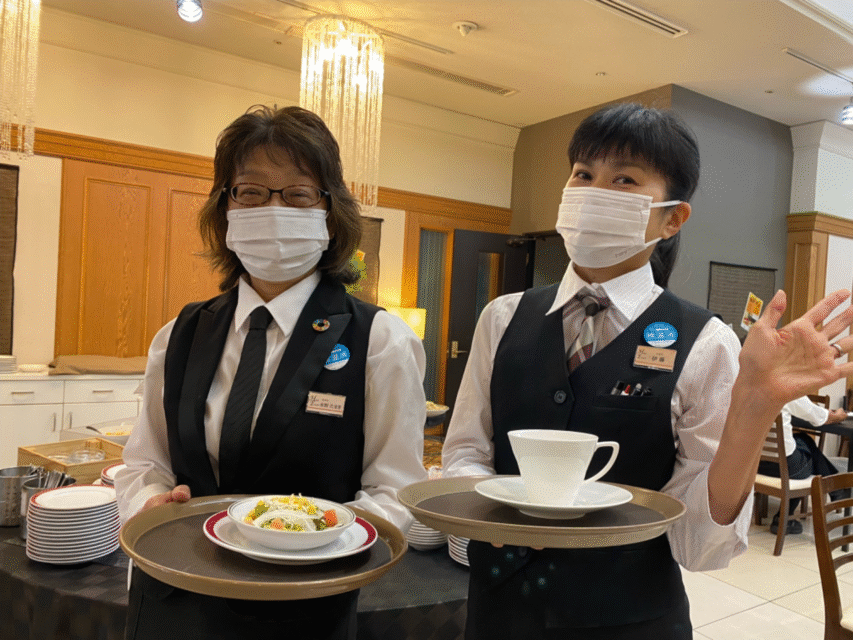
Hospitality jobs in Japan move fast. Hotels, restaurants, and resorts often need staff in place quickly, and the onboarding process — especially for foreign workers — can feel like a sprint through unfamiliar paperwork. Hospitality jobs Japan foreigner paperwork tends to stack up in the first week: employment contracts, health insurance forms, bank account applications, and HR acknowledgments all arriving before you have had a chance to find your local convenience store.
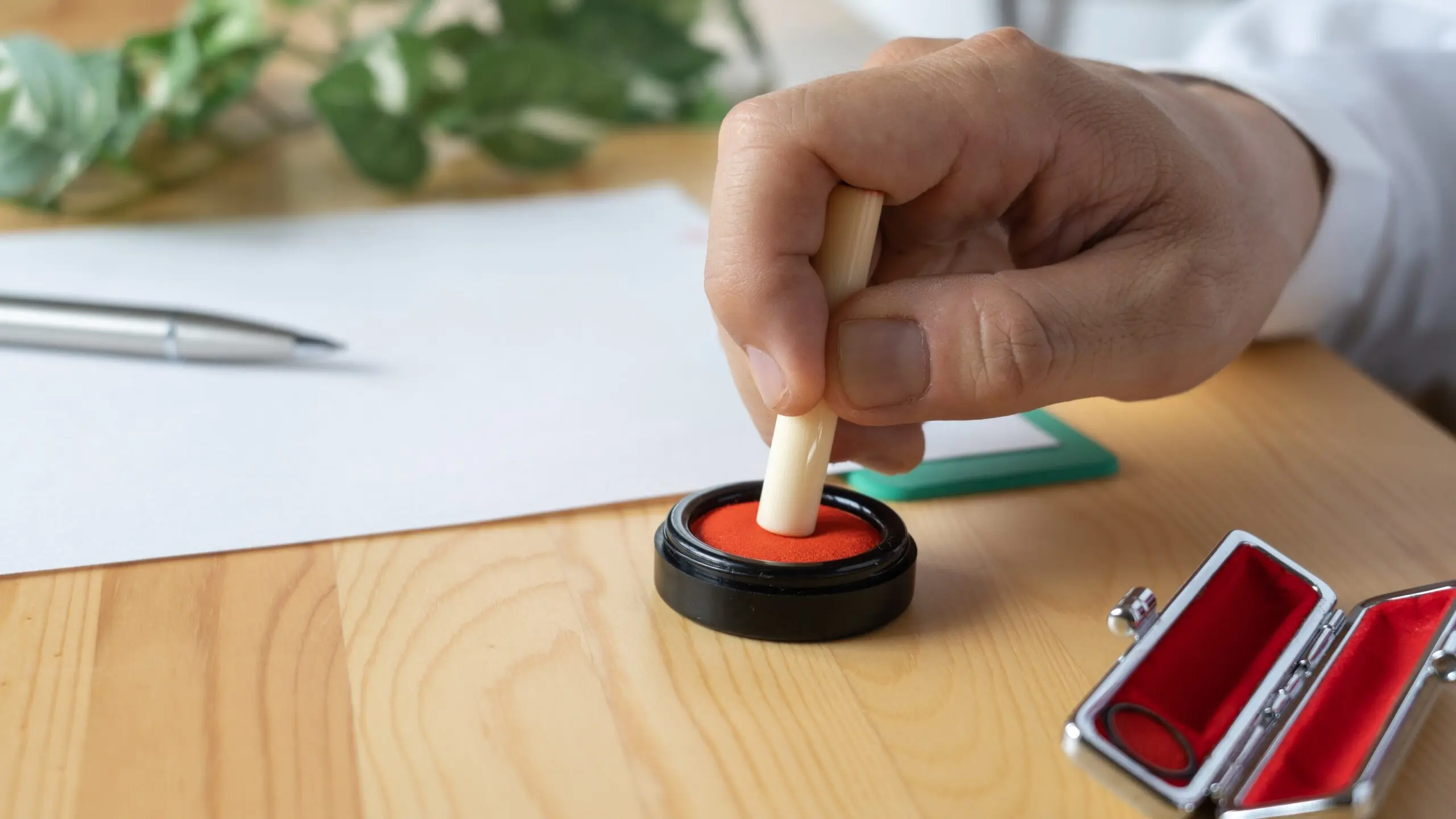
One thing that catches a lot of new arrivals off guard is the hanko. Japan’s personal stamp system is woven into everyday administrative life, and the hospitality sector is no exception. Whether you are checking into a role at a city-center hotel, starting as front-of-house at a restaurant group, or joining a resort property in a seasonal position, you will almost certainly encounter at least one document that expects a stamp rather than — or alongside — a signature.
This guide covers what that means in practice for people entering Japan’s hospitality industry. You will learn which documents are likely to require a stamp, which type of hanko makes sense for your situation, and how to get one ordered without hassle — even if your name is not designed for a kanji seal.
Context and why it matters

Japan’s hospitality sector runs on precision and presentation. From the way a hotel lobby is maintained to the timing of a service interaction, details matter at every level. The administrative side of the industry reflects the same philosophy: paperwork is expected to be complete, correctly signed, and submitted on time. A missing stamp on an HR form is a small problem, but it is the kind of small problem that delays your bank account setup, pushes back your first salary, or requires a return trip to the city office.
For foreign workers, this matters even more because the onboarding window is often compressed. Hospitality employers — particularly those running hotels or restaurants in busy tourist areas — may need you on the floor quickly. The HR process does not slow down to accommodate the learning curve of a new arrival. Showing up prepared with a hanko signals that you have done the groundwork and are ready to move at the pace the industry expects.
There is also a quiet professional signal in having your own stamp. Japanese HR teams and administrative staff notice. It is not something that gets commented on directly, but it removes friction, avoids awkward explanations about why you need to borrow someone else’s stamp, and sets a clean tone for the working relationship from day one.
Browse hospitality roles on ComfysCareer if you are entering this industry.
What documents may require a stamp
The specific documents you encounter will vary by employer, by whether you are working for an independent business or a chain, and by the prefecture. That said, the following categories appear consistently for foreign workers in hospitality roles across Japan.
HR and employment documents:
- Employment contracts and any supplementary agreements
- Confidentiality or workplace conduct acknowledgments
- Probationary period confirmation forms
- Uniform or equipment receipt acknowledgments at some properties
- Shift schedule confirmation forms at some restaurants and hotels
Payroll and financial onboarding:
- Salary payment method selection forms
- Tax withholding declaration forms (扶養控除等申告書)
- Social insurance enrollment documents including health insurance and pension
- Expense reimbursement forms for transport or training costs
Banking:
- Bank account opening paperwork — almost always requires a hanko at Japanese banks and Japan Post Bank
- Notifications of account changes if your employer switches payroll banks
Life admin that arrives alongside work:
- Resident registration at the city or ward office (住民票手続き)
- National Health Insurance enrollment if not covered by employer’s scheme
- Housing contract if you are placed in company accommodation
A realistic scenario: you are a front desk associate starting at a mid-size hotel in Osaka. Your first two days involve an employment contract, a social insurance form, a bank account application at the branch your employer uses for payroll, and a resident registration update at the ward office. Every single one of these may have a stamp field. If you do not have a hanko, you are either borrowing one that is not yours, being told to come back, or holding up the process for the HR staff who need to close your file.
A second scenario common in restaurants and izakayas: you join a chain group that processes new staff quickly across multiple sites. The onboarding paperwork is standardized and includes a stamp field on almost every form as a matter of policy. Staff are expected to arrive with a hanko. Not having one on day one marks you out as unprepared in an environment where operational readiness is everything.
Common mistakes:
The most common mistake is assuming that because your employer operates in a modern, customer-facing environment — a design hotel, an international restaurant brand — their back-office processes are equally modernized. Many are not. Even properties that present a contemporary face to guests use traditional HR paperwork internally, and stamps remain a standard expectation. Do not judge the administrative culture by the lobby aesthetic.
A second mistake is borrowing a generic stamp. Convenience stores in Japan sell inexpensive stamps with common Japanese surnames. These are not your name. Using one on a formal employment or banking document creates a mismatch that can cause complications later, particularly if the document is ever reviewed or verified. Your stamp should clearly represent you.
Which hanko type and size to choose

There are three main categories of hanko in Japan: the jitsuin (a registered seal for high-stakes legal use), the ginko-in (a bank seal), and the mitomein (an everyday unregistered personal seal). For foreign workers entering hospitality roles, the mitomein is the right starting point and will cover the vast majority of what you encounter.
Why a mitomein works for hospitality onboarding:
A mitomein does not require registration with the city office. It is accepted for employment documents, HR forms, everyday banking applications, insurance enrollment, and most of the routine administrative paperwork that comes with starting a new job. It is the practical, all-purpose personal seal that most people in Japan use for daily life. For a foreign worker arriving in a new role, it is exactly what you need.
Do I need a separate bank seal?
Some people in Japan maintain a separate, dedicated ginko-in — a seal used exclusively for banking to protect against fraud. In practice, many people use their mitomein for both. For straightforward salary account setup at standard Japanese banks, a mitomein is commonly accepted. If your employer or your bank specifically requests a registered seal, that is a separate matter, but for most hospitality workers opening a standard bank account, a mitomein is sufficient.
Size:
The standard sizes for a personal mitomein are 10.5mm and 12mm in diameter. For everyday HR and banking use, 10.5mm is the most practical choice. It fits neatly into the pre-printed stamp fields on standard Japanese forms without overrunning the box. It is also the most common size, which means it looks natural on the full range of documents you will encounter.
Name format for foreigners:
This is the most important decision for foreign workers, and the options are straightforward:
- Katakana: The phonetic script used for foreign names in Japanese. For example, “Emma” becomes エマ and “Carlos” becomes カルロス. This is the most conventional choice and is universally accepted in administrative contexts.
- Romaji: Your name in the Latin alphabet. Increasingly accepted, particularly at internationally oriented employers and newer financial institutions.
- Family name only: If your full name is very long or difficult to render phonetically, using just your family name is common and entirely practical.
The non-negotiable rule is consistency. Your hanko must reflect the name on your employment contract and residence card. A mismatch between your stamp and your ID creates administrative complications that you will have to resolve at the worst possible time — during an already busy onboarding week.
Checklist before ordering:
- Confirm the exact name on your employment contract and residence card
- Ask your HR contact if the company has a preferred stamp format or size
- Decide on name script: katakana is the safest conventional choice, romaji works at many modern employers
- Choose 10.5mm for everyday HR and banking forms
- Select a durable resin or composite material that handles daily use
- Consider a self-inking case for convenience during a busy onboarding period
Ordering tips for foreigners
Ordering a hanko with a non-Japanese name is simpler than it used to be. Physical hanko shops exist throughout Japan and can often produce a simple mitomein quickly, but they may not have staff who can easily handle foreign name transliteration or romaji requests. Online ordering is the more practical option for most foreign workers, and HankoHub is specifically built to handle exactly this situation — non-Japanese names, katakana or romaji options, and an ordering process that does not require Japanese language ability.
Order before you start. If you have a confirmed start date and the name on your contract, you have everything you need. The hospitality industry moves quickly, and so does the paperwork. Ordering your hanko in the week before you start means it arrives ready for day one. Waiting until after you have been handed your first stack of forms adds unnecessary pressure to an already full first week.
Use the name on your work documents. It is tempting to use a nickname or a shortened version of your name, but for any document that goes into an official file, the name on your hanko should match what is on your contract and residence card exactly. This protects you from complications later and makes any administrative verification straightforward.
Keep a spare ink pad handy. Hospitality onboarding often involves stamping multiple documents across multiple locations — the HR office, a bank branch, the ward office — sometimes on the same day. A self-inking hanko case eliminates the need to carry a separate pad and reduces the chance of a smeared impression on an important document.
Think of it as a long-term tool. The mitomein you order for onboarding is not single-use. The same stamp works for bank transactions, city office visits, housing agreements, and every future employment contract you sign in Japan. A well-made hanko from HankoHub is a practical investment in smoother administrative life for however long you stay.
If you are seasonal or on a short-term contract: Even workers on six-month or one-year contracts encounter the same paperwork requirements. A mitomein is inexpensive enough that it is worth having even for a short placement. The bank account alone is worth it — without a bank account, your salary has nowhere to go.
FAQ
Do I need a hanko to open a bank account in Japan?
In most cases, yes. Japanese banks — including Japan Post Bank, which is often the most accessible option for foreign workers — typically require a personal stamp alongside your identification documents to open an account. Some newer digital banks and certain branches of international banks may accept a signature instead, but the standard expectation at traditional Japanese banks is a hanko. Getting one before you try to open your account saves a return trip.
Can I get a hanko after I start work?
Yes, but it creates friction. Many employers will work around a missing stamp for the first day or two, but HR teams have closing deadlines for enrollment documents and payroll setup. The longer it takes to complete your paperwork, the more follow-up is required on both sides. Starting with your hanko ready removes this entirely.
What is the difference between a mitomein and a jitsuin?
A mitomein is an everyday, unregistered personal seal used for routine documents. A jitsuin is a registered seal — formally recorded with your local ward or city office — required for high-value legal transactions like property purchases or vehicle registration. For standard hospitality HR onboarding and banking, a mitomein is almost always sufficient. The situation where you would need a jitsuin is unlikely to arise during a standard employment setup.
Does my hanko need to be in Japanese?
No. Katakana is the standard way to write foreign names for official purposes in Japan, but romaji is also accepted at many institutions. The key is that the name on your stamp matches your official documents. If your employment contract uses katakana for your name, your stamp should match. If it uses your name in romaji, that works too.
What if my name is long or hard to transliterate?
This is common and not a barrier. Using your family name only, or a phonetically simplified version of your name in katakana, is normal practice for foreign nationals in Japan. If you are unsure how to render your name, HankoHub can guide you through the options when you place your order.
Can I use the same hanko for work and personal admin?
Yes. A mitomein is not context-specific. The same stamp you use for your employment contract works for your bank account, your ward office registration, and your housing agreement. There is no need to maintain separate stamps for different purposes unless a specific document requires a registered jitsuin.
Next steps
Hospitality work in Japan rewards people who arrive prepared. The paperwork side of starting a new role here is manageable once you know what to expect — and having a hanko ready before your first day removes one of the most common friction points in the onboarding process. Head to HankoHub to order a personal mitomein in katakana or romaji, sized for everyday HR and banking use. It takes a few minutes to order, arrives quickly, and makes the whole process of getting settled into your new role noticeably smoother.