
Finding a place to live in Japan as a foreign intern is already a process with more steps than most people expect. There’s the search, the application, the guarantor requirement, the agency fee, and the key money — and somewhere in that stack of paperwork, there’s almost always a stamp box waiting to be filled.
Rental contracts in Japan are among the most hanko-heavy documents a short-term foreign resident will encounter. Unlike internship agreements, which vary by company, or bank forms, where policies are slowly shifting, housing contracts in Japan remain stubbornly traditional. Property management companies and landlords have been using the same paper-based, stamp-verified process for decades, and most haven’t changed it.
Hanko for interns in Japan becomes most urgent, most visibly, at the housing stage. You’re often dealing with a tight move-in window — your internship starts on a fixed date, your temporary accommodation runs out, and the rental agency is waiting on your signed and stamped contract before handing over the keys. There’s no flexibility in that timeline.
This guide explains why rental paperwork specifically demands a seal, walks through every document you’re likely to encounter, helps you choose the right hanko, and shows you how to order one in English before the deadline catches you.
Why This Segment Is Asked for a Seal

Japan’s rental market runs on paper and stamps. This isn’t a quirk of one landlord or one agency — it’s a systemic feature of how housing contracts are processed, verified, and filed across the country.
The hanko serves a specific function in rental paperwork: it confirms that the person whose name is on the contract has physically reviewed and consented to each document. In a legal dispute, the stamp becomes part of the evidence chain. Property management companies treat it as a formal record, not a formality.
For foreign interns, the rental process often involves multiple parties: a real estate agency, a property management company, and sometimes a guarantor service (hoshō gaisha). Each of these parties may produce their own forms, and each form typically includes a stamp field. By the time you’ve worked through the full rental paperwork stack, you may have stamped the same hanko five or six times across different documents.
Here’s a scenario that plays out often: An intern arrives in Fukuoka for a five-month university exchange program with a housing arrangement through a private share house company. The share house requires a standard rental agreement, an emergency contact form, and a house rules acknowledgment — all on paper, all with stamp boxes. The intern assumed a signature would work. The management company politely but firmly explains otherwise. The move-in date slips by two days while the intern sources a hanko locally, under time pressure, in Japanese.
A second scenario: An intern in Tokyo uses a real estate agency to find a monthly apartment. The agency produces a lease agreement, a key deposit receipt, a fire insurance enrollment form, and a direct debit authorization for monthly rent. Four documents. Four stamp fields. One hanko, used across all of them — but only if you have one.
The rental sector has been slower than banking or corporate Japan to update its procedures for foreigners. Even agencies that deal regularly with international tenants often maintain the stamp requirement because their landlords and management systems expect it.
Common Documents and Timelines
Rental paperwork arrives in a defined sequence, and the timeline is usually tighter than interns anticipate. Here’s what to expect and when.
Documents commonly requiring a hanko in rental situations:
- Rental agreement (chinshaku keiyakusho) — The primary lease document. This is the most formal document in the process and almost always includes a tenant stamp field. It may run several pages, with a stamp required on the final signature page and sometimes on individual clauses or amendments.
- Key deposit and initial payment receipt — When you pay your deposit (shikikin) and first month’s rent, the receipt often includes a stamp field for your acknowledgment.
- Guarantor-related forms — If you’re using a hoshō gaisha (corporate guarantor service), you’ll complete enrollment forms that typically require a stamp.
- Emergency contact and resident registration form — Share houses and some apartment buildings require these as internal records. Stamp fields are common.
- Direct debit authorization — If your rent is collected automatically from your bank account each month, the authorization form usually requires a stamp that matches your bank’s registered impression.
- Move-out notice — When your internship ends and you’re vacating, the formal notice of termination often includes a stamp field as well.
- House rules acknowledgment — Share houses in particular frequently ask new residents to sign and stamp a document confirming they’ve read the house rules.
Timeline reality:
The crunch typically happens in the five to ten days before your move-in date. Agencies and management companies set deadlines for completed paperwork, and they don’t extend them easily — especially in competitive rental markets like Tokyo or Osaka where another tenant is waiting.
If your internship start date is fixed, work backwards. You need your hanko before you submit your rental application package, not after you’ve already been approved. Some agencies won’t even begin processing your application without a complete document set.
Recommended Hanko Type and Size
For rental paperwork, the requirements are the same as for other personal documents — but the stakes feel higher because a delay here means a delay in getting your keys.
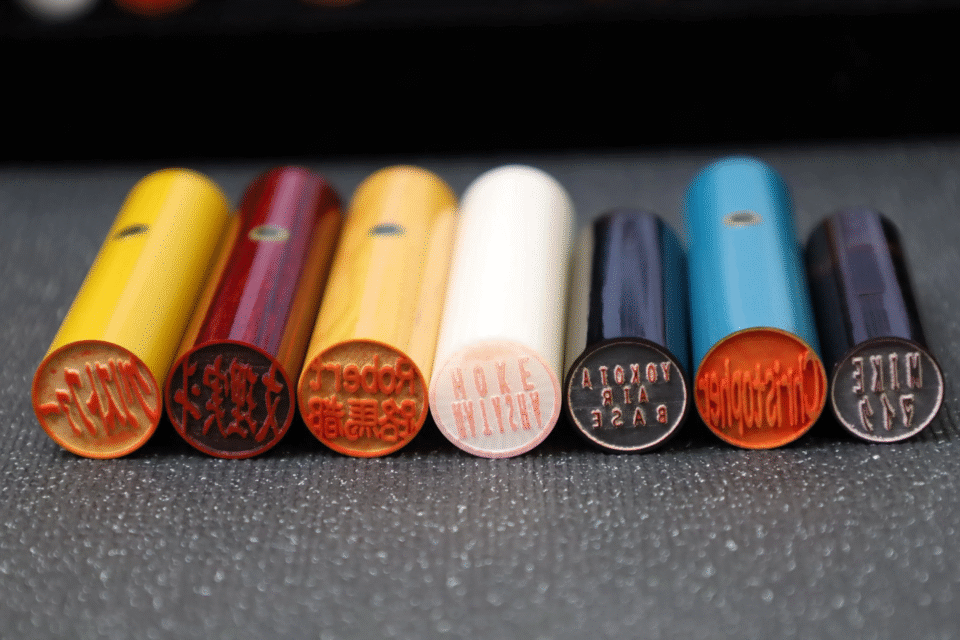
Type: Mitome-in (認め印)
This is the correct choice for rental paperwork. A mitome-in is a general-purpose personal seal that doesn’t require official city hall registration. It’s used for everyday contracts, receipts, and acknowledgment forms — exactly the category that rental documents fall into.
You do not need a jitsu-in (registered seal) for standard rental agreements. Jitsu-in are reserved for high-value legal transactions like property purchases. Bringing one to a rental signing isn’t wrong, but it’s unnecessary and involves extra administrative steps you don’t need as an intern on a short-to-medium stay.
Size: 10.5mm or 12mm
Standard personal seal size. Rental forms use the same stamp boxes as other official documents, and these dimensions fit cleanly every time. Avoid anything larger — oversized seals are associated with corporate or company use and can look out of place on a personal rental contract.
Material: Resin or acrylic
Practical, affordable, and durable enough for regular use across multiple documents. If you’re planning a longer stay in Japan beyond your internship, harder materials like ebonite or wood wear better over time and produce a crisper impression after extended use. For a three-to-six month internship, resin is entirely sufficient.
Name on the seal:
- Katakana is the standard and most broadly accepted choice for foreign nationals. Use the katakana rendering that appears on your residence card or other official Japanese documents.
- Romaji is occasionally accepted at more internationally oriented agencies, but traditional landlords and property management companies may push back.
If you’re uncertain about your katakana rendering, confirm it before ordering. The team at HankoHub can verify your name before engraving begins, which removes that uncertainty entirely.
Common mistakes at this stage:
- Ordering too late — rental paperwork deadlines are real and inflexible. Order your hanko as soon as your housing search begins, not after you’ve been approved.
- Using a 100-yen pre-made stamp with a Japanese surname — these are not your name and property management companies will notice.
- Choosing a font that’s too decorative or difficult to read — legibility matters on legal documents, and an unclear impression can prompt rejection.
- Assuming your landlord or agency will accept a digital signature — some international platforms now do, but most Japanese rental paperwork remains physical.
Ordering Tips in English
The ordering process itself is often what trips people up. You know you need a hanko, you know roughly what it should look like, but navigating a Japanese hanko shop — online or in person — without Japanese language skills introduces delays you can’t afford when a move-in date is looming.
If you’re still looking for the right role, ComfysCareer is a solid starting point for foreigner-friendly jobs in Japan.
For those who have their placement and need to move fast on housing, HankoHub handles the entire process in English. You order online, confirm your katakana name rendering before the seal is made, and receive a properly produced personal seal ready for rental paperwork. No Japanese required, no guesswork about type or size.
Practical ordering checklist:
- Confirm how your name appears on your residence card or visa documentation
- Verify the katakana rendering with your hanko maker before anything is engraved
- Select mitome-in — not jitsu-in
- Choose 10.5mm or 12mm diameter
- Order as soon as your housing search begins — don’t wait for approval
- If ordering internationally before your trip, factor in shipping time to Japan
- Order a small ink pad (shuniki) at the same time — red ink is standard for personal seals
- Keep your hanko in a protective case throughout your stay to avoid smudging or damage
One additional practical note: once you’ve used your hanko on your rental contract, keep it safe for the duration of your tenancy. You’ll likely need it again when you submit your move-out notice, and some management companies require the same stamp that appears on the original lease.
FAQ
Do all landlords in Japan require a hanko for rental contracts? Most do, particularly those working through traditional property management companies. Some newer platforms catering to short-term international tenants have moved toward digital signatures, but these are still the exception in the broader Japanese rental market. Having a hanko covers you in every situation.
What if I’m staying in a share house — do those require a hanko too? Yes, frequently. Share houses often have more paperwork than standard apartments because they include house rule acknowledgments, communal area agreements, and emergency contact forms in addition to the basic rental agreement. Many share house operators maintain traditional stamp requirements even when their target demographic is international.
Can my company or internship sponsor handle the rental paperwork on my behalf? Some companies do provide housing directly or assist with applications. In those cases, the company’s corporate seal may cover the main contract. But supplementary forms — your personal emergency contact record, for example — typically still require your personal stamp.
What if my internship ends and I need to leave early — do I need my hanko for that? Yes, early termination notices commonly include a stamp field. Keep your hanko accessible throughout your stay, not packed away at the bottom of your luggage.
Is there a difference between what’s required for a short-term versus long-term rental? The documents are similar, but longer leases may involve more paperwork overall. A monthly short-term contract might be simpler, but the stamp requirement tends to remain consistent regardless of lease length.
Can I use the same hanko for my rental contract, bank account, and internship agreement? Yes. A personal mitome-in is a general-purpose seal. The same hanko works across all three contexts. This is one of the practical advantages of getting it sorted early — one seal handles your entire Japan paperwork stack.
What happens if I stamp in the wrong place on a document? Notify the agency or management company immediately. Minor stamping errors are usually corrected with a revised page or an official correction stamp from the agency. Don’t try to fix it yourself or stamp over it.
Next Steps

Rental paperwork moves on the landlord’s timeline, not yours. The most practical thing you can do before your housing search begins in earnest is have your hanko ready. Order your personal seal at HankoHub, confirm your katakana name rendering before engraving, and walk into your rental signing prepared to stamp every document that comes your way.