

Japan has a way of making ordinary errands feel like small bureaucratic adventures. Opening a bank account takes longer than expected. Registering your address at the ward office involves forms you have never seen before. A delivery arrives while you are out and the slip on your door has a little circle printed on it with the word 印 next to it. All of these moments, scattered across your first weeks in Japan, share one thing in common: a hanko makes them easier. Understanding hanko for interns in Japan is not just about surviving your first day at work. It is about functioning in daily life with confidence once the onboarding is done and the real admin begins.
This guide focuses specifically on the everyday, outside-the-office situations where a personal seal comes up. If you are an intern living in Japan, even briefly, you will encounter these situations. Knowing what to expect, what documents are involved, and how to get a hanko sorted before you need one will save you time and frustration during an already busy transition period.
Why This Segment Is Asked for a Seal
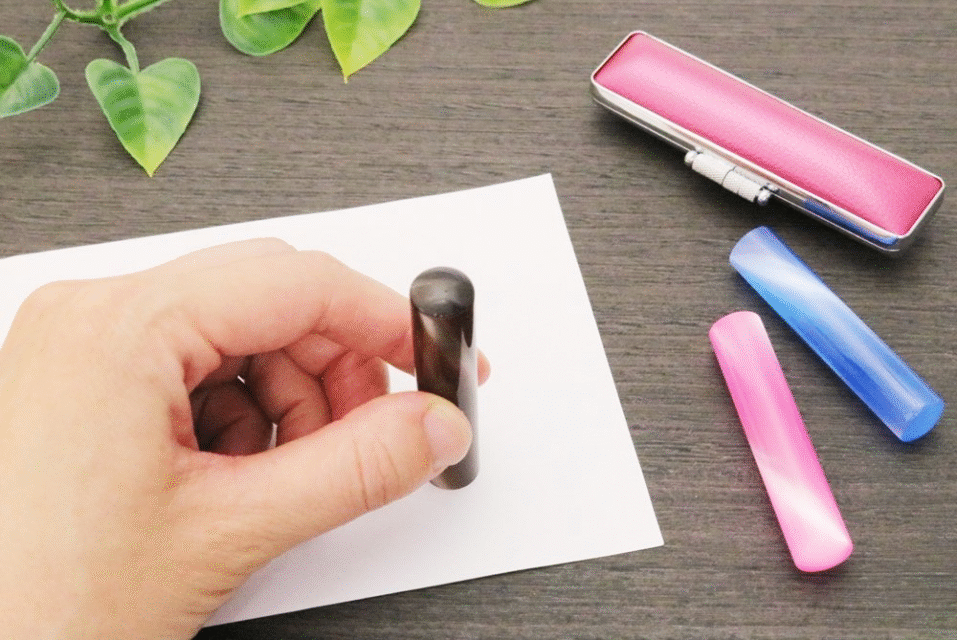
The short answer is that Japan’s administrative infrastructure was built around the hanko, and daily life paperwork still reflects that. While workplace documents are one context, the broader daily admin ecosystem, covering residency registration, banking, housing, deliveries, and utility setup, uses stamp fields as a default across many institutions and processes.
For interns specifically, the daily admin load tends to arrive in a concentrated burst. Within the first two to three weeks of arriving in Japan, you may need to register your address at the local ward office, open a bank account, sign a housing agreement if your placement includes arranged accommodation, and set up utilities or a phone plan. Several of these steps commonly involve a hanko, and none of them will pause to wait while you figure out what one is.
There is also a practical trust dimension to this. In Japan, a hanko functions as a personal identifier. When you stamp a document, you are affirming that you are the named individual and that you acknowledge the contents. For institutions that process large volumes of paperwork, a stamp is faster and more standardized than comparing handwritten signatures. Foreigners are not exempt from this system simply because they did not grow up with it.
A concrete example: an intern from Canada arrives in Osaka and spends her first Saturday trying to open a Japan Post bank account. She fills out the form, presents her residence card, and is then asked for her hanko. She has a pen. The staff member gestures again at the stamp field. She does not have a seal. The account opening is deferred. She comes back three days later with a seal ordered through HankoHub and the process takes ten minutes.
If you are still building toward an internship and have not locked in a placement yet, ComfysCareer is a solid starting point for foreigner-friendly jobs in Japan.
Common Documents and Timelines
Daily admin paperwork in Japan tends to cluster in your first month. Here is a breakdown of where a hanko commonly appears outside of workplace onboarding.
Residency and ward office registration After arriving in Japan on a visa that permits a stay of more than three months, you are generally required to register your address at your local ward or municipal office within fourteen days. The specific forms vary by municipality, but stamp fields appear on several supporting documents in this process, particularly if you are registering alongside a guarantor or co-resident, or signing any ward-issued documentation.
Bank account opening This is the most consistent daily admin moment where a hanko is requested. Traditional Japanese banks, including Japan Post Bank, JP Bank, and most regional banks, commonly require a personal seal to open an account. The stamp is linked to your account and used to verify your identity on future transactions. Some newer online banks and fintech options have dropped this requirement, but if your company processes stipends through a specific institution, you may not have a choice of bank.
Housing and accommodation agreements If your internship includes company housing, a host family arrangement, or a share house contract, there is a reasonable chance the agreement will include a stamp field. Lease-adjacent documents in Japan are particularly stamp-heavy. Even informal share house contracts often include a hanko field as standard.
Package delivery receipts This one surprises many newcomers. When a delivery arrives and you sign the slip, some carriers still include a stamp field alongside or instead of a signature line. It is not always required, but having a hanko nearby when packages arrive is a small convenience that adds up.
Utility and phone plan setup Setting up a mobile phone plan or a utilities account sometimes involves printed contract forms, particularly at physical carrier shops. Stamp fields appear less consistently here than in banking, but they do come up.
Typical timeline for interns:
- Days 1–14: Ward office registration, SIM card or phone plan
- Weeks 2–3: Bank account opening, housing document signing
- Weeks 3–6: Commuter or travel reimbursement claims, any additional admin tied to your placement
Common mistakes at this stage:
- Assuming residency registration does not involve any stamp requirements and arriving unprepared
- Opening a bank account at whichever branch is closest without checking whether they require a hanko
- Signing housing documents with a pen in fields that are clearly printed for stamps, which some institutions will flag or return
- Using a flatmate’s or colleague’s hanko, which is not appropriate and can create complications if the document is ever questioned
Recommended Hanko Type and Size
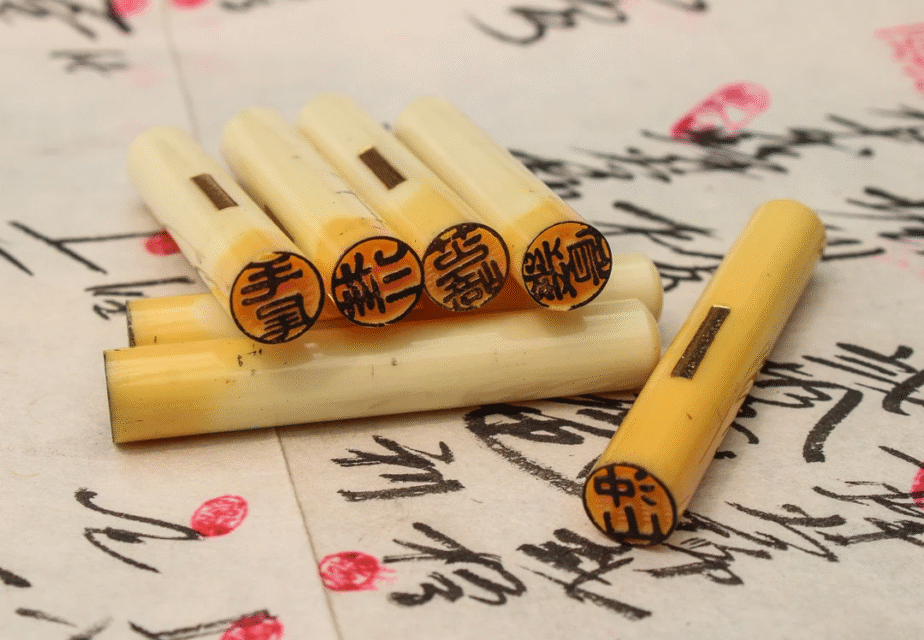
For daily admin purposes, the recommendation is the same as for workplace use, and that consistency is actually the point. One good personal seal handles both contexts.
Type: Mitome-in (認め印) A mitome-in is an unregistered personal seal used for everyday documents. It does not require you to visit the ward office for registration, and it is accepted for the vast majority of daily admin paperwork including bank account opening at most standard banks, housing agreements, delivery receipts, and utility contracts. You do not need a jitsu-in (registered seal) for intern-level daily admin, and pursuing one adds unnecessary time and process to your setup.
Size: 10.5mm to 12mm This is the standard range for personal seals used in everyday contexts. The stamp fields on most Japanese forms are designed around this size. A 10.5mm seal is slightly more compact and suits smaller form fields; a 12mm seal produces a slightly more legible impression and is the safer default if you are unsure.
Material: Resin or hardwood For an intern on a short-to-medium placement, material choice is largely a matter of personal preference and budget. Resin seals are durable, affordable, and entirely appropriate. Hardwood options are a modest step up in feel without a significant cost difference. Either will produce clean, consistent impressions across the types of paperwork you will encounter.
Name rendering: Katakana family name For foreigners, the standard and most practical approach is to have your family name rendered in katakana, the phonetic script used for non-Japanese words and names. This is immediately legible to any Japanese administrator, it fits neatly within the standard stamp diameter, and it is recognized as a legitimate personal seal across banking, housing, and government contexts. If you are unsure of the correct katakana spelling for your name, your placement company’s HR team can usually help, or a reliable katakana conversion tool will get you close enough to confirm.
Ordering Tips in English
The barrier for foreigners ordering a hanko used to be higher. Finding a shop, communicating your name correctly, and navigating the options without Japanese language ability was genuinely inconvenient. That has changed, and ordering a personal seal in English is now straightforward if you know where to go.
What to have ready before you order:
- Your family name in katakana (or your full name if you prefer, though family name is standard)
- Confirmation of the katakana spelling — double-check this before submitting
- Your preferred size: 10.5mm or 12mm
- Your preferred material: resin for practicality, hardwood for a slightly more refined feel
- Your delivery address and expected arrival date in Japan
- Your internship start date, so you can work backward on shipping time
Timing advice: If you are ordering from outside Japan, factor in international shipping lead time and build in a buffer of at least a week before your first admin appointment. If you are already in Japan, domestic shipping is typically fast. Either way, ordering before you need the seal is strongly preferable to ordering in a rush after your bank appointment falls through.
HankoHub runs an English-language ordering process built with exactly this audience in mind. You input your name, select your size and material, and receive a made-to-order personal seal without needing to navigate anything in Japanese. For interns managing a long list of arrival tasks, removing one friction point from the process is worth doing early.
What to avoid:
- Pre-made seals from convenience stores or 100-yen shops: these are not personalized and will not function as your personal seal
- Ordering a registered seal (jitsu-in) when a mitome-in covers everything you need
- Waiting until a specific document requires a stamp to start the ordering process
FAQ
Do I need a hanko to register my address at the ward office? The residency registration process itself may not always require a stamp, but supporting documents and related paperwork at the ward office commonly do. Requirements vary by municipality. It is worth having your hanko ready before your first visit rather than finding out mid-appointment that you need one.
Which banks in Japan still require a hanko to open an account? Traditional and regional banks commonly require a hanko. Japan Post Bank is one that frequently comes up for interns because it is accessible and widely used for stipend deposits. Some online banks and newer financial services have removed the requirement. If your company specifies a bank for stipend payments, check that bank’s current requirements directly.
Can I use the same seal for banking and housing documents? Yes. A single mitome-in handles both contexts. There is no requirement to have separate seals for different types of daily admin. Consistency is actually useful: the same seal impression on your bank account and your housing agreement creates a coherent personal record.
What if I make a stamping mistake on a form? The standard correction method in Japan is to stamp the error with your hanko overlapping it slightly, which indicates an acknowledged correction. This varies by institution and document type. When in doubt, ask the staff member assisting you before attempting a self-correction.
Is a hanko bought online as valid as one from a shop? For a mitome-in, yes. An unregistered personal seal does not require any formal validation. What matters is that it bears your name and produces a clean, consistent impression. A seal ordered through a reputable English-language service like HankoHub meets these requirements.
What if my name renders awkwardly in katakana? Most foreign names translate into katakana without major issues. Where names are long or contain sounds that do not map neatly into Japanese phonetics, shortening to the family name resolves almost every case. If you are genuinely uncertain, the ordering process at HankoHub includes support for exactly this kind of question.
Do I need to carry my hanko everywhere? Not everywhere, but during your first month in Japan it is worth keeping it accessible. A small hanko case or pouch makes this easy. Once the initial wave of admin is behind you, day-to-day carry becomes less necessary.
Next Steps

Daily admin in Japan moves faster when you are prepared, and a personal hanko is one of those small items that quietly unblocks a surprising number of processes. Before your bank appointment, your ward office visit, or your housing sign-off, get a mitome-in sorted. Order yours from HankoHub, confirm your katakana name spelling, choose a standard size, and have it in hand before your first admin errand. It is a straightforward step that makes everything that follows noticeably smoother.