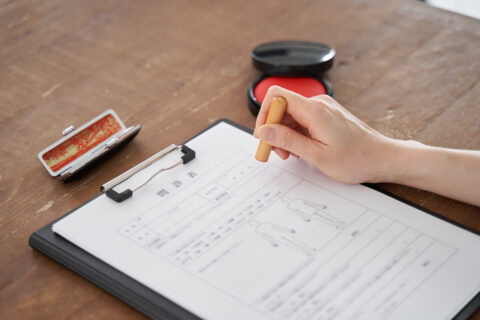


Opening a bank account in Japan is one of the first real administrative tasks you face when you start working at a hotel. It sounds straightforward — bring your documents, fill out the forms, get your account. But if you arrive at the bank without a hanko, you will likely be turned away before you reach the counter. For foreigners working in Japan’s hospitality sector, this is one of the most common and most avoidable bureaucratic setbacks.
Understanding hanko for hotel staff in Japan in the context of banking is slightly different from understanding it for employment contracts. The stakes are higher, the requirements are more specific, and the consequences of getting it wrong — a delayed account, a rejected application, or a payroll setup that can’t proceed — ripple directly into your financial life in Japan.
This guide explains why Japanese banks ask for a hanko, what the bank account setup process looks like for hotel workers, which type of seal you need, and how to order one in English before you ever walk through a bank’s doors. If your employer is waiting on your account details to set up salary payments, this is exactly where to start.
Why This Segment Is Asked for a Seal

Japan’s banking system has long used the hanko as a security and identity tool. When you open an account at a Japanese bank, your seal is registered to that account. Future transactions — depending on the bank and account type — may require you to produce the same seal as confirmation. In this context, the hanko isn’t just a formality. It becomes a functional key to your account.
For hotel workers specifically, this matters early and urgently. Most hotels in Japan pay salaries by direct bank transfer. Before you can receive your first paycheck, your employer needs your bank account details on file. Before you can open that account, you need a hanko. The sequence is tight, and it doesn’t move in reverse.
Foreign workers in the hospitality industry are often caught in a particular bind here. You arrive in Japan, start your orientation, and HR asks for your bank account information within the first week or two. You go to the bank. You have your residence card, your passport, your employer’s details. But you don’t have a hanko. The bank’s process stops there.
Here’s a scenario that’s more common than it should be: A foreigner starts a front desk role at a city hotel in Tokyo. On day three of orientation, HR distributes a salary registration form and asks everyone to submit bank account details by the end of the week. The foreigner visits a major Japanese bank the next morning with all required documents. The bank clerk asks for their hanko. They don’t have one. They’re directed to come back. The HR deadline passes. Their first paycheck gets delayed because the account isn’t registered in time.
A second scenario: A foreigner working as a hotel concierge tries to open an account at Japan Post Bank (ゆうちょ銀行), which is widely used by foreign residents for its relatively accessible process. Even here, depending on the branch and the account type, a hanko may be requested. Assuming that “foreigner-friendly” banks skip the seal requirement entirely is a mistake that costs time.
The broader point is this: Japanese banks are not all identical in their requirements, and policies have been slowly shifting in recent years. But the safest and most reliable approach is to have a hanko ready before you attempt to open any account. It eliminates the most common point of failure in the process.
Common Documents and Timelines
The bank account setup process for hotel workers in Japan involves a specific set of documents, and the hanko interacts with several of them. Here’s what to expect.
Documents typically required to open a Japanese bank account:
- Residence card (在留カード): Your primary identity document as a foreign resident. Required at virtually every bank.
- Passport: Often requested alongside the residence card, particularly for new residents.
- Personal hanko: Required by most major Japanese banks for account opening. Some banks have moved toward accepting signatures from foreign nationals, but this varies by institution and branch.
- Your Japanese address: You must have a registered address in Japan before opening most bank accounts. Hotel-provided staff accommodation counts, but confirm that the address is registered with your local city office.
- Employment documentation: Some banks ask for proof of employment, particularly for new foreign residents. A letter from your hotel HR department or a copy of your employment contract can help.
Timeline reality for hotel workers:
The moment you have a confirmed start date, begin the bank account process. The sequence that works is:
- Register your address at the local city office (ward office / 区役所 or town office / 市役所) as soon as you have a fixed address in Japan
- Order your hanko — allow at least one week for delivery
- Once both are in hand, visit the bank with all documents
- Submit your account details to HR as soon as the account is open
If your hotel provides staff housing, confirm whether the dormitory address can be used for bank registration purposes. Most Japanese banks require a verifiable domestic address, and some will check that it matches your residence card.
Common mistakes at this stage:
- Going to the bank before registering your address. Banks will often reject the application if your residence card shows a different address or no address yet.
- Assuming a signature replaces a hanko everywhere. Some banks, particularly those with international divisions or foreigner-specific account programs, have made this accommodation. Many have not. Don’t guess — bring a hanko.
- Using a 100-yen shop seal. These carry generic Japanese surnames that don’t match your name. A bank registering a seal to your account needs the seal to correspond to your registered identity. A mismatched seal creates problems immediately.
- Registering a seal and then losing it. The seal you use to open your account becomes your registered bank seal (銀行印, ginko-in). Losing it requires a formal replacement process with the bank. Keep it safe and separate from your daily-use seal if possible.
- Trying to open an account at a major city bank without any Japanese language support. If your Japanese is limited, Japan Post Bank or some regional banks with foreigner-accessible processes may be more practical starting points — though a hanko remains advisable regardless.
Recommended Hanko Type and Size
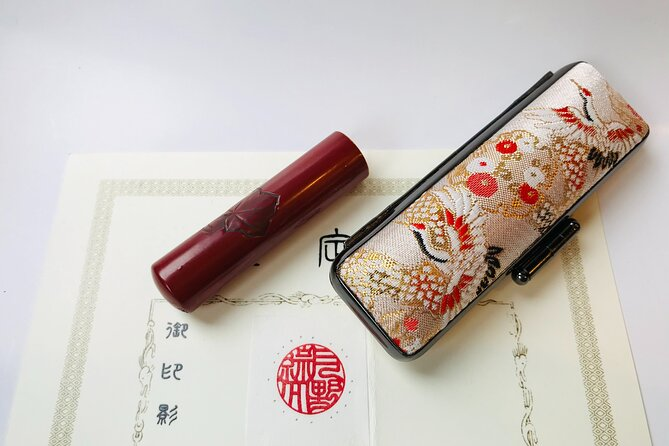
For bank account setup, the hanko category that matters is the ginko-in (銀行印) — a seal used specifically for banking purposes. In practice, many people use a standard mitomein for this, and banks generally accept it. However, there is a meaningful reason to consider keeping your banking seal separate from your everyday seal.
If your daily-use hanko is also your registered bank seal, you’re carrying a document security tool in your pocket every day. Losing it means both your general paperwork capability and your bank access need to be replaced simultaneously. A dedicated banking seal, stored separately, reduces this risk.
That said, for most hotel workers starting out: a well-made mitomein used exclusively for banking is entirely workable. You don’t need an elaborate setup from day one. The priority is having a proper personal seal before your bank appointment.
Size: 12mm is the most commonly recommended size for a banking hanko. It sits within the acceptable range for bank registration forms and has a slightly more substantial impression than smaller sizes, which some banks prefer for their records. 10.5mm also works and is widely accepted.
Material: Resin or acrylic handles regular use well. If you want something more durable for a seal you’ll use less frequently but store for longer, harder materials like ebonite or wood composites are reasonable upgrades. For a first seal as a foreign resident on a hotel worker’s budget, good-quality resin is entirely sufficient.
Name on the seal: For banking purposes, katakana is the standard recommendation for foreigners. Your bank account will be registered under a name, and that name needs to be consistent across your residence card, your employment documents, and your hanko. Katakana rendering of your foreign name is the most broadly accepted format at Japanese financial institutions.
If your name is long, a shortened rendering using your first name or a commonly accepted abbreviation is standard practice. Confirm this with the service before ordering.
Ordering Tips in English
The challenge for most foreigners isn’t understanding that they need a hanko — it’s actually getting one made when you don’t read Japanese. Most domestic hanko shops operate entirely in Japanese, and even online services can be difficult to navigate if you’re trying to specify katakana rendering without knowing how katakana works.
HankoHub handles this directly. The ordering process is in English, the name-to-katakana conversion is handled by the service, and you get a preview of exactly how your name will appear on the seal before anything is produced. For foreign hotel workers who need a reliable personal seal quickly and correctly, this is the practical solution.
What to confirm before ordering:
Name consistency: Check how your name appears on your residence card and how your hotel HR has it recorded. These should match. The name on your hanko doesn’t need to be identical character-for-character to every document, but it should be clearly the same person’s name.
Katakana rendering preview: Confirm the rendering before you finalize. Different phonetic interpretations of the same name are possible. The preview step is not optional — verify it.
Size selection: Choose 12mm for a banking-focused seal, or 10.5mm if you plan to use it across both banking and general admin.
Delivery timeline: Banks can’t register your account until you’re there in person with your seal. Order with enough lead time so the hanko arrives before your bank appointment, which should itself be scheduled after your address registration is confirmed.
Checklist before ordering:
- Confirm your registered name as it appears on your residence card
- Verify how your hotel HR has recorded your name
- Choose katakana script for bank use
- Select 12mm size for a dedicated banking seal
- Check delivery time against your planned bank visit date
- Review name preview and confirm before placing order
If you’re still looking for the right role, ComfysCareer is a solid starting point for foreigner-friendly jobs in Japan.
FAQ
Do all Japanese banks require a hanko to open an account? Not universally. Some banks, particularly those with programs specifically designed for foreign residents, have moved toward accepting signatures. Japan Post Bank and certain online banks have also made accommodations. However, policy varies by branch and changes over time. Having a hanko means you can open an account anywhere, regardless of that specific branch’s current policy.
Can I use the same hanko for my bank account and my employment contract? Yes, technically. Many people use a single mitomein for both purposes. The practical consideration is that your bank seal becomes registered to your account, so keeping it somewhere secure and consistent matters more for banking than for general paperwork. If you’d prefer to keep them separate, a second seal isn’t expensive.
What if I already opened an account with a signature and now need a hanko? If your bank accepted a signature and your account is functioning, you may not need to make any changes. The issue arises if your bank later requests a registered seal for certain transactions, or if you need to make changes to your account that require seal verification. Confirm with your bank what their ongoing requirements are.
My hotel’s HR is asking for my bank account details urgently. What should I do? Order your hanko immediately and prioritize delivery speed. In parallel, ask your HR department whether a temporary arrangement is possible — some employers can process initial payroll via a different method while your account setup is pending. Be transparent about the situation rather than letting the deadline pass silently.
Is there a difference between a ginko-in and a regular mitomein? Functionally, both are personal seals. The term ginko-in simply refers to the seal you register with your bank. Many people use a standard mitomein for this purpose. The main reason to have a dedicated ginko-in is security — keeping your bank seal separate from your everyday carry reduces the consequences of losing either one.
What happens to my registered bank seal if I leave Japan? When you close your Japanese bank account, the seal registration is dissolved. If you return to Japan and open a new account, you can register the same seal again or use a new one. The seal itself has no expiry — it remains valid as long as the physical stamp is intact.
Can I open a bank account before I start my hotel job? Generally, yes, as long as you have a valid residence card with a registered Japanese address. Some banks are more receptive to applicants who can show proof of employment or enrollment, but it’s not universally required. Opening the account before your start date, if your address is already registered, puts you ahead of the HR timeline.
Next Steps

The bank account process has a fixed sequence, and a hanko is the piece most foreigners are missing when they first attempt it. Get the address registration done, then order your seal, then book your bank appointment. HankoHub makes the ordering part straightforward — English throughout, katakana rendering handled for you, and a name preview before production so you know exactly what you’re getting. Order with enough lead time to arrive at the bank prepared, and remove the most common obstacle in the whole process before it has a chance to delay your first paycheck.