

Finding an apartment in Japan as a foreign designer is already its own challenge. Between guarantor requirements, key money, and the general preference some landlords have for Japanese tenants, getting to the point of signing a lease feels like an achievement in itself. And then, right at the finish line, the paperwork arrives — and somewhere in that stack is a field that requires your hanko.
For designers working in Japan, housing is rarely a casual decision. Your apartment might double as your workspace. Your address is tied to your residence card, your bank account, your tax filings, and your business correspondence. Getting the rental paperwork right, and getting it done on time, matters more than it might for someone with a more flexible setup.
This guide covers the hanko specifically in the context of rental paperwork — why it’s required, when it appears, which type you need, and how to get one ordered in English before the deadline hits. If you’re preparing to rent in Japan for the first time, or you’ve been caught off guard by the stamp requirement before, this is where to start.
Why This Segment Is Asked for a Seal

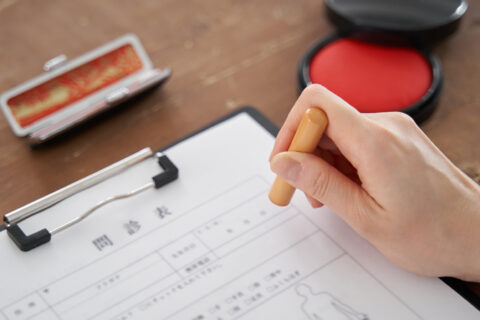
Japan’s rental market runs on formal documentation, and formal documentation in Japan almost always involves a stamp. The hanko in a rental context serves the same function it does elsewhere in Japanese administrative life: it confirms identity, signals consent, and creates a verifiable record that the person named on the document personally authorized it.
For landlords and real estate agencies (fudosan), this matters because lease agreements are legally binding contracts. In Japanese institutional culture, a stamped document carries a different weight than a signed one — not always in strict legal terms, but certainly in practice. Many real estate agencies will not process your application or finalize your contract without a stamp from every party named on the lease.
The foreigners-in-Japan dimension adds specific pressure. Some landlords are already cautious about renting to non-Japanese tenants, citing language barriers, unfamiliarity with customs, or concerns about long-term tenancy. Arriving at the contract stage without a hanko — or not knowing what one is — can read as unpreparedness and occasionally reinforces hesitation on the landlord’s side. Having your stamp ready, knowing where to press it, and moving through the paperwork smoothly signals that you understand how things work here.
A common scenario: a UX designer relocates from Berlin to Osaka for a one-year contract role. They find an apartment through a local agency, complete the application, pass the screening, and are told to come in to sign the lease on Friday. The agency sends a document checklist that includes inkan — a word the designer doesn’t recognize. They show up without one. The agency offers a fingerprint or signature as a temporary substitute, but notes the landlord prefers a stamp and asks them to bring one for the formal copy. The move-in date slides by four days. A small delay, but an avoidable one.
The rental process in Japan moves quickly once you’re approved. Having your hanko sorted before you even start apartment hunting is genuinely practical advice.
Common Documents and Timelines
Rental paperwork in Japan tends to arrive in a compressed window. Once your application is approved, the agency typically wants everything completed within a few days. Understanding which documents involve a stamp — and when — helps you prepare rather than react.
Lease agreement (chintai keiyaku). This is the primary document, and it almost always includes a stamp field for the tenant. Depending on the agency and landlord, you may need to stamp multiple pages or just the signature page. The lease covers the duration, monthly rent, terms of use, and conditions for deposit return.
Initial cost breakdown form. Some agencies include a separate document itemizing key money, deposit, agency fees, and first month’s rent. This may also require a stamp as acknowledgment.
Guarantor forms. If you’re using a guarantor company (hoshō gaisha) rather than a personal guarantor, the paperwork connecting you to that company often includes a stamp field on your side.
Move-in inspection record. When you take possession of the apartment, you’ll typically walk through with the agency and note the existing condition of the property. This document, once completed, may also require a stamp from both parties.
Renewal paperwork. If you stay past your initial lease term — commonly two years in Japan — renewal involves another round of documentation that commonly includes stamps again.
The timeline pressure is real. Approval to contract signing can be as short as 48–72 hours in some cases. If you don’t have a hanko when approval comes through, you’re either sourcing one urgently or delaying the process. Ordering in advance — ideally before you start your apartment search — means you’re ready when the moment comes.
If you’re still looking for the right role, ComfysCareer is a solid starting point for foreigner-friendly jobs in Japan.
Recommended Hanko Type and Size
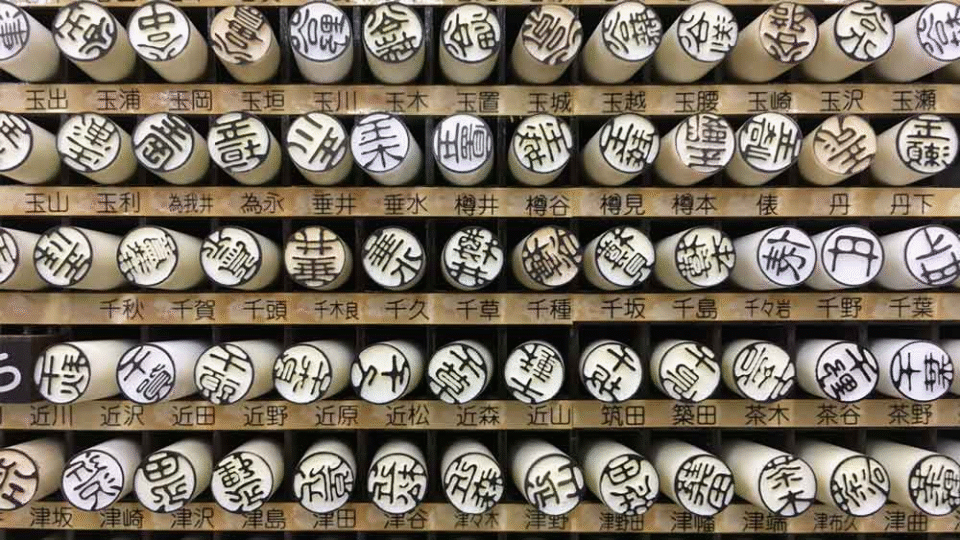
For rental paperwork, a mitome-in (認め印) is the standard and appropriate choice. This is a general-purpose personal seal — it doesn’t need to be registered with any office to be valid for lease agreements, and it’s accepted across virtually all standard rental documentation.
You don’t need a jitsuin (registered seal) for most rental situations, though there are edge cases. If a landlord specifically requests a jitsuin tōhon — a certificate of seal registration — that would require a registered seal and a trip to your municipal office. This is uncommon for standard residential rentals but does occasionally come up for high-value properties or more formal arrangements.
Size guidance:
- 10.5mm–12mm is the standard personal range and fits cleanly in typical lease stamp fields
- Avoid anything under 10mm — the impression can be too small to read clearly
- 13.5mm and above is more appropriate for business seals, not personal rental use
Name format considerations:
- Katakana is the most practical option for most foreign names — clear, phonetically accurate, and familiar to Japanese agencies and landlords
- Romaji is accepted in many contexts but can occasionally cause a real estate agency to pause, especially at more traditional offices
- Kanji works well if you’ve chosen a rendering thoughtfully, but isn’t necessary for rental purposes
Common mistakes in this area:
- Ordering a seal that’s too large for the stamp fields in rental contracts — this creates a messy impression that some agencies flag
- Using a pre-made name seal (sanmonban) from a convenience store — these often carry generic or incorrect name renderings and may not produce a clean, reliable impression
- Not having a backup record of where your seal is stored — lease paperwork often comes in multiple rounds, and you’ll need the same stamp each time
- Assuming the agency will remind you about the hanko requirement before you arrive — many simply list it on a form and expect you to know what it means
Material note: For a mitome-in used across rental, contracts, and professional documents, a mid-range material — resin, bamboo, or wood composite — offers a good balance of durability and cost. You’ll use this stamp more than a dedicated bank seal, so something that holds its edge over time is worth the modest extra investment.
Ordering Tips in English
Ordering a hanko in Japan as a non-Japanese speaker is straightforward if you use the right service. The checklist below is designed to get you from decision to doorstep with minimal friction.
- Order before your apartment search begins, not after approval. Approval can happen quickly, and you want to be holding your stamp when it does.
- Decide on your name format first. Katakana is usually the clearest choice for rental contexts. If your full name is long, family name only fits most stamp fields without crowding.
- Choose a size in the 10.5mm–12mm range. This covers virtually all standard residential lease stamp fields and works for professional documents as well.
- Select a material that will last. You’ll be using this hanko across multiple documents and document rounds — quality matters more than it might seem at first.
- Factor in delivery time. Standard orders typically arrive within 3–7 business days in Japan. If you have a specific move-in date in mind, order at least two weeks before you expect to need it.
- Keep your hanko in a consistent, known location at home. Rental paperwork often arrives in stages — inspection records, renewal documents, amendments — and you’ll need the same stamp each time.
- Consider ordering a carrying case or pouch with your stamp. Many providers include these, and it makes bringing the hanko to the agency or landlord appointment much easier.
HankoHub offers an English-friendly ordering process with clear guidance on name formats, sizes, and materials — which makes it a practical choice for foreign designers who want to get this right without navigating a Japanese-only checkout experience.
FAQ
Is a hanko legally required to sign a rental lease in Japan? Not always in a strict legal sense, but practically speaking, most real estate agencies and landlords expect one. Some agencies will accept a signature as a substitute, particularly those experienced with foreign tenants. However, assuming a signature will be accepted and arriving without a stamp is a risk — especially if the landlord or agency is more traditional. Having a hanko removes the uncertainty.
Can I use a convenience store stamp (sanmonban) for rental paperwork? Technically possible in some cases, but not recommended. Pre-made stamps at convenience stores are mass-produced and often don’t produce clean, consistent impressions. They’re also not made specifically for your name, which can create confusion. A properly made personal seal is a better investment.
What if I’m renting through an agency that works with foreigners — do they still need a stamp? Many foreigner-friendly agencies in Tokyo, Osaka, and other major cities have adapted their processes and may accept signatures. It’s worth asking directly. That said, even agencies experienced with foreign tenants often work with landlords who still prefer stamped documentation, so the agency may request it on the landlord’s behalf.
Do I need to register my mitome-in anywhere before using it for a lease? No. A mitome-in doesn’t require registration to be valid for lease agreements and most general documents. Registration is only required for a jitsuin, which is a separate type of seal used for high-stakes legal situations.
What happens if I stamp the wrong part of the lease document? Mistakes on formal documents in Japan are typically corrected using a teisei-in (correction stamp) process — pressing your stamp over or beside the error, initialing it, and rewriting the correct information. Agencies handle this regularly and will guide you through it if needed. The key is not to panic or cross out the error without following the correct procedure.
I’m renting a short-term furnished apartment — do I still need a hanko? Short-term furnished rentals, serviced apartments, and monthly mansion contracts vary widely. Some use simplified agreements that accept signatures. Others still include stamp fields. It depends on the provider. If you’re in Japan for more than a few months, having a hanko covers you for whatever comes up.
Can the same hanko be used for my bank account and my rental paperwork? For rental paperwork, yes — your everyday mitome-in works. For your bank account, it’s advisable to keep a separate dedicated bank seal (ginko-in). Using the same seal for everything isn’t prohibited, but it creates complications if that seal is ever lost.
Next Steps

Rental paperwork in Japan moves fast once things are in motion, and the hanko requirement tends to appear at exactly the moment you’re least prepared for it. Getting your seal sorted before your apartment search begins — rather than scrambling after approval — is the practical approach. It removes one variable from an already complex process and lets you move through the contract stage cleanly and confidently.
Order a practical personal hanko at HankoHub and get ready for paperwork. The process is available in English, designed with foreign residents in mind, and gets your stamp to you well before the lease is on the table.