

Freelancing in Japan as a foreigner comes with a particular kind of paperwork surprise. You’ve sorted your visa, found a place to live, maybe even landed your first client — and then someone hands you a form and asks for your hanko. If you’ve never owned one, that moment can bring everything to a halt.
This guide is specifically for freelancers. Not employees who get walked through onboarding by an HR team, and not large business owners filing corporate documents. Just you: independent, self-directed, and trying to figure out what a hanko for freelancers in Japan actually means in practice.
The short answer is that a personal seal is not always legally required for every transaction a freelancer makes — but it comes up often enough, and in critical enough moments, that not having one creates real friction. Bank account setup is the most common example. We’ll walk through exactly why institutions ask for it, what type you need, and how to order one in English without guessing.
Why this segment is asked for a seal
Freelancers occupy an interesting position in Japan’s administrative system. You’re not employed by a company, so no HR department is handling paperwork on your behalf. At the same time, you’re conducting legitimate financial and contractual activity: opening business-linked bank accounts, signing client contracts, registering as a sole proprietor (kojin jigyo nushi), and sometimes dealing with tax filings.
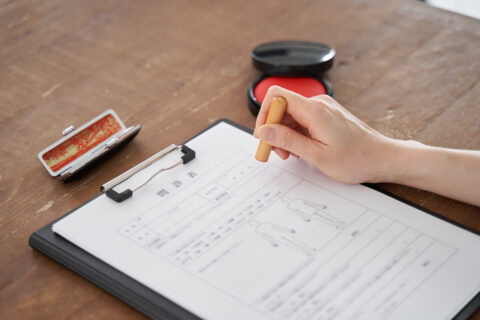
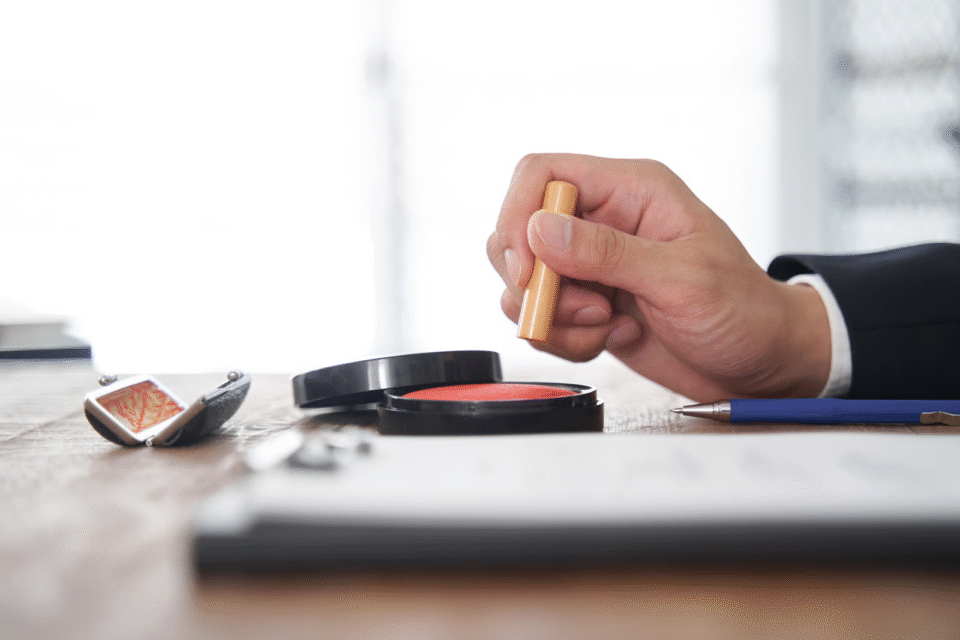
In Japan, the hanko functions as a personal identifier — historically more trusted than a handwritten signature. For banks in particular, a registered stamp impression on file creates a verifiable record. When you open an account and register a seal, the bank keeps your ink impression (called a tōin) on file. Future transactions above certain thresholds, or actions like changing account details, may require that you produce a matching impression.
Here is the freelancer-specific scenario that trips people up most often: You decide to open a second bank account — one dedicated to business income. You go to the bank, bring your residence card and My Number card, and the staff asks whether you have a hanko. If you say no and try to use a signature instead, some banks will accept it. Others won’t, or will push back in ways that slow the process significantly. Japan Post Bank and certain regional banks are especially known for preferring or outright requiring a seal.
There is also the matter of client contracts. Larger Japanese companies — even ones that hire foreign freelancers regularly — often send paper contracts with a designated stamp box. Leaving that box empty can create confusion, delay payment, or require back-and-forth that is entirely avoidable.
One more scenario: if you register as a sole proprietor at your local tax office (a relatively simple and free process), the registration form itself has a space for your seal. It is technically optional in many cases, but staff will often expect it.
Common documents and timelines
Understanding where a hanko appears in your freelance setup helps you plan ahead rather than react under pressure. Here are the documents and moments where it comes up most frequently:
Bank account opening This is the most time-sensitive use case. Whether you’re opening an account at a major city bank (Mitsubishi UFJ, Sumitomo Mitsui), an online-friendly option like Rakuten Bank or PayPay Bank, or Japan Post Bank, the seal question will come up. Online banks tend to be more flexible about signatures. Physical branch banks, especially regional ones, often require a registered hanko.
Sole proprietor registration (kojin jigyo nushi todokede) Filed at your local tax office, this declaration makes you official as a self-employed person in Japan. You don’t need a registered (jitsuin) seal for this — a simple personal seal (mitome-in) is usually sufficient. Timeline: file within two months of starting your business activity.
Client contracts Japanese companies of a certain size still send physical or PDF contracts with stamp fields. If you work with international clients only, this may never come up. If you have any Japanese corporate clients, expect it.
Invoice acknowledgment and receipts Less common now with digital invoicing tools, but some traditional clients still request a stamped receipt (ryōshūsho) as proof of payment. A small personal seal handles this.
Lease agreements (if moving for work) Not directly freelance-related, but if relocating for your work situation, lease agreements almost always require a personal seal.
Checklist: what to have ready before your first freelance banking appointment
- Valid residence card (zairyū card)
- My Number card or notification letter
- Personal hanko (mitome-in is usually sufficient for most banks)
- A registered seal and certificate (jitsuin + inkan shōmeisho) if your bank specifically requires it — call ahead to confirm
- Proof of address (utility bill or resident record)
Recommended hanko type/size
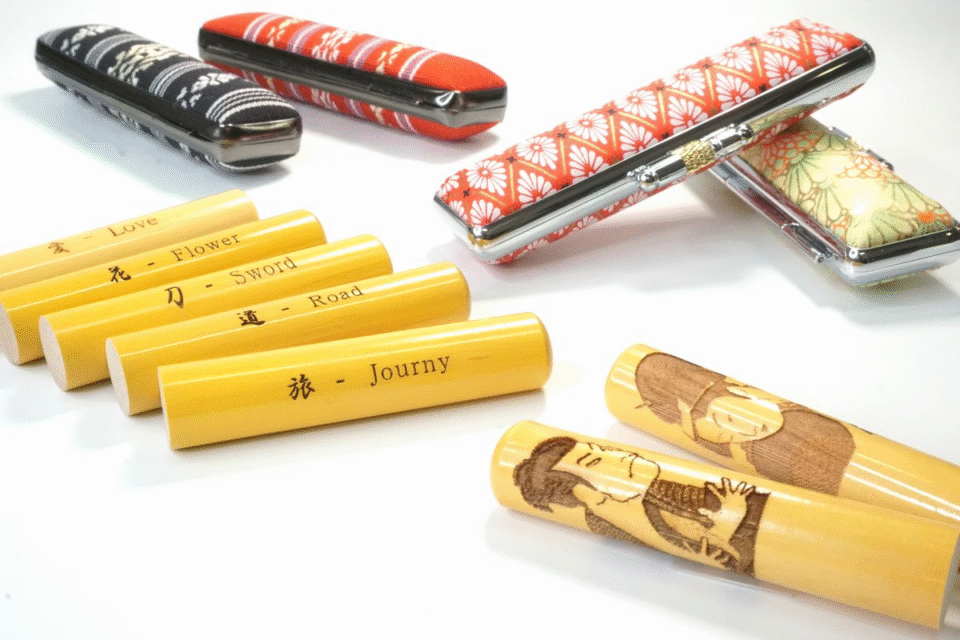
For most freelancers, you do not need a jitsuin (registered seal). That is the high-security seal used for property transactions, car purchases, and some high-value contracts. Registering it requires a trip to city hall and ongoing maintenance.
What you need is a mitome-in: a personal seal used for everyday documents. It is not registered with the government, but it is accepted for bank account openings at most institutions and for the vast majority of freelance contracts and registrations.
Size: 10.5mm to 12mm in diameter is standard for personal use. Avoid going larger — it reads as a business/corporate seal. Avoid going too small (under 9mm) as impressions can be unclear.
Material: Acrylic or resin is affordable and durable enough for daily use. If you want something that holds up over years and produces a consistently clean impression, materials like wood or synthetic ivory (eco-friendly alternatives to natural ivory) are worth considering.
Name format: This is where foreigners often get stuck. You don’t need to use kanji. Many banks and institutions accept seals with katakana (the script typically used for foreign names) or even romanized names, depending on the institution. However, katakana tends to be more universally accepted. If your name is long in katakana, a common approach is to use your family name only.
Common mistakes
- Ordering a seal with a name that doesn’t match your residence card. Banks compare documents carefully — use the name exactly as it appears on your official ID.
- Using a pre-made 100-yen shop hanko. These are sold with common Japanese names and won’t have your name on them. They’re also not suitable for financial institutions.
- Assuming all banks accept the same format. Call ahead or check the bank’s English-language FAQ before your appointment.
- Getting a jitsuin registered unnecessarily. Most freelancers won’t need this unless they’re signing property leases or car contracts in their own name.
Ordering tips in English
Ordering a hanko in Japan traditionally meant visiting a local stamp shop (hanko-ya) and communicating your name, size, and material preferences in Japanese. That works fine if you’re comfortable with the language — but for most foreigners, especially newer residents, it creates unnecessary stress.
English-friendly ordering is now available and practical. HankoHub lets you order a custom hanko in English, with options for katakana rendering of foreign names, choice of size and material, and clear delivery timelines. For a freelancer setting up quickly, this removes a real bottleneck.
A few practical tips when ordering:
Know your name in katakana before you order. If you’re unsure how your name converts, check your residence card — it may already show a katakana version. If not, a quick search for katakana name converters will give you a reliable result to work from.
Order before you need it. Don’t wait until the day before your bank appointment. Standard production and delivery typically takes a few days to a week. Give yourself buffer time, especially if you’re ordering during a busy period.
Match the name to your ID. As noted above — the name on your seal should match the name on your residence card exactly, or as closely as the script allows.
Consider digital hanko for client work. If you’re collaborating with international clients or working remotely with Japanese companies that have moved to digital workflows, a digital hanko version is worth having alongside your physical one. HankoHub offers digital options as well. Use the physical seal for official paperwork and banking; use the digital version for PDF contracts and email-based workflows.
If you’re still looking for the right role, ComfysCareer is a solid starting point for foreigner-friendly jobs in Japan.
FAQ
Do I need a hanko to freelance in Japan? Not to start working, but you will almost certainly need one to open a bank account, sign client contracts with Japanese companies, and register as a sole proprietor. Getting one early avoids delays.
Can I use my signature instead of a hanko? Some institutions accept signatures, particularly newer online banks. However, many physical banks and most traditional Japanese companies still expect a seal. Having one removes the guesswork.
What if I have a very long foreign name? Most stamp makers, including HankoHub, can accommodate longer names by adjusting layout or recommending a shortened version (often family name only). Katakana compression is a standard practice.
Is there a difference between a hanko and an inkan? Not really — the words are used interchangeably. “Hanko” tends to refer to the physical stamp tool; “inkan” more often refers to the impression it leaves. In practice, people use both terms for either meaning.
Do I need to register my hanko anywhere? For a mitome-in (everyday personal seal), no registration is required. For a jitsuin, you register it at your local ward or city office. Most freelancers only need the former.
Can I use the same hanko for banking and client contracts? Yes. One personal seal can be used across banking, contracts, registrations, and receipts. You don’t need separate seals for different document types.
Next steps

If you’re setting up as a freelancer in Japan, the practical move is to get your hanko sorted before your first bank appointment — not after. Head to HankoHub to order a custom personal seal in English, with your name rendered in katakana and your choice of size and material. It ships to your address in Japan, and the process is straightforward enough that you can have it ready well before your paperwork pile builds up.