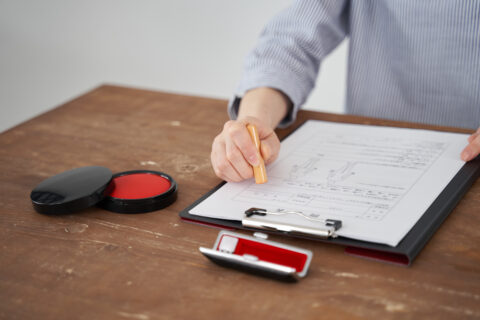


Starting a new contract or project in Japan brings a particular kind of administrative surprise. You’ve agreed on the terms, sorted the details, and then — sometimes days before your start date, sometimes on your first morning — someone from HR or administration slides a stack of papers across the desk and points to a row of empty stamp boxes. If you don’t have a hanko, the process stops there.
This guide is written for freelancers navigating HR onboarding in Japan. That includes independent contractors signing project agreements with Japanese companies, foreign professionals starting fixed-term contract work, and self-employed individuals who regularly take on engagements that come with formal paperwork. The HR onboarding experience for this group sits in an interesting middle ground: you’re not a full-time employee, but the companies you work with often treat the documentation process as if you were.
Understanding hanko for freelancers in Japan in the HR context means knowing which documents carry a stamp field, when they appear in the onboarding timeline, and how to be ready without overthinking it. The seal itself is straightforward. Getting caught without one is the part that creates problems.
Why this segment is asked for a seal

Japanese companies — even those with international teams and modern HR systems — often maintain traditional document practices for formal agreements. When a company brings on a contractor or project-based freelancer, they typically generate a set of documents that mirrors what they’d produce for a full-time hire: a contract, a confidentiality agreement, sometimes a separate terms-of-engagement form. These documents have stamp fields, and the expectation is that you’ll fill them.
The hanko functions here the same way it does across Japanese administrative life: as a personal identifier that carries more weight than a handwritten signature in formal contexts. When a company’s legal or HR team reviews a signed contract, a clear, consistent seal impression reads as intentional and verifiable. A missing stamp field, or a scrawled signature in its place, reads as incomplete — even if the company accepts it technically.
Here is the scenario that catches most freelancers off guard: You’re a foreign graphic designer who has just landed a six-month contract with a mid-sized Japanese firm. The contract is sent as a PDF with instructions to print, sign, stamp, and return by a given date. You print it, you sign it, and then you notice the inkan field — a small square box, sometimes labeled 印 or ご捺印 — sitting next to your signature line. You have no hanko. You email the HR contact asking if a signature is acceptable. They check with legal. Legal says the form requires a stamp. You’ve now delayed your own start date over something that costs very little to solve.
There is also a confidentiality and non-disclosure dimension. NDAs are common in Japanese corporate engagements, and they almost always come with stamp fields. The same applies to intellectual property assignment forms, which are standard in creative and technical fields. If you’re working in software, design, writing, or any area where deliverables are proprietary to the client, expect these documents on top of the core contract.
The other reason freelancers specifically encounter this is that Japan’s corporate culture often treats contractor paperwork with a degree of formality that matches or exceeds what employees experience. The logic is risk management: a contractor is an external party, and the company wants documentation that is complete and unambiguous.
Common documents and timelines
HR onboarding for freelancers in Japan doesn’t always follow a single fixed sequence, but certain documents appear consistently. Knowing which ones carry stamp fields — and when they typically arrive — helps you plan.
Business consignment agreement (gyōmu itaku keiyaku) This is the primary contract document for most freelance engagements in Japan. It defines the scope of work, payment terms, delivery schedule, and termination conditions. It will have a stamp field for both parties. This is the document you’re most likely to receive before your start date, sometimes weeks in advance.
Confidentiality agreement (himitsu hoji keiyaku / NDA) Often sent alongside the main contract, or as part of a combined document. Always has a stamp field. Expected to be returned before you begin work.
Intellectual property assignment or work-for-hire confirmation Common in tech, design, and content industries. Confirms that deliverables created during the engagement belong to the client. Stamp field standard.
Personal information handling consent form Companies that process personal data — which is most of them — ask contractors to sign and stamp a form acknowledging their data handling practices. This is often the last document in the onboarding stack and the one most easily overlooked.
Invoice template or payment instruction form Less formal, but some companies ask contractors to stamp their invoices or a payment setup form. Varies by company.
Checklist: what to have ready before your first day on a Japanese contract
- Personal hanko — name matching your official ID
- Residence card (zairyū card)
- My Number card (required for tax withholding forms if the company processes them)
- Bank account details for payment setup
- A copy of your most recent tax return if the company requests income verification
- Any certifications or qualifications the company has requested
Timeline note: HR onboarding documents are often sent one to two weeks before a start date, but some companies send them the week of. Don’t wait for documents to arrive before ordering your seal. Order it as soon as the engagement is confirmed.
Recommended hanko type/size
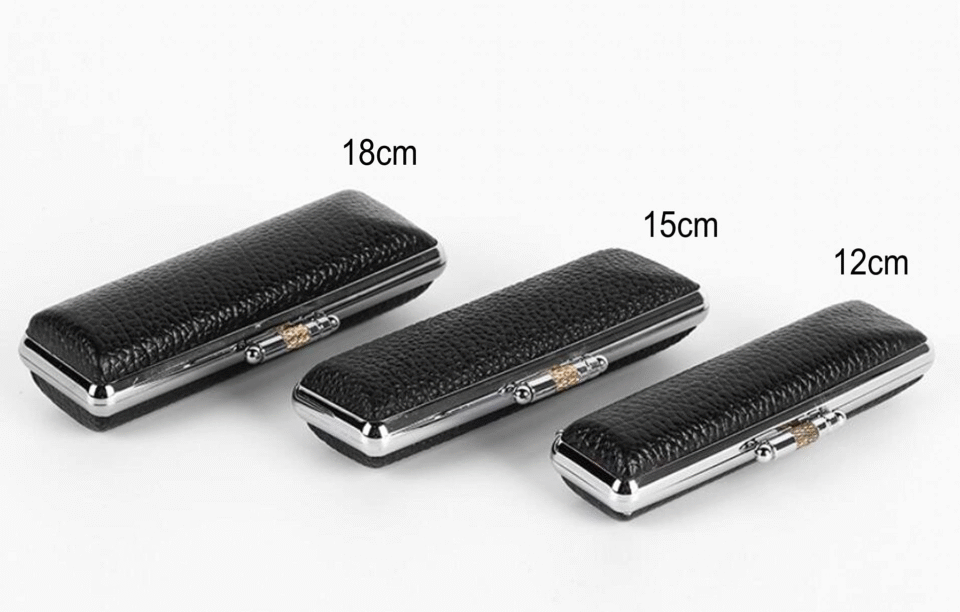
For HR onboarding as a freelancer, a mitome-in — a standard personal seal — covers everything you’ll encounter in the typical document stack. You do not need a jitsuin (government-registered seal) for contractor agreements, NDAs, or onboarding forms. That category of seal is reserved for higher-stakes legal transactions like property purchases.
Size: 10.5mm to 12mm diameter is the correct range for personal use in a business document context. Stamp fields on contracts are designed with this size in mind. A seal that is too large will overflow the box; one that is too small produces a faint, unclear impression that can be questioned.
Material: For documents that are going into a company’s legal files, impression quality matters. A resin or composite seal produces a clean, consistent impression. Avoid rubber-die self-inking stamps (shachihata) for formal contracts — many Japanese companies explicitly reject them for legally binding documents because the rubber impression is considered less permanent and less precise than a carved seal.
Name format: Your seal name should correspond to the name on your residence card. For foreigners, katakana is the most broadly accepted script for personal seals in a corporate HR context. If your full name is long in katakana, using your family name only is standard practice and will not raise questions. Romanized name seals are less commonly accepted in formal corporate settings than in some other contexts — katakana is the safer choice.
Common mistakes
- Arriving at the HR appointment without a hanko and assuming you can use a signature. Some companies will accommodate this; many will not, and the delay is your problem to manage.
- Using a pre-made seal from a convenience store. These are sold for common Japanese names and will have someone else’s name on them. This is immediately apparent and undermines the purpose of the seal entirely.
- Using a shachihata for formal contracts. Quick and convenient for internal office use, but often explicitly excluded from binding documents by company policy.
- Ordering a seal that doesn’t match your official name. HR teams compare document names. If your residence card says one thing and your seal says another, questions get raised.
- Registering a jitsuin unnecessarily. Unless your specific engagement involves a transaction that legally requires a registered seal, the mitome-in is sufficient and requires no registration.
Ordering tips in English
For most foreigners, the challenge with getting a hanko isn’t understanding what it is — it’s navigating the ordering process in Japanese. Traditional hanko shops require you to communicate your name, preferred script, size, and material in person, often with limited English support. For someone managing a new contract, a new work environment, and the general demands of relocating or settling into Japan, that’s an unnecessary obstacle.
English-language ordering removes that friction entirely. HankoHub lets you order a custom personal seal in English, with your name rendered in katakana, your choice of size and material, and delivery to your address in Japan. The process is designed for people who know what they need but don’t want to navigate it in a second language.
Practical steps:
Confirm your katakana name before ordering. Check your residence card — many residence cards display your name in katakana. If yours doesn’t, use a reliable katakana conversion tool and verify the result carefully. The name on your seal should match your official documents as closely as the script allows.
Order the moment a contract engagement is confirmed. Don’t wait for documents to arrive. As soon as you know you’re starting a new engagement in Japan, order your seal. Standard production and delivery takes several days to a week, and you don’t want to be chasing a delivery on your start date.
Choose a size appropriate for contract documents. A 10.5mm or 12mm seal is correct for the stamp fields you’ll encounter in HR onboarding paperwork.
Think about digital hanko for remote work. If some of your client relationships are managed entirely online — contracts sent as PDFs, invoices via email — a digital version of your seal keeps things consistent without needing to print and scan every document. HankoHub offers digital hanko options alongside physical ones, which is practical for freelancers working across both physical and digital workflows.
If you’re still looking for the right role, ComfysCareer is a solid starting point for foreigner-friendly jobs in Japan.
FAQ
Is a hanko legally required for freelance contracts in Japan? Not always in a strict legal sense, but in practice many Japanese companies require it for their internal document processes. Leaving a stamp field blank can delay onboarding or require renegotiation of the document format. Having a seal avoids the issue entirely.
What if I’m signing contracts remotely as a foreign freelancer? Remote contract signing is increasingly common, and some companies have moved to fully digital workflows. In those cases, a digital hanko serves the same function as a physical one. For companies that still send physical documents or require printed-and-scanned returns, a physical seal is needed.
Can I use the same hanko across multiple client contracts? Yes. One personal mitome-in can be used across all your freelance engagements, banking, rental paperwork, and any other document that requires a personal seal. There is no rule requiring separate seals for different contexts.
What does the 印 symbol on a form mean? It marks the designated stamp field. You place your seal on the ink pad and press it firmly onto that box. Some forms have multiple 印 fields — read the form before stamping to make sure you’re placing impressions in all the right places.
My company says they accept signatures. Do I still need a hanko? If the company explicitly accepts signatures and their document system is set up for it, you may not need a seal for that particular engagement. However, as a freelancer working across multiple Japanese clients over time, you will almost certainly encounter a company that does require one. Having a seal means you’re always ready.
What if I make a poor impression with my seal — can I redo it? On informal documents, sometimes. On formal contracts, it depends on the company’s process. Some HR departments will reprint and ask you to re-stamp; others will ask you to write a correction next to the smudged impression and stamp again next to it. The safest approach is to practice the stamping motion before your appointment — firm, even pressure, straight down and straight up.
Next steps

If you’re heading into a new freelance engagement in Japan, get your hanko sorted before the paperwork lands. Head to HankoHub to order a custom personal seal in English, with your name in katakana and your choice of size and material. It ships directly to your address in Japan, and having it ready before your onboarding documents arrive means you can move through the process without delays.