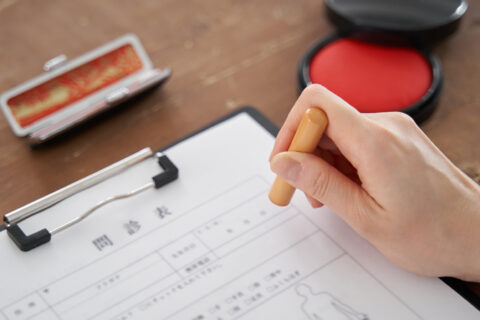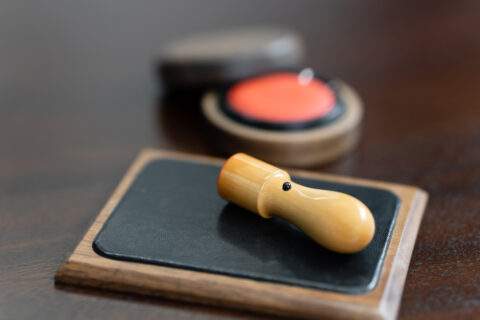


Starting a new job in Japan is exciting, and it comes with a paper trail that most foreigners aren’t prepared for. Before your first day, or during your first week, your HR department will likely hand you a stack of forms — and somewhere on those forms, you’ll see small red boxes marked 印 (in), waiting for a seal. If you don’t have a hanko yet, that stack doesn’t move forward.
Understanding hanko for new graduates in Japan isn’t about mastering Japanese bureaucracy overnight. It’s about knowing one specific thing well enough to avoid delays during onboarding. A missing seal at the wrong moment can hold up your salary registration, your tax paperwork, or your company insurance enrollment. None of those are things you want stalled in your first two weeks.
This guide is for foreign graduates starting jobs in Japan — whether you arrived for a full-time corporate role, a teaching position, or a technical job at a smaller firm. You’ll learn why HR asks for a hanko, which specific documents typically require one, what type to order, and how to get it sorted in English before your start date.
Why This Segment Is Asked for a Seal
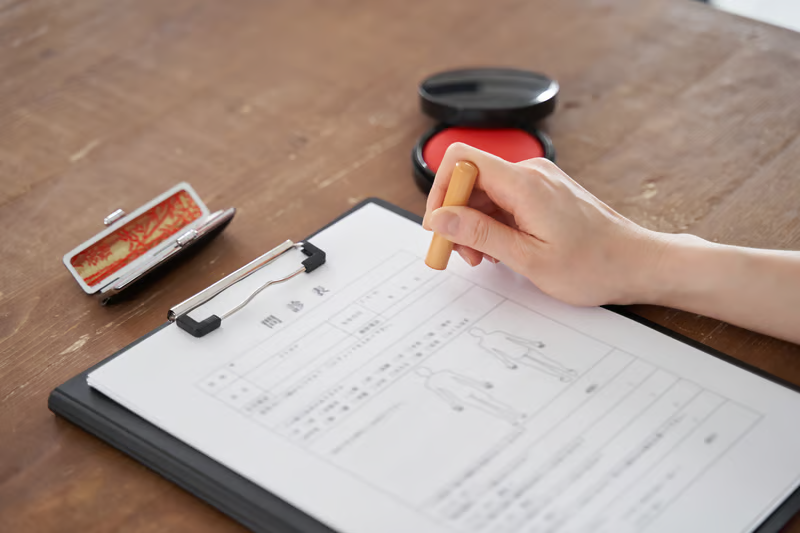
HR onboarding in Japan follows a structured sequence that hasn’t changed much across decades. Tax forms, health insurance enrollment, pension registration, direct deposit authorization — these are all paper-based processes at most Japanese companies, and they commonly carry stamp fields rather than signature lines. The hanko functions as your formal mark of agreement, similar to a signature but tied to a physical object that’s uniquely yours.
For foreign new graduates, this creates a specific friction point. You may have come from a country where everything is signed digitally or with a pen. Japan’s HR process, particularly at mid-size and smaller domestic companies, often hasn’t moved that far yet. Even companies with modern internal systems frequently maintain paper records for statutory filings, which require traditional stamps.
There’s also a cultural dimension worth understanding. In Japan, presenting complete, properly prepared paperwork signals professionalism and respect for the process. Showing up without a hanko when one is expected can read — unintentionally — as being unprepared. It’s not a moral failing, but it does create a small but real first impression problem in a workplace culture that pays close attention to such things.
Consider Marcus, a British graduate who joined a logistics company in Nagoya after completing his master’s degree in Japan. His HR coordinator sent a pre-arrival checklist that listed a hanko as required. Marcus assumed it was optional since he was a foreign national. On his first day, three forms were set aside incomplete, and his salary bank account setup was delayed by nearly a week. The rest of his onboarding proceeded, but the salary delay created stress he hadn’t anticipated.
Having your hanko ready before day one removes that variable entirely.
Common Documents and Timelines
HR onboarding in Japan typically unfolds across your first two to four weeks. The hanko appears on a range of documents during this window, and the timing matters because some filings have statutory deadlines.
Employment contract: Most companies ask you to sign and stamp your employment agreement before or on your first day. This is the document that formally establishes your working relationship, and it almost always has a stamp field.
Tax withholding declaration (給与所得者の扶養控除等申告書): This form, submitted to your employer, determines your income tax withholding rate. It’s filed at the start of employment and annually thereafter. A stamp is commonly required.
Social insurance and pension enrollment: Your employer enrolls you in shakai hoken (health and pension insurance) and will often ask you to stamp related forms. These filings go to government bodies and are time-sensitive.
Direct deposit authorization: Setting up your salary payment to your bank account requires a bank-stamped form in many cases. Some banks have moved away from this, but many regional banks and Japan Post Bank still request it.
Company internal agreements: Confidentiality agreements, IT use policies, commuting allowance applications — these vary by company but frequently include stamp fields at Japanese firms.
Timeline to work with: If your start date is four weeks away, order your hanko now. If you’re starting in ten days, order immediately and choose a service that offers faster shipping. HankoHub ships within Japan and handles orders in English, which makes this straightforward even if you’re still settling in.
Checklist: HR documents that commonly require a hanko
- Employment contract
- Tax withholding declaration
- Health insurance enrollment form
- Pension enrollment form
- Direct deposit and salary payment authorization
- Commuting allowance application
- Confidentiality or internal policy agreements
- Annual year-end adjustment forms (later in the year)
Keep your hanko accessible throughout your first month. You’ll return to it more than once.
Recommended Hanko Type and Size

For HR onboarding purposes, the hanko you need is a mitome-in (認め印) — a standard personal seal used for everyday documents. You do not need a jitsuin (実印), which is the formally registered seal required only for high-stakes legal transactions such as property purchases. Your HR paperwork, regardless of how official it feels, falls into the everyday category.
Size: A diameter of 10.5mm or 12mm is standard for personal use. These sizes fit comfortably within the stamp boxes printed on Japanese forms. Anything larger risks overflowing the field; anything significantly smaller can look unprofessional.
Material: Resin or acrylic is practical for a working seal. It’s durable, consistent in impression, and unaffected by humidity. Wood is traditional but can warp over time in Japan’s climate. For a seal you’ll use regularly across multiple years of employment, synthetic resin is a sensible choice.
Name and script: This is the question most foreign graduates have. Your hanko should display your name — but which name, and in which script? The standard approach for foreigners is to use a katakana rendering of your surname. If your surname is very long or phonetically complex in Japanese, a shortened version or your given name is also acceptable. Some people opt for a kanji approximation that carries meaning, though this is more of a personal preference than a requirement.
HankoHub provides name rendering support for foreign names, so you don’t have to figure out your katakana spelling on your own.
Common mistakes to avoid:
- Ordering a decorative or novelty seal: Stylized fonts and elaborate designs can look out of place on formal employment documents and may not be taken seriously by HR staff at traditional firms. Keep it clean and readable.
- Buying a pre-made seal from a convenience store or 100-yen shop: These exist for common Japanese surnames. Your name as a foreign national won’t be there, and using a seal that doesn’t match your name on official documents creates clear problems.
- Waiting until after you arrive to think about this: Many new arrivals land in Japan with a full to-do list and assume they’ll handle the hanko locally. Finding an English-language shop in an unfamiliar city under time pressure is more stressful than ordering online in advance.
- Confusing mitome-in with jitsuin: Unless your company asks specifically for a registered seal — which is rare for employment onboarding — a standard personal seal is what you need.
- Forgetting ink: Some seals are self-inking. Others require a separate vermilion ink pad (shuiniku). Confirm which type you’re ordering so you’re not caught without ink on your first day.
Ordering Tips in English
The process of ordering a hanko used to be heavily language-dependent. You’d walk into a small engraving shop, try to communicate your foreign name across a language barrier, wait several days, and hope the result looked right. That path still exists, but it’s no longer necessary.
English-language hanko services built specifically for foreigners have made this considerably simpler. HankoHub is designed for this exact situation: you enter your name in Roman letters, preview the name rendering in Japanese script, select your preferred size and material, and place your order online. Everything is in English. The seal ships within Japan to your address, whether that’s a company dormitory, a share house, or an apartment you’ve just moved into.
A few practical points for ordering:
Place your order with enough lead time. Processing and shipping takes a few days. If your start date is in two weeks, order now. Don’t wait for your pre-arrival checklist to arrive from HR.
Preview and confirm the name rendering. Before you finalize your order, review exactly how your name will appear on the seal. Pay attention to the phonetic rendering in katakana, particularly if your name has sounds that don’t map cleanly into Japanese.
Check whether your employer has specific requirements. Most HR departments won’t care about size or material as long as the seal is clean and legible. But if you’re joining a more traditional firm or a government-adjacent organization, a quick question to your HR contact can save a re-order.
Store your hanko safely and consistently. Once it arrives, keep it in the same place — a desk drawer, a small pouch, your document folder. Losing a hanko mid-onboarding is the kind of minor crisis that feels much larger in the moment.
If you’re still looking for the right role, ComfysCareer is a solid starting point for foreigner-friendly jobs in Japan — and once you’ve landed one, your hanko will be among the first things HR asks you to bring.
FAQ
Do I legally need a hanko to work in Japan as a foreigner? There’s no blanket legal requirement for foreign nationals to own a hanko, but in practice, many employers expect one for standard HR documents. Some multinational firms accept signatures in lieu of stamps, but domestic companies commonly do not. Having one removes the uncertainty.
What if my company says signatures are fine? Some companies, particularly international firms or startups, have moved to fully digital onboarding or accept pen signatures. If HR confirms this before your start date, you may not need a hanko immediately. That said, having one is still useful for rental contracts, bank accounts, and other non-work paperwork you’ll encounter as a resident.
What name goes on the seal? Most foreign residents use a katakana rendering of their surname. If your surname is long or complex, a shortened version or your given name is acceptable. HankoHub offers name rendering guidance during the ordering process.
Do I need to register my hanko? Not for employment onboarding. Registered seals (jitsuin) are required only for specific legal transactions such as property purchases or vehicle registration. A standard unregistered personal seal (mitome-in) covers everything you’ll encounter in a typical HR context.
Can I use one hanko for both work and personal paperwork? Yes. Your everyday personal seal works across employment documents, rental contracts, bank forms, and utility registrations. You don’t need separate seals for different purposes at this stage.
What if I make a mistake when stamping? Stamps that are smudged, misaligned, or incomplete are sometimes flagged by HR. If it happens, ask whether the form can be reprinted. Most HR staff have seen this before and will simply give you a fresh copy. The solution is straightforward: practice once or twice on scrap paper before stamping official documents.
How long does a hanko last? A well-made resin seal lasts for years with basic care. Keep it clean, store it with the cap on, and avoid dropping it. The ink pad, if separate, will need occasional replenishing, but the seal itself is durable.
Next Steps

Your HR paperwork won’t wait for you to figure out the hanko situation on your first day. The straightforward move is to handle it before your start date. Visit HankoHub, enter your name in English, and order a personal seal sized for everyday use. It ships within Japan, the ordering process is entirely in English, and it arrives ready to use — so when HR hands you that first stack of forms, you’re already prepared.