

Getting a work visa approved is a major milestone. You’ve navigated the paperwork, waited through the processing window, and finally have permission to live and work in Japan. Then someone at your company mentions a hanko — and if you’ve never heard of one before, it lands like one more bureaucratic mystery you weren’t expecting.
So here is the direct answer: you do not need a hanko to apply for a work visa. The visa application itself is handled through the Japanese embassy or consulate in your home country, or via the Immigration Services Agency once you’re in Japan, and none of those steps require a personal seal. But once your visa is approved and you start building a life in Japan — opening a bank account, signing a rental contract, completing work onboarding paperwork — the hanko becomes something you will actually need.
This guide covers what a hanko is used for after your visa comes through, which documents commonly require one, how to choose the right type, and how to order one as a foreigner. The goal is to make sure you’re not caught off guard when the stamp request comes up — and it will come up.
Context and why it matters
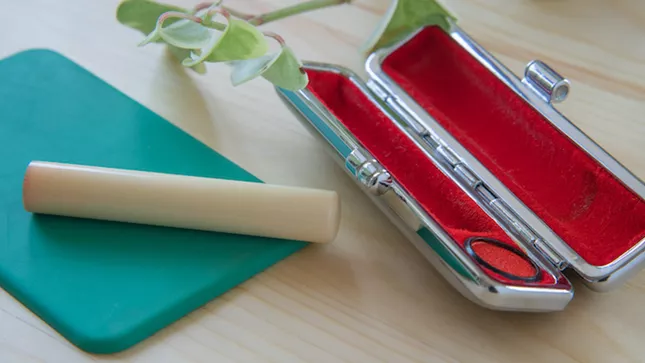
Japan has used personal seals for hundreds of years as a primary form of authentication. A hanko (also called an inkan) is a small cylindrical stamp engraved with your name — typically in Japanese characters — that functions as a legally recognized signature substitute in many official and professional contexts.
For foreigners, understanding when a hanko matters versus when a signature suffices can take some adjustment. Japan is gradually accepting signatures in more contexts than it used to, and digital processes are slowly reducing the need for physical stamps in some government systems. But on the ground, particularly in employment, banking, and housing, the hanko remains widely expected.
Consider a realistic scenario: you arrive in Japan on an engineering work visa and report for your first week at a mid-sized company. HR hands you a packet of onboarding documents — a direct deposit authorization, an emergency contact form, a confidentiality agreement, and a company equipment acknowledgment form. Two of those documents have a small circle printed at the bottom of the signature line with the kanji 印 (in), meaning “seal here.” A signature is sometimes accepted, but many HR departments expect a stamp because that is simply how their process is built.
Or picture this: you’re renting an apartment through an agency. Your guarantor paperwork, your lease agreement, and your moving-in checklist may all have stamp boxes. Some agencies working with foreign tenants have adapted, but others have not. Coming to that meeting without a hanko can delay signing by days.
None of this blocks your visa. But it can block the steps that follow.
What documents may require a stamp
No national rule mandates a hanko for every document, and accepted practices vary by institution, region, and employer. That said, the following categories commonly involve stamp requests for foreign residents on work visas:
Employment documents
- Labor contracts and amendments
- Payroll and direct deposit setup forms
- Non-disclosure agreements, internal policy acknowledgments
- Timesheet approvals at some companies
Banking
- Account opening forms at major banks (MUFG, SMBC, Japan Post Bank)
- Some banks accept a signature instead, but Japan Post Bank in particular has historically required a registered hanko for certain account types
- Wire transfer authorizations and account change forms
Housing
- Lease agreements and renewal documents
- Guarantor forms
- Move-in and move-out inspection acknowledgments
City hall and residence procedures
- While the My Number card system has reduced stamp requirements in some municipal offices, certain ward offices and local administrative forms still have stamp fields
- National Health Insurance enrollment and changes
Tax and pension paperwork
- Year-end tax adjustment forms provided by employers (nenmatsu chosei)
- Pension enrollment and fund transfer forms
A common mistake foreigners make is assuming that because a document is in English or because their employer is an international company, a hanko will not be needed. Some international employers have moved entirely to digital signatures or standard ink signatures. Many have not. It is worth asking HR directly during your onboarding process — and ideally, having your hanko ready before the question arises.
For visa-friendly employers, start with ComfysCareer‘s jobs for foreigners in Japan.
Which hanko type and size to choose

There are three main types of hanko used in Japan, and for most foreigners on a work visa, only one or two are genuinely relevant.
Mitome-in (認め印) This is the everyday stamp — used for internal company documents, delivery receipts, most rental paperwork, and routine admin. It does not need to be registered anywhere. This is the type most foreigners need first, and it is the right starting point if you are new to Japan and want to be prepared without overcomplicating it.
Ginko-in (銀行印) A bank seal registered specifically with your bank. Technically it can be the same physical stamp as your mitome-in, but many people keep them separate to protect against fraud. If you plan to open a Japanese bank account — and most residents do — having a dedicated bank seal is advisable.
Jitsuin (実印) The official registered seal, filed with your local ward or city office. Required for major transactions: property purchases, vehicle registration, certain legal agreements. Most new arrivals do not need this immediately, but it is worth knowing about.
What to engrave
For foreigners, this is where it gets practical. Your hanko can be engraved with your name in katakana (phonetic Japanese script), your family name in kanji if your name has a standard kanji equivalent, or a combination. Katakana is the most common and broadly accepted choice for foreign residents, and it is how most Japanese people expect a foreign name to appear on a stamp.
Size
For a mitome-in or ginko-in, a diameter of 13.5mm or 15mm is standard. Larger sizes (18mm and above) are typically reserved for jitsuin or corporate seals.
Material
Resin and acrylic are affordable and practical. Boxwood is a step up in durability. Titanium, buffalo horn, and ox bone are premium options that last a lifetime and are popular with long-term residents who want something that travels well and holds its shape over years of use.
Ordering tips for foreigners
Ordering a hanko in Japan as a foreigner used to mean finding a local stamp shop (hanko-ya), hoping someone spoke enough English to understand your name, and waiting a few days for production. That process still exists and works, but it is not the only option.
Online ordering has become the cleaner path for many foreign residents, particularly for getting katakana names rendered correctly and having multiple options for materials and sizes laid out clearly in English.
Here is a practical checklist for ordering:
- Decide on your name rendering. Will you use your full family name, given name, or both? For everyday use, family name alone is common. For a bank seal, check if your bank has specific requirements.
- Choose katakana unless you have a strong reason not to. Your name in katakana is universally understood in a Japanese context and causes no administrative confusion.
- Order mitome-in first. Get your everyday stamp sorted before worrying about a registered seal. Most of your early paperwork needs will be covered by it.
- Allow for production time. Custom stamps take a few days to produce. If you have a move-in date, a bank appointment, or a first-day-of-work coming up, order at least a week in advance.
- Keep your stamp in a proper case. A hanko that rolls around loose in a bag gets damaged. A fitted case keeps the engraving clean and the ink pad (if included) from drying out.
HankoHub offers custom hanko for foreign residents, with English-language ordering and options across materials and sizes — a straightforward way to get exactly what you need without the guesswork.
FAQ
Do I need a hanko to apply for a work visa? No. The visa application itself does not require a personal seal. You need a hanko for the administrative steps that follow approval — employment paperwork, banking, housing, and so on.
Can I use a signature instead of a hanko in Japan? In many situations, yes. The acceptance of signatures has grown, particularly at international companies and in digital workflows. But plenty of institutions — banks, landlords, some government offices — still have stamp fields and expect a stamp. Having a hanko ready means you are never the person holding up a process.
Can my hanko have my name in English letters (romaji)? It is technically possible to engrave a hanko in romaji, but this is not standard practice in Japan and may not be accepted on official documents. Katakana is the reliable default for foreign residents.
How long does it take to order a hanko? Most custom hanko take two to five business days to produce, depending on the maker and material. Express options are sometimes available. Order ahead of any deadline.
What if my name is very long? Long foreign names can be abbreviated or split across lines. A good hanko maker will advise on how to fit the name clearly within the stamp face. A common approach is to use family name only, which keeps the engraving clean and legible.
Does a mitome-in need to be registered anywhere? No. An everyday hanko (mitome-in) does not require registration. Only a jitsuin (official seal) needs to be registered at your local city or ward office, and that is typically needed only for major legal transactions.
I work remotely — do I still need a hanko? Possibly. Even fully remote positions often involve Japanese company paperwork at onboarding, and if you are living in Japan, housing and banking needs remain the same regardless of how you work.
Next steps

Now that you know when and why a hanko matters for life in Japan after your work visa comes through, the practical move is to have one ready before your first week of onboarding begins. Head to HankoHub to order a custom hanko with your name in katakana — choose the material that fits your budget, and you will have everything you need for the admin that comes next.