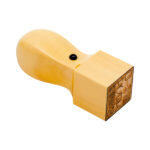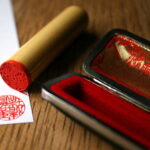


Most foreigners starting a job in Japan expect to sign a contract. What catches many of them off guard is that signing alone is often not enough. Depending on the company, the industry, and the HR department’s internal processes, you may be asked to stamp your employment contract, your commuter pass application, your health insurance enrollment form, and several other documents—all with a personal hanko—before your first day of work.
Knowing how to prepare for this ahead of time makes onboarding significantly smoother. A missing hanko on day one does not always derail the process, but it creates delays, follow-up requests, and occasionally real friction with HR staff who are already managing a full onboarding schedule. For a foreigner trying to make a good first impression, it is an avoidable complication.
This guide covers which HR documents typically require a hanko, what type of seal to get first, how to handle your name in the right format, and how to time everything before your contract start date. Whether you are new to Japan or switching jobs after years here, the steps below will help you arrive ready.
What HR Documents May Need Stamping
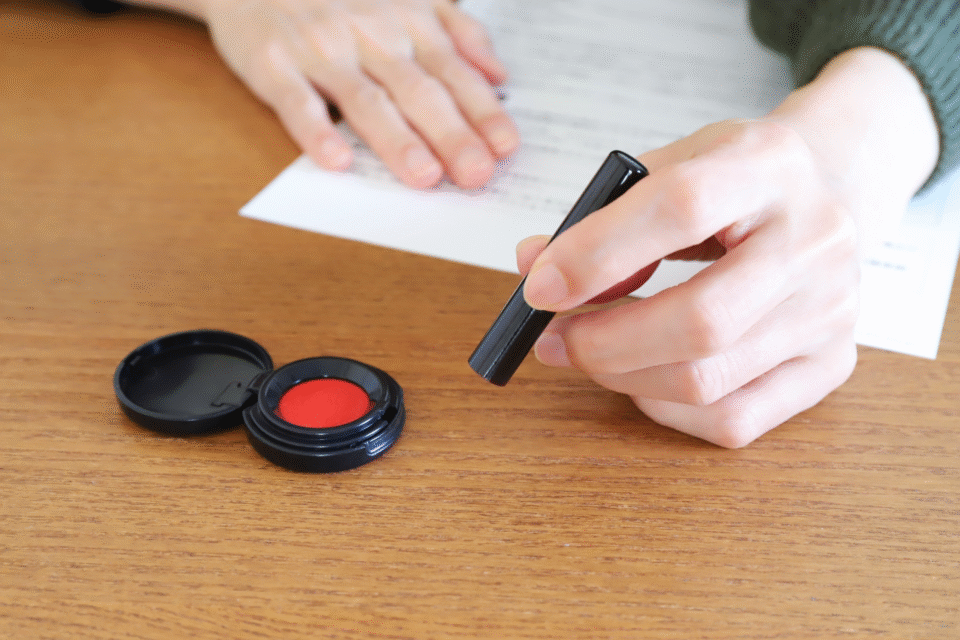
Not every company in Japan requires a hanko on employment documents—some have moved to digital signatures or accept a handwritten sign-off—but many still do, and traditional industries lean heavily toward physical seals. The specific documents vary by employer, but these are the ones that come up most often.
Employment contract (雇用契約書, koyō keiyakusho): This is the document most people think of first. Some companies require both parties—employer and employee—to stamp it. Others only require the company seal. Ask HR in advance, but be prepared to stamp your copy.
Resident card registration forms and address confirmation documents: If your employer is helping you with residence registration, or if they need your address confirmed for commuter allowance purposes, a hanko may appear on those internal forms.
Social insurance and pension enrollment (社会保険, shakai hoken): Enrollment forms for health insurance under the company plan and the employees’ pension (厚生年金, kōsei nenkin) sometimes require a personal seal impression.
Commuter pass application (通勤定期申請, tsūkin teiki shinsei): Many companies reimburse commuting costs but require a stamped internal form to process it. This is often one of the first forms HR hands you on day one.
Direct deposit bank authorization: If you are setting up salary payment to a Japanese bank account, the internal authorization form may require a stamp—sometimes the same stamp registered with your bank, sometimes just a daily-use seal.
Non-disclosure agreements and internal compliance documents: Depending on the industry, these may also require a personal impression.
A common scenario: a foreign teacher hired at a private language school in Nagoya receives a welcome email from HR two weeks before the start date. Attached is a PDF checklist. Buried in item six is a line: “Please bring your personal hanko on the first day for contract signing.” No further explanation. No specification of what type. If you have not prepared in advance, you are now ordering something under time pressure—or worse, showing up without it.
What Type of Hanko to Get First
For employment purposes, you do not immediately need a registered seal (実印, jitsuin)—the kind registered at your municipal office. What most HR departments ask for in an employment context is a mitome-in (認め印), a standard daily-use seal used for general documents that do not require formal verification.
Here is a quick breakdown of what matters for work onboarding:
Mitome-in (認め印): The everyday seal. Not registered anywhere. Used on internal company documents, commuter pass forms, general correspondence. This is the most practical starting point for any foreigner entering the Japanese workforce. Order this first.
Ginko-in (銀行印): Your bank seal, registered with your Japanese bank. If your employer’s HR process requires stamping bank authorization documents for salary payment, and your bank requires this seal specifically, you may need it ready before or shortly after your start date. Not always required on day one, but worth having early.
Jitsuin (実印): A registered seal, certified at the municipal office. Employment contracts at most companies do not require this level of formality. However, if you are signing a contract with unusually high stakes—an executive-level appointment, a document that requires a seal certificate—HR may ask for this. Rare at the entry and mid-level, but worth knowing.
The practical advice: order a mitome-in with your name in the correct format as soon as you have a job offer. It covers the majority of what HR will ask, and it is the easiest and fastest seal to obtain. If you don’t have the job yet, browse ComfysCareer for English-friendly openings and prepare your documents in parallel.
Name Format Alignment Tips
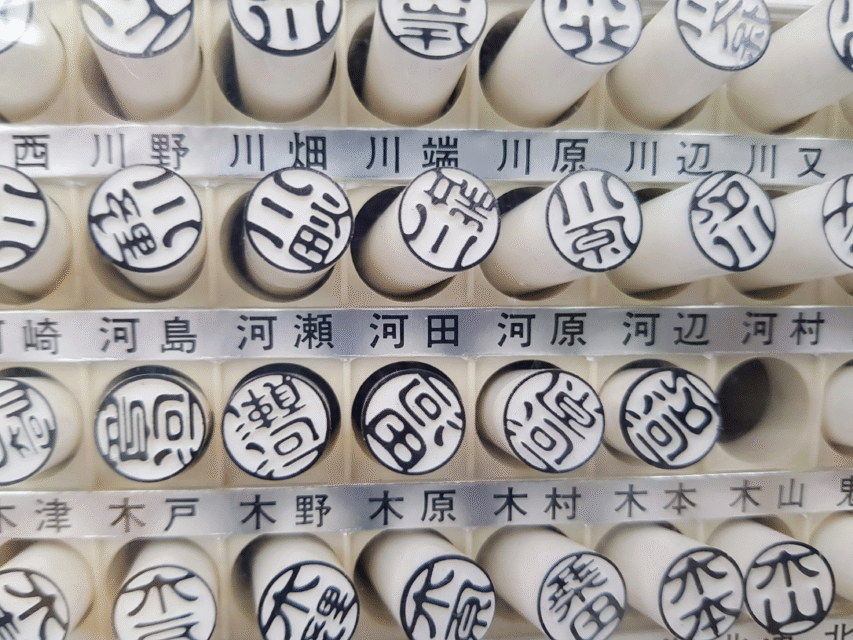
This is where many foreigners make a mistake that causes real problems—not immediately, but eventually. The name on your hanko should align with how your name appears on the documents you are stamping. In Japan, that usually means your name as it appears on your residence card (在留カード, zairyū kādo).
Katakana vs. kanji vs. romaji: Most foreigners living in Japan have their name rendered in katakana on their residence card. A hanko with your name in katakana is the standard and most accepted format for everyday use. Some foreigners with Chinese or Korean names may use kanji—check your residence card first.
Which part of your name to use: Japanese personal seals traditionally display the family name only, or in some cases the full name. For foreigners, seals using the family name in katakana are most common and most practical for employment purposes. Some HR departments are flexible; some are not. When in doubt, family name in katakana is the safest default.
Length limitations: Hanko faces are small. Very long foreign family names can be difficult to render legibly on a standard 10.5 mm or 12 mm seal face. A good seal maker will advise on sizing and layout, but if your name has more than six or seven katakana characters, discuss sizing options when ordering.
Consistency across documents: This is important. If your name appears as マクドナルド on your residence card and on your HR forms, your seal should reflect that spelling exactly. Inconsistencies between documents—even minor ones—can create confusion when HR is filing your paperwork, and in formal contexts, a seal impression that does not match other identity documents can raise questions.
A quick scenario: a British engineer starts a job in Osaka. Her family name in katakana is six characters. She ordered a seal using a slightly different romanization she found on an old document. HR’s enrollment form has the katakana from her residence card. The names look different. HR sends the form back and asks her to clarify. Two days of back-and-forth, all because the katakana on the seal did not match the residence card. Confirm the exact spelling before you order.
Timeline: Before First Day
Getting your hanko ready for employment is not complicated, but it does require some lead time. Here is a practical timeline to work from once you have a confirmed job offer.
As soon as you have your offer letter:
- Confirm with HR whether a hanko is required for your contract and onboarding documents
- Ask specifically what type of seal they expect (mitome-in is almost always sufficient)
- Check your residence card for the exact katakana spelling of your name
Two to three weeks before your start date:
- Order your mitome-in with name in katakana matching your residence card
- If you do not yet have a Japanese bank account, begin that process—some banks require a seal at account opening
- Consider ordering a bank seal (ginko-in) at the same time if you are also setting up a new account
One week before your start date:
- Confirm your seal has arrived and test the impression on plain paper
- Verify the characters are legible and complete—no ink gaps, no blurred lines
- Check that the impression matches what you told HR to expect (if they asked)
Day before your start date:
- Pack your seal in its case alongside your other onboarding documents
- Bring your residence card, any requested identification, and your hanko together
On your first day:
- Do not press your seal until you have read what you are stamping
- If HR asks for a stamp on a document you do not fully understand, it is entirely reasonable to ask for a translation or explanation before stamping
Checklist for hanko employment readiness:
- Residence card checked for exact name spelling
- Mitome-in ordered with correct katakana
- Seal arrived and impression tested on paper
- Bank seal ordered if new account is needed
- Seal stored in its case and packed with onboarding documents
- HR confirmed on what type of seal is expected
FAQ
Do all companies in Japan require a hanko for employment contracts? No. Many modern companies, startups, and foreign-affiliated firms have moved to digital signatures or accept a handwritten signature. However, many traditional Japanese companies—manufacturing, finance, education, government-adjacent roles—still expect a physical seal. Always ask HR in advance rather than assuming.
What if I arrive on my first day without a hanko? HR will usually ask you to bring it the following day or to stamp any pending documents as soon as you obtain one. It is not a catastrophic situation, but it creates a to-do item that follows you into your first week. Better to have it ready.
Can I use a signature instead of a hanko? Some companies accept both. Others specify one or the other. On formal employment contracts, if the company has a hanko requirement, a signature alone may not be sufficient to close the document. Clarify with HR before your start date.
Does my hanko need to be registered for employment purposes? For most employment documents, no. A mitome-in—unregistered, standard daily-use seal—is sufficient. Registered seals are generally only needed for higher-stakes legal documents.
What size hanko should I order for work? Standard sizes for personal seals are 10.5 mm and 12 mm. Either works for employment documents. Some people prefer 12 mm for slightly better legibility with longer katakana names. Your seal maker can advise based on your name length.
Can I use the same hanko for work and for my bank? Technically yes, but it is not recommended. If you use the same seal for both, changing it later—if it is lost or damaged—means updating both your bank registration and any work-related records simultaneously. Keeping them separate is cleaner.
What if my name is very long in katakana? A good seal maker will work with you on layout. Options include using only the family name, adjusting the seal diameter, or using a vertical layout that accommodates more characters. This is a common request for foreign names—do not hesitate to ask.
How long does it take to receive a hanko after ordering? Standard production is typically three to seven business days. Some providers offer faster turnaround. Plan to order at least two weeks before your start date to allow time for shipping and any issues.
Next Steps

Your employment contract is one of the most important documents you will sign during your time in Japan. Arriving at HR with the right seal, correctly made, and ready to use is a small thing that signals you understand how things work here—and that counts for more than most foreigners realize. HankoHub offers fast, English-friendly ordering for personal seals in katakana, kanji, and other formats suited to foreign residents. Whether you need a standard mitome-in for your first job or a full set for a longer stay, you can order confidently at HankoHub and have your seal ready well before day one.