
Working in Japan as an engineer means navigating two worlds at once. On one side, a technically sophisticated industry that moves fast and expects precision. On the other, an administrative culture where paper forms, physical stamps, and in-person sign-offs still carry real weight. If you are joining a Japanese tech company — whether a large enterprise, a mid-size manufacturer, or a startup with traditional management — working in Japan engineer paperwork will become part of your routine faster than most recruiters mention during the interview process.
The hanko, Japan’s personal seal, is not just a historical artifact. In corporate settings, it remains embedded in approval workflows, contract execution, and internal sign-off chains. For engineers specifically, the documents that pass across your desk tend to carry more consequence than a leave request: NDAs, vendor agreements, project scope sign-offs, and employment addenda. Getting a stamp sorted early is not just convenient — it is a quiet signal that you understand how things work here.
This guide covers the practical reality of hanko use in engineering roles in Japan, which documents you are likely to encounter, how to choose the right seal, and how to order one that fits your situation as a foreigner.
Context and why it matters
Japan’s corporate approval culture has a name: ringi. It refers to the process of routing a document upward through a chain of stakeholders, each of whom stamps their approval before a decision is finalized. In many Japanese companies, nothing moves until the right people have stamped. Engineers are not usually the most senior signatories in this chain, but they are often required to stamp their own documents — confirming receipt, agreeing to terms, or acknowledging deliverables.
This system exists across industries, but it is particularly entrenched in manufacturing, hardware, and traditional IT firms. If you are joining a Japanese semiconductor company, an automotive supplier, a large systems integrator, or even a subsidiary of a global firm that has absorbed Japanese management practices, you will encounter ringi-style workflows. Even companies that have partially digitized their approval processes often retain physical stamps for certain categories of document, particularly legal agreements and HR paperwork.
The cultural dimension matters too. Arriving at a new job with your own hanko ready is read as preparation. It tells your colleagues and your administrative team that you did not treat your move to Japan as an adventure but as a professional transition. That impression compounds over time. Small things carry weight in Japanese corporate culture, and a personal stamp is one of the smallest things that signals the most.
Find tech roles for foreigners via ComfysCareer and prepare your documents early.
What documents may require a stamp
The range of documents requiring a stamp in an engineering role depends on the company, the industry, and whether you are employed directly or through a contracting agency. The following categories come up consistently.
Employment and onboarding documents:
- Employment contracts and any amendments or role changes
- Confidentiality agreements and NDAs signed on joining
- Intellectual property assignment agreements, common in R&D and product roles
- Probationary period acknowledgment forms
- Salary confirmation slips at some companies
Ongoing work documents:
- Internal approval forms routed through the ringi process
- Project kickoff documentation at some firms
- Vendor and client agreement acknowledgments
- Equipment and asset receipt confirmations
- Expense claims and reimbursement requests
External and legal documents:
- NDAs signed before client meetings or partner discussions
- Subcontracting agreements if you work across teams or companies
- Government or compliance-related declarations at regulated firms
Life admin that intersects with work:
- City hall registration and national health insurance enrollment
- Bank account paperwork, often needed before your first salary can be paid
- Housing lease agreements, particularly in company-arranged housing
A realistic scenario: you are a software engineer starting at a Tokyo-based systems integrator. Your first week involves an employment contract, an IP agreement, a company laptop receipt form, and a health insurance enrollment document. The HR team hands you a small pile and gestures toward the stamp fields. If you do not have a hanko, someone will lend you one, enter a note in the file, and you will spend your first social capital on an administrative workaround. It is a minor moment, but it sticks.
A second scenario worth flagging: contract engineers and派遣 (haken) workers — those placed through staffing agencies — often sign documents on both sides of the relationship: with the agency and with the client firm. The volume of stamp-required paperwork can be higher in this arrangement than in direct employment. Getting ahead of it matters more, not less.
Common mistakes:
Assuming your company has gone fully digital is the most common misjudgment. Japan has been actively reducing mandatory hanko use for certain government procedures since around 2020, and some forward-thinking tech firms have eliminated stamps from internal workflows. But “some” is not “most,” and assuming is riskier than checking. The safest approach is to order a hanko before your start date and confirm with HR whether they expect one. If they do not, you have spent very little. If they do and you do not have one, the first impression is set.
A second mistake is using a generic or placeholder stamp — the kind sold cheaply at convenience stores with common surnames. These are not your name. For anything that goes into a legal or employment file, a stamp that clearly represents you is the only appropriate choice.
Which hanko type and size to choose
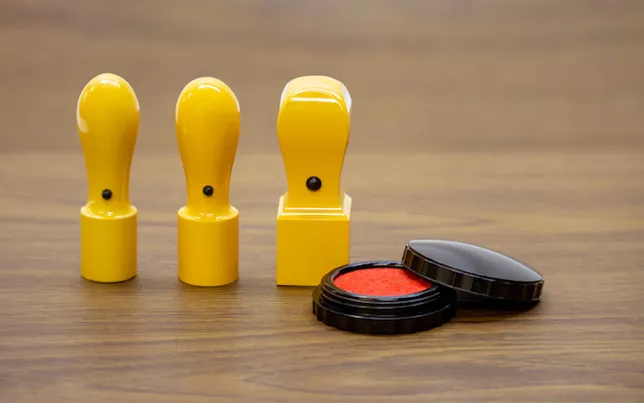
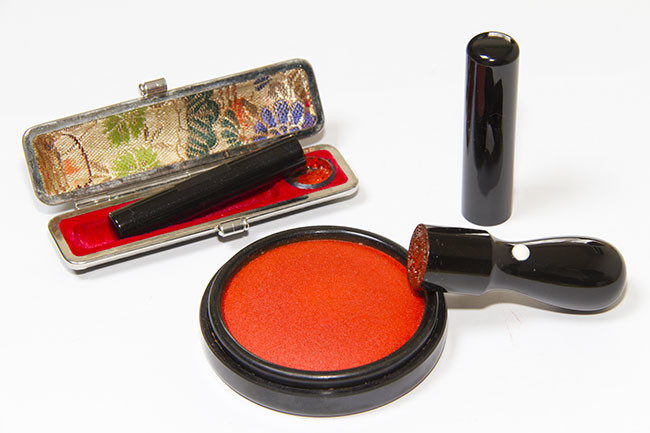
There are three main types of hanko in common use in Japan: the jitsuin (a registered seal, required for high-stakes legal transactions), the ginko-in (a bank seal), and the mitomein (an everyday unregistered seal for routine documents). For most foreign engineers navigating standard corporate paperwork, the mitomein covers the majority of real-world needs.
Mitomein for daily corporate use:
A mitomein does not need to be registered with the city office. It is appropriate for internal approvals, employment acknowledgments, expense claims, equipment receipts, and most NDAs and contracts at the document-acknowledgment level. For an engineer who needs a reliable, professional-looking stamp that covers the day-to-day range of corporate paperwork, a mitomein is the practical choice.
When a jitsuin may be needed:
If you are signing a property lease independently, purchasing a vehicle, or involved in any high-value legal transaction, a registered jitsuin may be required. This is a separate stamp that you register with your local ward or city office. It comes with an official certificate of seal registration (印鑑証明書). For most engineers in employment settings, jitsuin situations arise infrequently — but it is worth knowing the distinction exists.
Size:
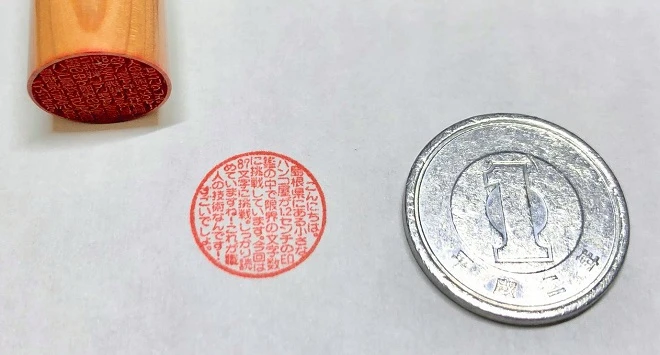
The standard size for a personal mitomein is 10.5mm or 12mm in diameter. For corporate paperwork, 12mm is slightly more common in professional contexts and tends to look more deliberate and substantial on formal documents. Either size works for typical form fields, but if you want a stamp that reads as professional rather than personal-casual, 12mm is a reasonable choice.
Name format for foreign engineers:
This is the most practically important decision for foreigners. Your options are:
- Katakana: The standard way to render foreign names in Japanese. Widely accepted, immediately recognizable to Japanese colleagues, and the most conventional choice for foreign nationals.
- Romaji: Your name in the Latin alphabet. Increasingly accepted, particularly at internationally oriented tech companies. Less traditional but entirely functional.
- A hybrid or shortened version: If your full name is very long, using your family name only — in katakana or romaji — is common and practical.
The single most important rule is consistency: your hanko should match the name on your employment contract, residence card, and other official ID. A mismatch between your stamp and your documents creates administrative friction that you will have to explain and resolve. Check what name your company has on file before ordering.
Checklist before ordering:
- Confirm the name on your employment contract and residence card
- Check with HR whether the company expects a hanko and in what format
- Decide on name script: katakana, romaji, or family name only
- Choose 12mm for a professional corporate appearance
- Select a durable material: resin composites or wood handle daily use without degrading
- Consider a self-inking case for convenience in offices where you stamp frequently
Ordering tips for foreigners
Ordering a hanko with a non-Japanese name used to require navigating a language barrier in a physical shop or relying on a Japanese-speaking colleague for help. Online services have changed this significantly. HankoHub is designed with foreigners in mind, including support for katakana transliteration of foreign names and romaji options, with an ordering process that does not assume you read Japanese.
Order before your start date. If you know your start date and the name on your contract, you have everything you need to order. Shipping times are short, but the week before starting a new job in a new country tends to fill up quickly. Ordering early removes one item from that list.
Match the name on your documents. It bears repeating: your hanko should reflect your legal name as it appears on your employment paperwork. For most foreigners in Japan, this is either your full name in katakana or your family name. If you are unsure how your name transliterates into katakana, HankoHub provides guidance during the ordering process.
Choose quality material. A corporate environment means your stamp will be used regularly and may spend time in a bag or desk drawer. Cheap plastic stamps degrade faster and produce inconsistent impressions — which matters when that impression appears on a legal document. A mid-range resin or composite stamp is durable, produces a clean mark, and is entirely appropriate for professional use.
Get an ink pad or self-inking case. Engineers tend to move between meetings, desks, and sometimes sites. A self-inking hanko case means you are not hunting for an ink pad before a sign-off. It also reduces the chance of a smeared or partial impression on a document that then needs to be reprinted.
Think beyond the first job. A mitomein you order now is not job-specific. The same stamp will work for bank paperwork, city hall visits, lease agreements, and your next employment contract. A small, professional, well-made hanko is a multi-year investment in the frictionless version of life in Japan.
FAQ
Do foreign engineers in Japan legally need a hanko?
Not always, and Japan has been reducing mandatory hanko requirements for some government processes. But in practice, most Japanese companies — especially larger firms, manufacturers, and traditional IT organizations — still expect stamps on employment documents and internal forms. The safest assumption is that you will need one. If your company turns out to be fully digital, you have lost nothing. If they are not and you are unprepared, the first week of your job becomes more complicated than it needs to be.
Can I use a signature instead of a stamp?
On some documents, yes. Japan’s administrative reform push has made handwritten signatures more acceptable on certain forms. In a corporate setting, though, documents with a dedicated stamp field (印鑑欄) generally still expect a stamp. Whether a signature substitutes depends on the specific document and the individual company’s policy. Ask your HR contact directly if you are unsure.
What is the difference between a mitomein and a jitsuin?
A mitomein is an everyday, unregistered personal seal used for routine paperwork. A jitsuin is a registered seal — you formally register it with your local ward office, and it comes with an official certificate (印鑑証明書) that can be requested as proof. Jitsuin are required for significant legal transactions like property purchases. For standard employment and corporate paperwork, a mitomein is almost always sufficient.
What is Japan NDA practice like compared to other countries?
NDAs in Japan are common in tech and engineering contexts, particularly before client meetings, partnership discussions, and project onboarding with external parties. They often require a personal or company seal alongside a signature. The content of NDAs in Japan is broadly similar to international practice, though Japanese-language agreements may use formal legal phrasing that benefits from translation. If your company operates in English, agreements may be bilingual. Either way, a stamp field is likely.
Can I use a katakana hanko even if my company uses English internally?
Yes. The name script on your hanko does not need to match the language your company communicates in. Katakana is the conventional way to render foreign names in Japanese administrative contexts, and it will be recognized and accepted regardless of whether your company’s internal culture is English-first. If you prefer romaji, that is also acceptable at many firms — but katakana is the safer conventional choice.
What if my name is difficult to transliterate into katakana?
This is a common concern and a solved problem. Using your family name only, or a shortened phonetic version of your given name, is entirely normal for foreigners using hanko in Japan. If your name has sounds that do not map cleanly into katakana, HankoHub can help you work through the transliteration when you place your order.
Next steps

The paperwork side of engineering work in Japan is manageable once you know what to expect. Getting a hanko sorted before your start date is one of the simplest things you can do to remove friction from the first weeks of a new role. Head to HankoHub to order a professional personal hanko in katakana or romaji, in the size and material that fits corporate use. A clean stamp, ready to go, is the kind of preparation that pays off quietly — exactly the way professional life in Japan tends to work.