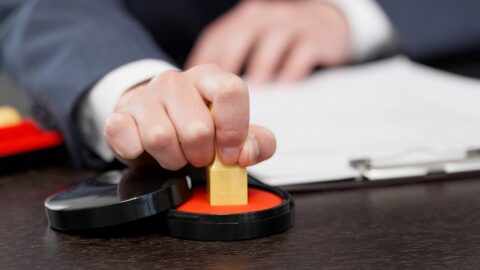


Most foreigners working at hotels in Japan expect a learning curve. New language, new customs, new workplace hierarchy. What they rarely expect is being stopped mid-shift by a piece of paper with an empty box labeled hanko — and no idea what to put in it.
The hanko requirement does not end after onboarding. For hotel staff in Japan, seals come up repeatedly throughout the working year, woven into the daily and monthly rhythms of Japanese workplace administration. A shift swap that needs documenting. An expense reimbursement form. A memo acknowledging a new internal policy. These are not rare events. They are the texture of working life at a Japanese hotel, and a personal seal is the tool that keeps things moving.
This guide focuses specifically on that ongoing reality: the daily and routine admin situations where hotel staff in Japan are asked for a seal, long after the employment contract has been signed and the dormitory agreement is filed away. If you are already working at a hotel in Japan and finding that the hanko question keeps reappearing, or if you are preparing for a hotel role and want to understand the full picture before you arrive, this is the reference you need.
Why This Segment Is Asked for a Seal
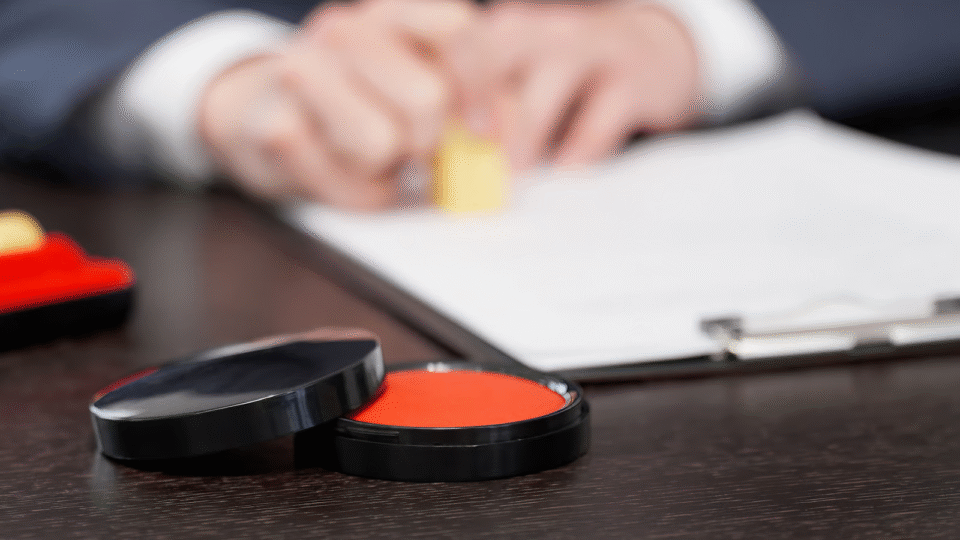
Japan’s hospitality industry has a particular relationship with paper-based processes. Compared to tech companies or international corporate offices, many hotel operations — especially mid-size Japanese chains, independent ryokan, and resort properties — rely heavily on physical documentation for internal workflow. That is not inefficiency for its own sake. It reflects a workplace culture that values traceable, accountable record-keeping, and in that culture, a hanko is the standard instrument of personal acknowledgment.
For hotel staff in Japan specifically, several features of the work environment keep the hanko in regular rotation.
Shift-based work generates ongoing paperwork. Hotels run on rotating shifts, and shift-based employment creates a steady stream of forms: schedule confirmations, overtime acknowledgments, shift swap requests, attendance corrections. Many of these circulate as physical documents and include a staff stamp field as confirmation of receipt or agreement.
Hotels are hierarchical and procedural by nature. Internal communications at many Japanese hotel operations follow a formal chain. A memo from management, a change in uniform policy, a revision to service procedures — these are often distributed as printed documents with a sign-off section. Stamping that section is how staff confirm they have read and understood.
Expense and reimbursement processes often remain paper-based. Staff who purchase supplies, cover transportation for work purposes, or handle petty cash are commonly asked to submit stamped reimbursement forms. A signature alone is sometimes not accepted at properties where hanko culture is embedded in finance procedures.
The physical nature of hotel work keeps digital alternatives limited. In industries where staff spend their days at computers, digital signatures and paperless workflows are easier to implement. Hotel staff are on their feet, moving between departments, often away from a desk entirely. Paper forms remain practical in this environment, and hanko culture persists with them.
The result is that for a foreigner working at a hotel in Japan, the hanko is not a one-time administrative hurdle. It is a recurring practical tool.
Common Documents and Timelines
Unlike the onboarding phase where documents arrive in a concentrated burst, daily admin paperwork appears throughout the year in patterns tied to the hotel’s operational calendar. Here is what to expect and when.
Weekly and monthly:
- Attendance and timesheet confirmation forms at properties that still process these on paper
- Shift schedule acknowledgment sheets
- Overtime or extra hours approval forms
- Internal memos requiring staff sign-off
As needed:
- Shift swap request forms between staff members
- Expense reimbursement submissions
- Equipment or uniform request forms
- Incident or accident report forms, which commonly require the involved staff member’s seal
- Internal transfer or role change documentation
Seasonally or annually:
- Renewal of internal agreements such as locker assignments or parking permits
- Policy update acknowledgment forms distributed at the start of a new fiscal year
- Bonus confirmation documents at some properties
- Re-enrollment confirmations for company benefits
A realistic scenario: Lucas had been working at a hotel in Kyoto for three months when his department introduced a new service protocol. The manager distributed a two-page memo to all front desk staff and asked each person to stamp the acknowledgment section at the bottom. Lucas was the only one who did not have a hanko at his workstation. He borrowed one from a colleague — a Japanese name seal that clearly did not match his own — and the manager quietly asked him to get his own seal before the next memo round.
Another scenario: Fatima worked at a resort in Hokkaido and submitted a shift swap request with a colleague. The form had two hanko fields — one for each staff member. Her colleague stamped immediately. Fatima had to write her name by hand in the box and add a note explaining she did not have a seal yet. The form was accepted, but her supervisor mentioned that hanko were standard for all staff and she should have one. It was not disciplinary, but it was uncomfortable.
These scenarios are not dramatic. That is the point. The hanko requirement in daily admin is low-stakes individually but cumulative. Not having one creates small friction repeatedly, across the entire length of your employment.
Recommended Hanko Type and Size
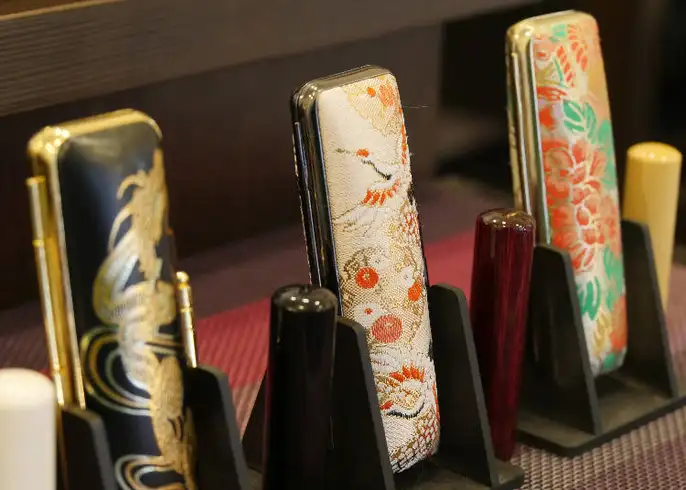
The good news is that daily admin paperwork requires the simplest and most affordable type of hanko available. There is no need to overcomplicate this.
Type: Mitomein (認め印) This is the everyday personal seal, and it is entirely appropriate for the full range of daily admin documents a hotel staff member encounters. Attendance forms, memos, shift requests, reimbursements — none of these require a registered or high-grade seal. A clean, readable mitomein is the right tool.
Size: 10.5mm For daily admin purposes, 10.5mm is the most practical size. It fits neatly into the stamp boxes on standard internal forms, which are often smaller than those on official legal documents. If you already have a 12mm seal from onboarding, it will work for most forms — but 10.5mm is the smoother fit for everyday workplace use.
Material: Resin Resin seals are durable, consistent in impression quality, and affordable. For a seal that will be used regularly across a working year, resin holds up well and produces clean stamps. There is no practical benefit to a premium material for this application.
Name format: Katakana For daily admin in a Japanese workplace, katakana is the most universally understood and accepted format for a foreign name. Colleagues and managers can read it, it fits standard stamp boxes cleanly, and it signals that you have made the effort to integrate with local convention. Romaji works at many hotels, particularly those with international management, but katakana is the safer default if you are unsure.
Common mistakes to avoid:
- Using a shared or borrowed seal from a Japanese colleague — this creates a mismatch between the name on the form and the seal impression, which can cause the document to be rejected or questioned
- Keeping your hanko only at home — for daily admin, it needs to be with you at work, either in your locker or on your person
- Using an ink pad that bleeds or smears — low-quality ink pads produce unclear impressions that can cause forms to be returned; use a standard vermillion shuniku pad
- Stamping too hard or at an angle — a clear, level impression matters more than people expect; practice on scrap paper before stamping official documents
- Assuming a digital signature will substitute — some hotels have adopted digital workflows, but many have not; confirm with HR before assuming your phone signature will be accepted on internal forms
Ordering Tips in English
The practical challenge for many foreign hotel workers is that ordering a custom hanko in Japan traditionally meant visiting a local stamp shop and communicating in Japanese. That barrier has largely been removed for those who know where to look.
HankoHub offers a fully English ordering process designed with foreign residents in mind. You select how your name is rendered, choose your size and material, and have the seal delivered to your address in Japan. For someone already managing the demands of a new job and a new country, this is a straightforward solution without the language stress.
Practical tips for ordering with daily admin use in mind:
- Order sooner rather than later. If you are already working and realizing you need a seal, order immediately. Daily admin forms do not wait for convenient timing.
- 10.5mm is the right size for workplace forms. Specify this when ordering if you want the most versatile option for internal hotel documents.
- Use your family name in katakana. This is the standard format for foreigners in Japanese workplaces and produces a clean, professional-looking seal.
- Keep a small ink pad at your workstation. A compact vermillion pad stored in your locker or desk means you are always ready when a form appears. Larger pads are fine at home; bring a travel-size one to work.
- Order a second seal if you tend to lose things. Having a backup at home while keeping one at work is a practical habit for people who use their seal regularly.
If you are still looking for the right role, ComfysCareer is a solid starting point for foreigner-friendly jobs in Japan.
FAQ
I already stamped my onboarding documents. Do I really need a hanko for everyday admin too? Yes, if you are working at a hotel that uses paper-based internal processes. Onboarding documents are a one-time event. Daily admin forms appear throughout your employment. If your workplace uses hanko for internal paperwork — and many Japanese hotel operations do — you will need your seal on a regular basis.
Can I just write my name in the hanko box if I do not have a seal? Some supervisors will accept this, especially for minor internal forms. Others will not, and repeated instances create a pattern that reflects poorly on your professional preparedness. Having a seal and not needing it for a particular form is a far better position than needing one and not having it.
What if I work at an international hotel brand with more modern processes? International brands operating in Japan vary. Some have moved to fully digital internal workflows. Others maintain paper-based processes in their Japanese operations because local staff and long-established procedures expect it. Ask HR or a senior colleague what the standard practice is at your specific property.
My seal impression came out smudged on an important form. What should I do? If the form allows it, re-stamp cleanly in the same box or immediately adjacent. If the smudge has made the form unclear, ask HR for a replacement form and re-stamp carefully. Practice your technique — consistent pressure, level contact, and good ink coverage — to avoid this on future documents.
How do I transport my hanko safely to and from work? A small hanko case or cap-style holder keeps the seal protected and the ink pad separate. Most hanko come with a cap. For daily commuting, a compact case that holds both the seal and a small ink pad is practical and widely available at Japanese stationery shops and online.
Does it matter which direction I stamp? For everyday mitomein use, there is no strict rule on orientation — the seal is round and the impression is the same regardless of rotation. What matters is that the impression is clear, complete, and legible. Some people align their seal so the name reads in a consistent direction as a personal habit, but it is not a formal requirement for daily admin documents.
What if a colleague uses my hanko by mistake? For a mitomein, this is an awkward situation but not a legal one. Retrieve your seal, clarify with your colleague, and if a document was stamped incorrectly, inform HR so it can be corrected. This is another reason to keep your seal with you rather than leaving it accessible in a shared space.
Next Steps

Daily admin in a Japanese hotel moves on its own schedule, and the hanko requirement tends to appear at the least convenient moments — mid-shift, five minutes before a form needs to be submitted, right when you are trying to make a good impression. The simplest way to stay ahead of it is to have your seal ready before it comes up.
Visit HankoHub to order a personal hanko in English. A standard 10.5mm resin seal with your name in katakana covers the full range of daily workplace documents you will encounter as hotel staff in Japan. Order it, keep it at work, and stop having to explain yourself every time a form appears.