


Starting a new restaurant job in Japan comes with a particular kind of paperwork pressure. The hiring process moves fast — you might go from interview to first shift within a matter of days — and somewhere in that compressed timeline, HR will hand you a stack of documents that need to be completed before you can officially begin. If you’re a foreigner working in Japan for the first time, one item on that list will likely stop you cold: the hanko.
For most people outside Japan, the concept of a personal seal as a form of identity verification is entirely new. You’re used to signing your name. Japan’s administrative culture is used to stamps. The two systems coexist, and increasingly a signature is accepted in more casual contexts, but when it comes to formal HR onboarding documents at a Japanese employer, the hanko for restaurant staff in Japan remains a practical reality that is worth preparing for before your first day.
This guide explains exactly what you need to know: why HR asks for a seal, which specific documents are likely to require one, what kind of hanko to order, and how to get it sorted in English without any unnecessary complexity. Getting this right before your first shift removes one of the most common early friction points for foreign workers in Japan.
Why This Segment Is Asked for a Seal

The restaurant industry in Japan runs on fast onboarding. A chain izakaya, a ramen shop, a hotel restaurant, a family-owned café — all of them tend to process new hires quickly and expect paperwork to be completed within the first day or two. That speed sits in an interesting tension with Japan’s document culture, which is thorough, formal, and built around the assumption that employees have a personal seal ready to use.
The hanko functions as a verifiable personal identifier within Japan’s administrative systems. Unlike a handwritten signature, which can vary from day to day, a seal impression is consistent and traceable. Japanese employers — particularly in industries with high staff turnover like food service — use stamp fields on HR documents as a standard confirmation mechanism. When you stamp a document, you are formally acknowledging it in a way that carries weight within that system.
For foreign restaurant workers, there are a few specific reasons why this comes up more sharply than it might for other workers. First, restaurant HR departments often use standardized document templates that were designed with Japanese employees in mind. Those templates have stamp fields. HR staff processing dozens of employees don’t always have a modified workflow for foreigners, and asking you to stamp is simply the fastest path through their checklist.
Second, restaurant work in Japan frequently involves multiple employment arrangements running at once — a primary contract, a time-tracking system, a payroll registration, and sometimes a union or benefit enrollment form. Each of these may carry its own stamp requirement. By the time you’ve added them up, the absence of a hanko becomes a genuine administrative gap rather than a minor formality.
The concrete scenario looks like this: you’ve been hired at a restaurant in Osaka. Your manager tells you to come in Monday morning to complete paperwork before the lunch shift. You arrive, the HR coordinator lays out five documents, and three of them have a stamp field. You don’t have a hanko. The coordinator accepts your signature on two of them but says the employment contract needs a proper stamp. Your start is delayed by two days while you sort it out.
That is a real and common situation. It is also entirely preventable.
Common Documents and Timelines
HR onboarding in a Japanese restaurant environment tends to follow a recognizable pattern. The exact documents vary by employer, but the following come up consistently enough that every foreign restaurant worker should expect them.
Employment contract (koyo keiyakusho): This is the most important document in your onboarding stack. It outlines your hours, pay rate, contract term, and conditions of employment. Many Japanese employers — particularly those using standard templates — include a stamp field for the employee’s seal alongside the signature line. Timeline: day one, often before your first shift begins.
Tax withholding declaration (kyuyo shotoku sha no fuyo kojosha shinkokusho): This is the form that tells your employer how to calculate your income tax withholding. It is required by law and submitted at the start of employment. Stamp fields appear on some versions of this form depending on the employer’s template. Timeline: first week.
Social insurance enrollment forms: If your hours qualify you for shakai hoken (health insurance and pension through your employer), you will need to complete enrollment paperwork. These forms vary but sometimes include stamp requirements. Timeline: within the first two weeks, depending on when your employment status is assessed.
Payroll registration: Many restaurants register employees in a payroll system that involves a signed and stamped acknowledgment form, particularly where direct bank transfer authorization is involved. Timeline: first week, tied to bank account setup.
Internal rules acknowledgment (shugyo kisoku): Larger restaurant chains often ask new employees to sign and stamp a document confirming they have received and understood the company’s internal rules and code of conduct. Timeline: day one or day two.
A practical onboarding checklist for foreign restaurant workers:
- Hanko (mitomein, name in katakana or romaji)
- Hanko case and ink pad
- Residence card (zairyu card)
- My Number card or notification letter
- Passport
- Bank account details (or plan for opening one)
- Emergency contact information
- Enrollment details for previous health insurance if transferring
Having every item on this list ready before your first HR appointment means the paperwork moves at the speed your employer expects, not at the speed of your preparation gaps.
Recommended Hanko Type and Size
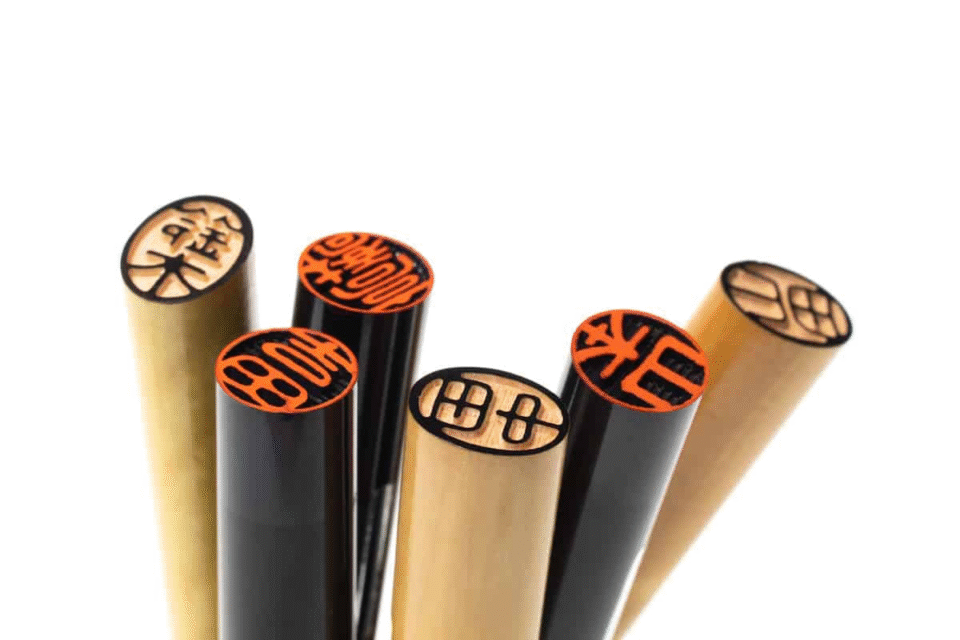
For HR onboarding as a restaurant worker, the appropriate hanko is a mitomein — an unregistered everyday personal seal. You do not need a registered seal (jitsuin) for employment documents. Registered seals are reserved for more significant legal transactions like property purchases or major contracts. Your employment paperwork does not reach that threshold.
Within the mitomein category, here is what to look for:
Size: 10.5mm is the standard for personal everyday use and fits cleanly in the stamp fields on Japanese employment documents. Some people use 12mm, which is also acceptable, but 10.5mm is the most practical default.
Material: Acrylic or plastic is entirely suitable for this purpose. The material conversation matters more for decorative or long-term investment pieces. For a working seal you’ll use on HR forms and bank documents, standard acrylic is durable and functional.
Name format: Your name in katakana, exactly as it appears on your residence card, is the most consistent choice. Katakana aligns with how your name exists in Japan’s official records, which matters when documents across different institutions need to be consistent. Romaji is accepted at some employers and banks, but katakana is the safer default if you want to avoid any questions.
Common mistakes to avoid:
- Ordering before checking your residence card. The katakana spelling of your name on your hanko must match the katakana spelling on your official documents. Even a single character difference can raise questions during HR processing.
- Choosing a highly stylized or difficult-to-read font. HR coordinators and payroll processors need to verify stamps quickly. A clean, legible impression causes no problems. An artistic design that looks different each time it’s stamped creates unnecessary friction.
- Waiting until your start date to order. Standard delivery takes several days. If you order the same week you accept a job offer, your hanko arrives before your first HR appointment.
- Assuming your employer will have a spare or that a signature will always suffice. Some employers are flexible. Many are not, particularly when using standardized document templates that were not designed with foreign employees in mind.
Ordering Tips in English
For foreign restaurant workers whose Japanese is limited or nonexistent, the challenge isn’t just getting a hanko — it’s getting the right one without making errors in the name, size, or format that create problems later.
HankoHub is designed specifically for this situation. The entire process runs in English: you select your size, choose your material, enter your name, and confirm your order without needing to navigate a Japanese-language interface or guess at terminology. For someone who has just arrived in Japan and is managing a dozen new administrative tasks at once, that simplicity has real practical value.
A few ordering tips to get it right the first time:
Use your residence card as your reference document. Before you type your name into any order form, look at your card. Note the exact katakana spelling. Enter that, not a version you’ve constructed from memory or a different romanization.
Select 10.5mm as your default size. Unless you have a specific reason to go larger, this size works for HR documents, bank forms, and everything else in the standard Japan paperwork stack.
Order when you accept the job offer, not when you start. The moment you know you have a job lined up, that is the right time to order. A few days of lead time is all you need, and it means the seal arrives before the paperwork does.
Confirm the case is included. Your hanko needs to be transported to your HR appointment without the ink pad getting damaged or the seal face getting scratched. A case solves both problems. Most orders from HankoHub include one, but verify before completing your purchase.
If you’re still looking for the right role, ComfysCareer is a solid starting point for foreigner-friendly jobs in Japan.
FAQ
Is a hanko actually required for restaurant HR paperwork, or can I use a signature? It depends on the employer. Larger international chains and some modern operators accept signatures from foreign employees. Many mid-size and smaller restaurants use standardized templates with stamp fields and expect them to be used. Having a hanko means you are never in the position of having to negotiate a substitution.
What if my employer says a signature is fine — do I still need a hanko? For HR onboarding specifically, possibly not. But you will almost certainly need a hanko for other Japan paperwork tasks — bank account opening, rental agreements, city hall registration — so getting one is worthwhile regardless of your employer’s flexibility on the employment contract itself.
Does my hanko need to be registered? No. For employment documents, a standard unregistered mitomein is appropriate. You only need a registered seal for more significant legal transactions, and even then, only when the other party specifically requires it.
What name should I put on my hanko? Your family name in katakana, exactly as it appears on your residence card. Surname only is the standard format for a mitomein. If your name is particularly long in katakana, a reputable hanko service will help you format it to fit the seal face correctly.
Can I use the same hanko for HR documents and other purposes? Yes. A personal mitomein is a general-purpose seal. The same stamp works for employment contracts, bank account paperwork, rental agreements, and any other standard administrative documents. One seal handles everything at the everyday level.
What happens if I stamp a document incorrectly — for example, the impression is smudged or off-center? In most cases, you stamp again next to the first impression and the HR coordinator notes the correction. It is not a serious problem. If the document is particularly formal, they may provide a replacement page. The key is to press evenly and firmly, and to check that your ink pad is adequately loaded before stamping important documents.
How long does it take to receive a hanko after ordering online? Standard domestic delivery within Japan typically takes three to seven business days. Expedited options are often available. Order as soon as you have a start date confirmed — that window is usually enough time for delivery before your HR appointment.
Next Steps

Your HR appointment will come faster than you expect. Restaurant employers move quickly once a hire is confirmed, and the paperwork window is short. The simplest thing you can do right now, if you have a job offer in hand or know you’ll be working in Japan soon, is order your hanko before anything else on your administrative checklist. Head to HankoHub, select a 10.5mm mitomein with your name in katakana, and have it ready before your first day. One small preparation removes one of the most common early complications for foreign restaurant workers in Japan.