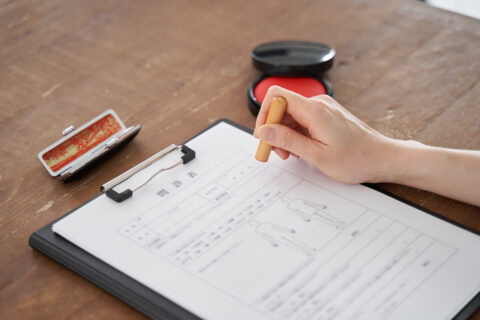


Opening a bank account in Japan as a working holidaymaker is one of those tasks that sounds straightforward until you’re standing at the counter and the staff member slides a form across the desk with a small circle printed near the bottom. That circle is where your hanko goes. If you don’t have one, the process stops — politely, apologetically, but completely.
Banking is one of the more bureaucratic corners of working holiday life in Japan, and it’s one where the hanko still holds genuine weight. While Japan’s financial sector has been modernizing, many banks — particularly the ones most accessible to working holidaymakers on a budget — continue to require a seal as part of account setup. Understanding this before you arrive saves you a wasted trip, a frustrating wait, and the scramble of finding a stamp shop in a city you’ve just landed in.
This guide focuses specifically on the banking side of hanko for working holiday in Japan. You’ll learn why banks ask for a seal, which institutions are most likely to require one, what type of hanko is appropriate, and how to order one in English so it’s ready when you need it. If you’ve already read our companion post on hanko for employment contracts, some of the groundwork will be familiar — but the banking context has its own quirks worth addressing separately.
Why This Segment Is Asked for a Seal
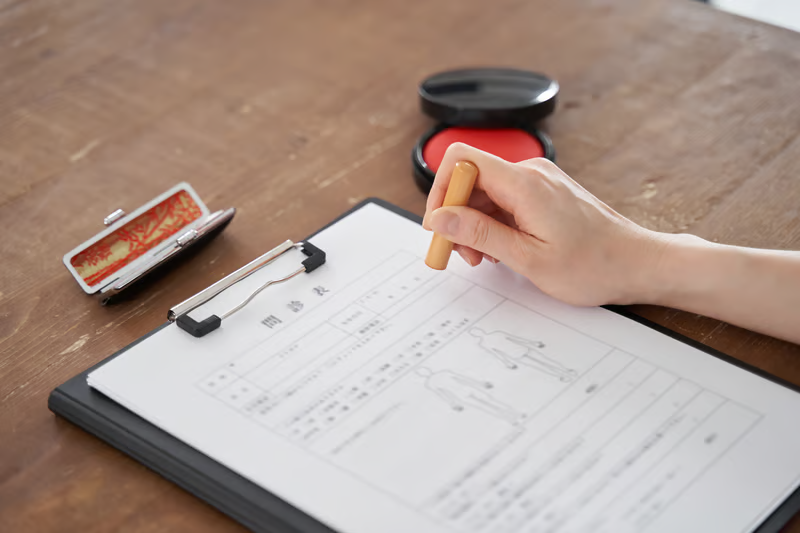
Japan’s banking system has deep roots in paper-based verification, and the hanko has functioned as a personal authenticator in that system for generations. When you open a bank account in Japan, the institution typically records the impression of your seal — this is called a tōin (登印), or registered seal impression — alongside your account details. When you later conduct certain in-branch transactions, that impression is used to verify your identity.
For working holidaymakers, the banking situation depends heavily on which bank you approach. Japan’s major banks fall into a few broad categories in terms of foreigner-friendliness, and the hanko requirement varies across them.
Japan Post Bank (Yucho) is historically one of the most accessible options for foreign residents, including working holidaymakers, because branches are everywhere — even in rural areas where you might be working on a farm or at a ski resort. Japan Post Bank commonly requests a hanko during account setup. Some branches may accept a signature from foreign applicants, but it’s not consistent, and arriving with a hanko removes the uncertainty entirely.
Regional banks vary widely. A regional bank in a town with a large seasonal foreign workforce — think Niseko in Hokkaido or certain agricultural areas in Aomori — may be more experienced with foreign applicants and more flexible. Others follow traditional procedures to the letter.
Digital and online banks like PayPay Bank or Rakuten Bank have largely moved away from the hanko requirement for account opening, but they come with their own barriers — Japanese-language interfaces, the need for a Japanese phone number, and sometimes a requirement to already have a Japanese address registered before applying. They’re workable solutions for some, but not always the easiest starting point for someone who just arrived.
The practical reason banks ask for a seal comes down to verification consistency. A signature can vary; a stamp impression, in theory, does not. For institutions still operating within traditional verification frameworks, the hanko is simply part of the intake process. It isn’t a policy designed to inconvenience foreigners — it’s a legacy system that remains active in parts of the banking sector regardless of the customer’s nationality.
One concrete micro-scenario: a working holidaymaker arrives in Sendai, takes a job at a hotel within the first week, and is told their salary will be transferred to a Japanese bank account. The employer gives them two weeks to set up an account. They visit the nearest Japan Post Bank branch, forms are filled in, and then the clerk asks for their inkan. They don’t have one. The branch is polite but firm — come back when you have a seal. That two-week window suddenly feels much shorter.
Common Documents and Timelines
Within the banking context specifically, here are the typical moments when your hanko becomes relevant during a working holiday.
Account opening form — the primary and most immediate requirement. If the bank uses a hanko-based system, this is where it shows up first. You’ll stamp the form and that impression will be registered against your account.
Seal registration card — some banks issue a separate card or internal record of your registered seal impression. You stamp this at the time of opening; it’s kept on file.
In-branch withdrawal or transfer forms — for certain over-the-counter transactions, particularly larger ones, some banks may ask you to stamp a transaction slip to verify your identity alongside your bankbook or card.
Account closure or modification paperwork — if you close the account before leaving Japan, or change your registered address, some banks include a hanko field on the relevant forms.
Timeline reality: the bank account requirement typically appears in your first two to three weeks in Japan, driven by employer payroll deadlines. Most Japanese employers pay by bank transfer, so getting your account set up fast is genuinely time-sensitive. This makes the hanko one of the items you want ready before you arrive — not something to sort out after you’ve already started work.
Working holidaymakers who plan to move between regions — spending three months on a farm, then a ski season, then a city stint — often find that their initial bank account setup is the most bureaucratically dense moment of the whole year. Getting the hanko sorted early means it’s simply done, and you carry it with you as needed.
Recommended Hanko Type and Size
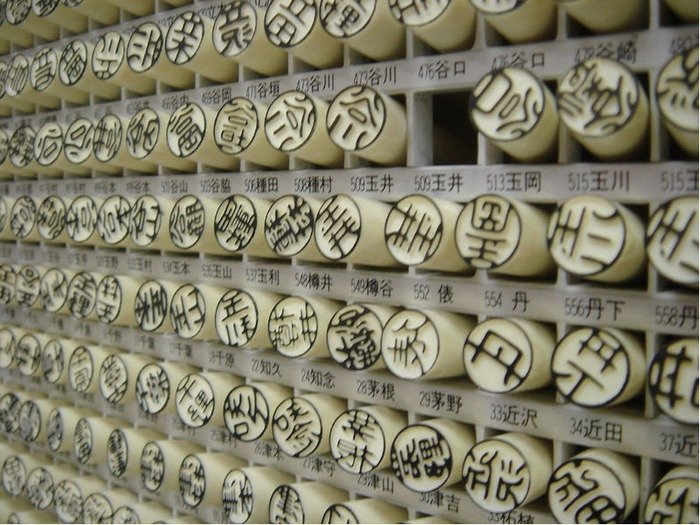
For bank account setup during a working holiday, a mitome-in (認め印) is the appropriate choice in most cases. This is the everyday personal seal — unregistered with any government office — and it’s suitable for bank account opening at the institutions most commonly used by working holidaymakers.
You do not need a jitsu-in (実印) — the formally registered seal used for property transactions and major legal contracts. Unless you’re doing something well outside the scope of a working holiday, this level of seal is not required.
Size: 10.5mm to 12mm in diameter is the standard range for a personal mitome-in and fits the seal impression fields on standard banking forms without issue. Stick within this range.
Material: Wood, acrylic, or resin are all appropriate for everyday banking use. There is no need to invest in premium materials like water buffalo horn or titanium for a mitome-in used in this context.
Name and script: For foreign applicants, having your family name rendered in katakana is the conventional approach and the one most readily understood by bank staff across Japan. If your name is long or phonetically complex in Japanese, a shortened katakana version is acceptable — hanko makers handle this regularly and can advise you. Some English-language hanko services also offer romanized options, though katakana is generally the safer choice for official documents and banking.
Common mistakes in this category:
- Choosing too large a size — anything above 15mm starts to look like a more formal official seal, which can create confusion rather than confidence in a banking context.
- Ordering a highly decorative or stylized script — the impression needs to be legible and consistent. Overly artistic characters can look different each time they’re stamped, which undermines the whole point.
- Assuming any stamp will do — a rubber stamp from a stationery shop is not equivalent to a proper hanko. Banks that require a seal expect a solid-material stamp that produces a clean, consistent impression.
- Leaving the hanko at your accommodation — once your account is open, carry your hanko with you when you’re doing any in-branch banking, especially for the first few months while you’re still getting settled.
Ordering Tips in English
The most practical approach for working holidaymakers is to order a hanko in English before leaving home. By the time you’re dealing with bank account paperwork, you’ll already have enough on your plate — accommodation, tax registration, employer onboarding — without adding a trip to a Japanese stamp shop where the interaction will likely be in Japanese only.
Here’s a simple checklist for ordering efficiently:
- Start the order at least ten to fourteen days before departure to allow production and shipping time
- Decide on your name input — family name in katakana is the standard choice for banking; confirm with the maker if you’re unsure
- Specify the use case — mentioning that you need a mitome-in for bank account setup helps the maker recommend the right size and style
- Choose a practical size — 10.5mm or 12mm works well for banking forms
- Select a readable script style — legibility over decoration
- Confirm the material — wood or resin is fine; no need for premium materials
- Check shipping lead times — international shipping can add several days depending on your location
HankoHub processes orders in English and handles foreign name conventions as a standard part of the service. You won’t need to figure out the katakana yourself or guess at sizing — the process is designed for exactly this kind of practical, pre-departure order.
If you’re still looking for the right role, ComfysCareer is a solid starting point for foreigner-friendly jobs in Japan.
Once your hanko arrives, store it in its case and pack it with your important documents — passport, visa paperwork, residence card once you have it. Treat it as part of your essential Japan kit.
FAQ
Do all Japanese banks require a hanko to open an account? No. Digital banks and some newer financial services have moved to signature-based or fully online onboarding. However, the banks most physically accessible to working holidaymakers in regional and rural areas — particularly Japan Post Bank — commonly still ask for a seal. Having one means you’re covered regardless of which institution you end up using.
Can I use a signature instead of a hanko at a Japanese bank? Some banks accept signatures from foreign nationals, and this has become more common in recent years. But it’s inconsistent across branches and institutions. A bank in a city with a large international population may be more flexible than one in a smaller town. Relying on signature acceptance as your plan is a gamble during a time-sensitive payroll setup.
What if I open my account with a signature and later need a hanko? If your account was opened with a signature on file, you typically won’t need a hanko for subsequent banking with that institution. The problem arises when the bank requires a seal at opening and you don’t have one — that’s when the process stalls.
Is the hanko I use for banking the same one I’d use for employment contracts? Yes. A single mitome-in is appropriate for both. You don’t need separate hanko for different document types at the working holiday level.
What happens to my hanko impression if I close my account? When you close a Japanese bank account, the registered impression is removed from the bank’s records. Your physical hanko remains yours — you can use it for other purposes or keep it as a souvenir of your time in Japan.
Can I order a hanko after arriving in Japan? You can visit a stamp shop (hanko-ya) in person, and larger cities have several options. The challenge is that the interaction will almost always be in Japanese, turnaround time varies, and you may need to wait one to three days for production — time you may not have during a busy first week. Ordering in English before you arrive is the more comfortable option.
What if my name doesn’t transliterate cleanly into katakana? This is more common than you’d think, and hanko makers deal with it regularly. Names with sounds that don’t exist in Japanese phonetics are adapted using the closest katakana equivalents. English-language services walk you through this as part of the order process.
Next Steps

Bank account setup is one of the first real administrative tasks of working holiday life in Japan, and it moves faster than most people expect once an employer is waiting on payroll details. Having your hanko ready before that moment — rather than during it — is one of the simplest ways to start the year smoothly. Head to HankoHub to order a practical mitome-in in English, with your name in katakana, sized and styled for everyday Japan paperwork. Ship it before you fly, and arrive ready.