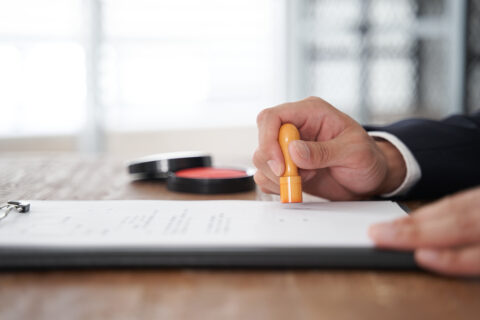

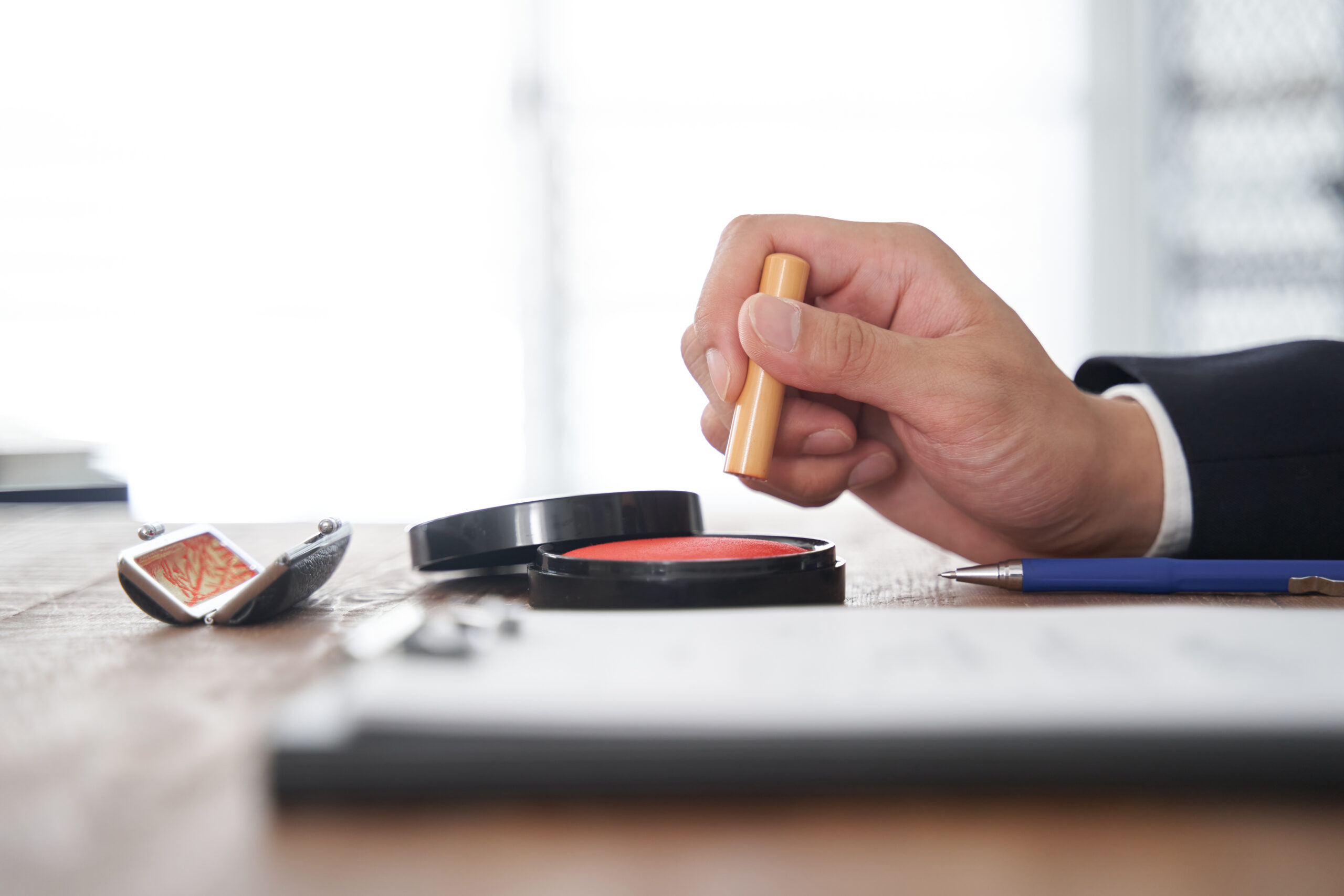
If you’re freelancing in Japan as a foreigner, paperwork has a way of catching you off guard. You expect invoices, contracts, maybe a tax form or two. What you might not expect is someone sliding a document across a desk and waiting for you to press a seal onto it. That moment — the first time someone asks for your hanko — tends to land differently when you don’t own one yet.
Hanko for freelancers in Japan is not an edge case. It is a regular part of working life, especially once you start dealing with Japanese clients, signing lease agreements for a workspace, or opening a business bank account. The stamp is not ceremonial here. It carries real administrative weight, and not having one can stall straightforward processes by days or weeks.
This guide is written for freelancers specifically — not salaried employees who get handed a company seal, and not large business owners with a full set of corporate stamps. You are an individual operating in Japan, and you need to understand which documents actually require a seal, what type of hanko makes sense for your situation, and how to get one ordered without navigating a Japanese-only website.
By the end, you will know exactly what you need, why you need it, and where to get it.
Why This Segment Is Asked for a Seal
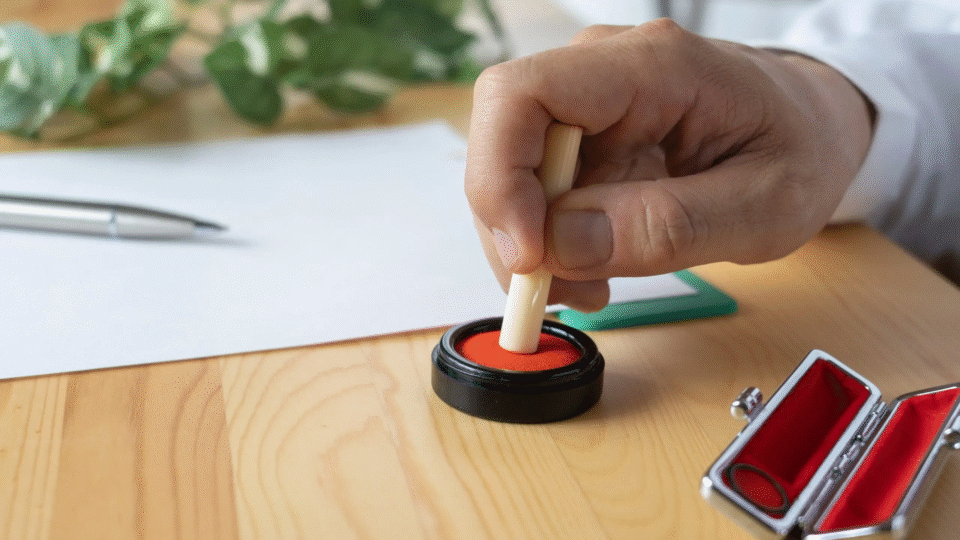
Freelancers in Japan occupy a particular administrative space. You are not employed by a company, so no one hands you onboarding documents with a corporate seal already applied. You are the signatory on everything — service contracts, lease agreements, client invoices, bank paperwork, and in some cases, city hall registrations.
Japanese document culture still treats a personal seal as a meaningful form of identity verification. While signatures have become more accepted in some contexts, many Japanese institutions — banks, real estate agencies, local government offices — continue to default to seals as the standard. When a Japanese client or landlord presents you with a contract, they are often working from a template that was never designed to accommodate a signature in place of a stamp.
Here is a realistic scenario: you land a steady contract with a mid-sized Japanese company to handle their English content. Before the first payment is processed, their accounting department sends over a contractor agreement. It has a small circle printed at the bottom next to your name. That circle is waiting for a seal. Sending back a scanned signature may work — or it may prompt a polite but firm request to please affix your inkan and resubmit. This is not unusual.
Another common situation involves renting workspace. Even short-term office or desk rentals in Japan sometimes include contracts that expect a personal seal. If you are renting a monthly co-working room or a private studio, the agency may request your hanko at signing.
The administrative logic behind all of this is consistency. A seal looks the same every time. It is associated with a registered identity. For institutions that process hundreds of documents, it removes ambiguity. As a freelancer, accepting this early rather than pushing back against it saves you time.
Common Documents and Timelines
Understanding which documents require a seal — and when in your freelance timeline you are likely to encounter them — helps you plan ahead rather than scramble.
Documents that commonly require a hanko:
- Freelance service contracts with Japanese clients
- Bank account opening forms (especially business accounts)
- Lease agreements for office or studio space
- City hall procedures, including tax registration as a sole proprietor (kojin jigyo nushi)
- National Health Insurance or pension-related forms
- Invoice templates used by certain Japanese companies (some clients provide their own format)
- Utility setup agreements when renting a dedicated workspace
Approximate timeline for when these tend to appear:
Most freelancers first encounter the hanko question within their first three months of active work in Japan. The trigger is usually a first formal contract with a Japanese client or an attempt to open a business bank account. Tax registration at the local ward or city office often comes next, typically around the first April following the start of freelance income.
A common mistake here is assuming that bank account opening can wait. It often cannot. Some Japanese clients will only process payment into a Japanese account, and certain banks require a registered seal — specifically a jitsuin or at minimum a reliable personal stamp — before they will proceed. Starting the hanko process before you actively need it is almost always the better decision.
If you are still looking for the right role or transitioning into freelance from employment, ComfysCareer is a solid starting point for foreigner-friendly jobs in Japan.
Recommended Hanko Type and Size
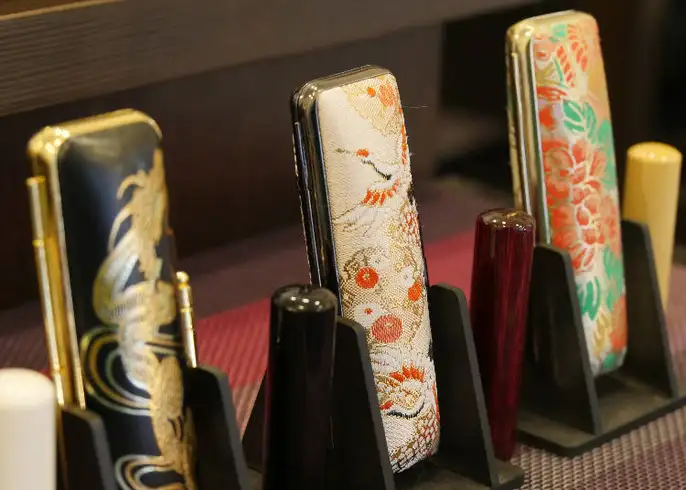
As a freelancer, you do not need a full set of corporate seals. You need one or two practical stamps that cover the range of everyday administrative documents.
The personal hanko (mitomein or ginko-in):
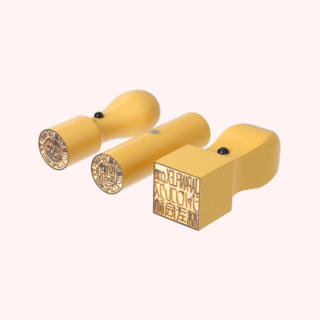
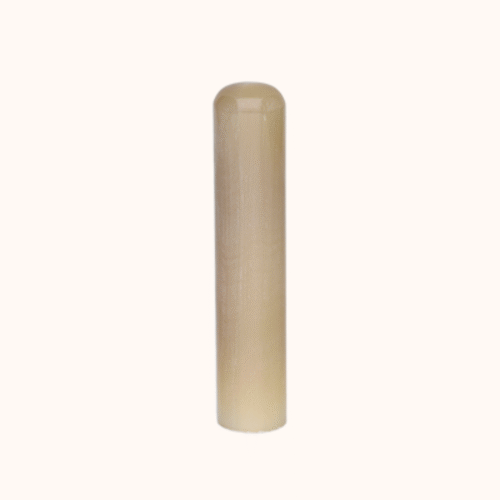
For most day-to-day freelance paperwork, a standard personal hanko is sufficient. This is the stamp you use on contracts, invoices, and general correspondence. It is typically 10.5mm to 12mm in diameter for individuals. Your name is carved into the face of the stamp, usually in katakana if your name is non-Japanese, though some providers offer Roman alphabet carving.
The bank seal (ginko-in):
Some freelancers choose to register a separate seal specifically for banking. This stamp is registered with your bank and used exclusively for financial documents. It does not need to be formally registered with the government unless your bank requires a jitsuin (the officially registered seal). In practice, many regional banks and some major banks accept an unregistered personal seal for account opening, but this varies. Check directly with your bank before assuming either way.
What about a jitsuin?
A jitsuin is a seal formally registered at your local city or ward office. Registration creates an official link between your identity and that specific stamp. Some high-value contracts and certain real estate transactions require a jitsuin along with a inkan shomeisho (seal certificate). For most standard freelance contracts and everyday paperwork, however, an unregistered personal hanko is commonly accepted. Unless you are signing high-value agreements regularly, you may not need to register your seal immediately.
Size and material:
- 10.5mm is a practical all-purpose size for personal use
- 12mm works well if you want slightly more presence on larger document spaces
- Acrylic and resin handles are durable and affordable
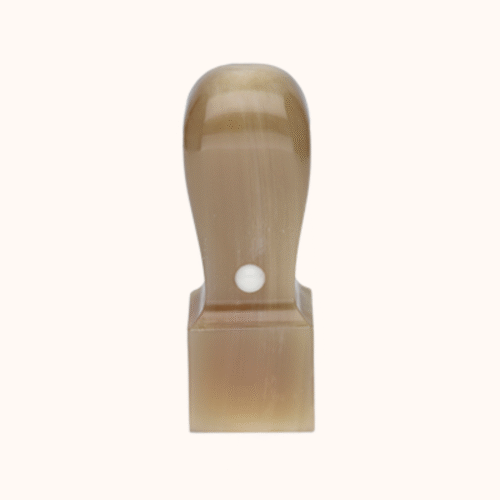
- Wood and buffalo horn are traditional materials, preferred by some for aesthetic and longevity reasons
The name on your stamp matters. Use the name that appears on your official documents — residence card, contracts, tax registration. Consistency across your paperwork prevents small but annoying discrepancies down the line.
Ordering Tips in English
Ordering a hanko as a foreigner is straightforward when you use a service designed with English speakers in mind. Here is what to keep in mind:
Checklist before you order:
- Decide whether you want your name in katakana, kanji (if applicable), or Roman letters
- Confirm the name spelling matches your official documents exactly
- Choose your size (10.5mm for everyday use is a reliable default)
- Decide whether you want a standard or bank-specific stamp
- Check delivery timelines if you have an upcoming contract deadline
Common mistakes when ordering:
Using a nickname or shortened version of your name is one of the most common errors. If your official name on your residence card is Michael Thomas Anderson, do not order a stamp that says “Mike Anderson.” The mismatch between your stamp and your legal name can cause friction when submitting documents to institutions that check carefully.
Ordering the wrong size is another frequent issue. A stamp that is too large can overflow the designated circle on a contract form. A stamp that is too small may look unofficial or get questioned. The 10.5mm to 12mm range covers nearly all standard Japanese document fields.
Leaving the order too late is the third common mistake. Hanko production, even when fast, takes time. If you have a contract signing in four days, ordering that morning is a gamble. Plan a week ahead at minimum, and ideally order your hanko before you need it for any specific deadline.
HankoHub is built specifically for foreigners ordering in Japan and offers English-language ordering, name customization for non-Japanese names, and options suitable for freelance and personal administrative use.
FAQ
Do I legally need a hanko to freelance in Japan?
There is no universal legal requirement that freelancers must own a hanko. However, many institutions and clients will request one, and the absence of a seal can create practical delays. It is less a legal obligation and more a functional necessity depending on your client base and administrative needs.
Can I use a signature instead of a hanko?
In many cases, yes. Japan has been gradually accepting signatures in more contexts, particularly in digital workflows and international business. However, if your client or institution presents a traditional contract with a seal field, they may not readily accept a substitution. It varies by institution and situation, so having a hanko available removes the guesswork.
Does my hanko need to be registered with the government?
For most everyday freelance use, no. An unregistered personal hanko is commonly accepted for contracts, invoices, and general paperwork. Official registration (creating a jitsuin) is typically required only for high-value transactions, certain real estate documents, and some vehicle purchases.
What name should appear on my hanko?
The name on your hanko should match the name on your official Japanese documents — residence card, tax registration, bank account. This consistency protects you when documents are cross-referenced.
Can I order a hanko with my name in English letters?
Yes. Several services, including HankoHub, offer stamps carved with Roman alphabet names. Some freelancers choose katakana because it looks more standard on Japanese documents, but Roman letters are accepted in many contexts. The choice is yours.
What if I change my name or legal status later?
If your name changes — through marriage, for example — you will need a new stamp to match your updated legal name. The old stamp would no longer match your official documents.
Next Steps

If you are freelancing in Japan or preparing to, getting your hanko sorted before the first deadline arrives is one of those small moves that saves a disproportionate amount of stress. Order a practical personal hanko at HankoHub and have it ready for contracts, bank paperwork, and everything else that comes with building a working life in Japan.