
Starting your career in Japan as a foreign graduate comes with a particular kind of paperwork surprise. You have prepared your resume, practiced your interview Japanese, and accepted an offer. Then the onboarding documents arrive, and somewhere in the stack is a form with a small circle printed next to your name. That circle is waiting for a seal. If you do not have one yet, that moment can feel unexpectedly urgent.
Hanko for new graduates in Japan is one of those practical topics that career guidance rarely covers in advance. Most job-hunting resources focus on the application process — how to write a rirekisho, how to dress for interviews, how to handle the offer conversation. The administrative reality of what happens after the offer is accepted gets far less attention, and the hanko question tends to catch people off guard precisely because it comes at the busiest possible moment: the transition into a new role.
This guide is written for foreign graduates entering the Japanese workforce for the first time. Whether you are joining a large Japanese corporation, a mid-sized domestic company, or a smaller firm, the seal question will likely come up. Understanding it in advance means you will not be scrambling to find a solution the week before your start date.
By the end of this guide, you will know why Japanese employers and institutions ask for a hanko, which documents typically require one, what type of stamp you actually need, and how to order one in English without any unnecessary confusion.
Why This Segment Is Asked for a Seal

New graduates entering the Japanese workforce sit at an intersection of institutions that all tend to lean on the same traditional verification method: the personal seal. Your employer, your bank, your landlord, and your local city office may each ask for a hanko within the same short window of time. That concentration of requests in the weeks around your start date is what makes this such a practical concern.
Japanese document culture developed around the assumption that a personal seal represents a consistent, verifiable identity. Unlike a signature, which varies slightly every time, a stamp looks identical on every document it touches. For companies processing large volumes of contracts and onboarding paperwork, this consistency has long been treated as a form of reliability.
Here is a realistic scenario: you receive your employment contract two weeks before your official start date. The document is largely in Japanese, your HR contact has been helpful, and everything looks straightforward. At the bottom of the final page, there is a space for your name and a circle for your seal. You email HR to ask if a signature is acceptable. The reply comes back politely but clearly: the company uses a standard contract format, and the seal field is expected to be filled. You now have less than two weeks to get a hanko made.
Another common situation involves the rirekisho, the traditional Japanese resume. Many new graduates applying to Japanese companies are expected to complete this form by hand, and some versions include a field for a personal seal impression. Even if it is not always required, arriving at the application or onboarding stage without a hanko signals a gap in preparation that a well-organised candidate would want to avoid.
There is also the social dimension. In a Japanese office environment, particularly in more traditional companies, small procedural details carry weight. Coming to your first day of work with your own hanko ready, handling paperwork smoothly, and not requiring special accommodations makes a quiet but real impression.
Common Documents and Timelines
Understanding which documents require a seal, and when they tend to appear, helps you plan around the onboarding rush rather than react to it.
Documents that commonly require a hanko for new graduates:
- Employment contract (rodo keiyaku)
- Company equipment receipt forms (laptop, phone, access card)
- Payroll setup paperwork
- Bank account opening forms, including those processed through your employer
- Apartment lease agreements
- City hall registration and National Health Insurance enrollment forms
- Commuter pass applications processed through certain employers
- Pension enrollment paperwork (nenkin)
Approximate timeline:
The hanko need tends to cluster between one month before your start date and two months after. The employment contract often arrives two to four weeks before day one. Apartment hunting, if you are relocating, typically happens in the same window. City hall registration is legally required within fourteen days of moving to a new address, and bank account setup often follows in the first week of employment.
This means the period when you most need a hanko is also the period when you are busiest with interviews, apartment searches, and relocation logistics. Ordering your hanko well before any specific deadline — ideally as soon as you have accepted an offer — removes one pressure point from a genuinely busy period.
If you are still looking for the right role, ComfysCareer is a solid starting point for foreigner-friendly jobs in Japan.
Recommended Hanko Type and Size
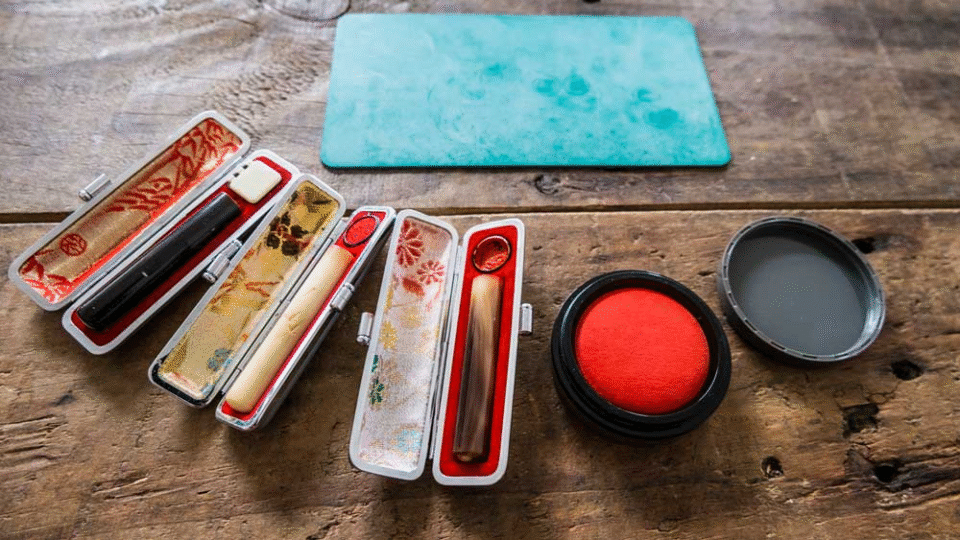
As a new graduate, you do not need a full set of seals. You need one reliable personal stamp that can handle the range of documents you will encounter in your first year of working life in Japan.
The standard personal hanko (mitomein):
For employment contracts, company paperwork, apartment leases, and general administrative documents, a standard personal hanko is sufficient and appropriate. It does not need to be officially registered with the government for most of these purposes. A size of 10.5mm to 12mm in diameter is the practical range for individual use, fitting comfortably within the seal fields printed on standard Japanese forms.
The bank seal (ginko-in):
Some new graduates choose to keep a separate stamp specifically for banking purposes. This stamp is registered with your bank and used only on financial documents. Whether your bank requires this or accepts a standard personal stamp varies by institution, so it is worth confirming directly when you open your account. Many banks will accept a regular personal hanko for a standard salary account, but policies differ.
What about a jitsuin?
A jitsuin is a seal formally registered with your local city or ward office, creating an official government record linking your identity to that specific stamp. For most new graduates handling standard employment and daily life paperwork, this level of registration is not immediately necessary. It becomes relevant for high-value transactions — certain real estate signings, vehicle purchases, and some financial agreements. Unless your specific situation requires it, you can hold off on official registration until it becomes relevant.
Practical guidance on name and material:
- Use the name that appears on your official documents — residence card, tax registration, bank account
- If your name is non-Japanese, katakana rendering looks standard on Japanese forms, but Roman alphabet carving is also accepted in many contexts
- 10.5mm is a reliable everyday size; 12mm works if you prefer slightly more presence on larger document fields
- Acrylic and resin are durable, low-maintenance, and affordable
- Wood and buffalo horn are traditional materials that hold up well over years of use
Checklist before you order:
- Name matches your residence card and official documents exactly
- Size selected (10.5mm for general use is a dependable default)
- Script style chosen (katakana or Roman letters)
- Delivery timeline checked against your nearest contract deadline
- Whether you want a single all-purpose stamp or separate everyday and bank stamps
Ordering Tips in English
Ordering a hanko as a foreign graduate in Japan is far more accessible than it used to be, provided you use a service that was built with non-Japanese speakers in mind.
What to check before placing your order:
Confirm that the service supports non-Japanese names. This sounds obvious, but some traditional hanko makers work primarily with Japanese characters and may have limited options for foreign names. A service like HankoHub is designed specifically for foreigners, offers English-language ordering, and handles name customization for non-Japanese names as a standard part of the process.
Check delivery timelines carefully. Standard production typically takes a few days, but if you are ordering close to a contract signing or your start date, confirm the estimated delivery window before finalising your order. Expedited options are sometimes available.
Common mistakes when ordering:
Using an informal or shortened version of your name is one of the most frequent errors. If your official name is Elizabeth Jane Morrison, do not order a stamp that reads “Liz Morrison.” Your hanko should match the name on your legal documents precisely. When institutions cross-reference paperwork — and some do — a mismatch creates unnecessary complications.
Ordering too late is the other common mistake, and it is particularly relevant for new graduates because the onboarding timeline is not always flexible. A company’s HR department has its own internal deadlines for processing contracts and enrollment paperwork. If your hanko arrives the day after the document was due, the situation becomes awkward. Order at least a week before your earliest expected need, and ideally two weeks if your schedule allows.
Choosing the wrong size is less common but still worth noting. Standard Japanese form fields are designed around the 10.5mm to 12mm range. A stamp that is larger than the printed circle on a contract form will overflow the field, which looks careless. A stamp that is significantly smaller may prompt questions about whether it is a legitimate personal seal.
FAQ
Do I legally need a hanko to sign my employment contract in Japan?
There is no universal legal requirement that a hanko must be used on employment contracts. However, many Japanese companies use standard contract formats that include a seal field, and some HR departments will request that the seal field be completed rather than substituted with a signature. The practical answer is that having a hanko avoids the question entirely.
Can I sign with my signature instead of a stamp?
Increasingly, yes. Digital workflows and international business have made signatures more accepted in certain contexts. However, if a Japanese employer or institution presents a traditional paper document with a seal field, they may not readily accommodate a substitution. Having a hanko available means you are never in the position of negotiating this on a deadline.
Which name should I use on my hanko?
The name on your hanko should match the name on your official Japanese documentation — your residence card in particular. This consistency matters when documents are cross-referenced by banks, employers, or government offices.
Do I need to register my hanko with the city office?
For standard employment and daily life paperwork, official registration is not typically required. A registered seal (jitsuin) becomes necessary for specific high-value transactions, but most first-year employment documents do not fall into that category.
Can I get my name in English letters on my hanko?
Yes. Services including HankoHub offer Roman alphabet carving for non-Japanese names. Some graduates prefer katakana because it appears more standard on traditional Japanese forms, but English-letter stamps are accepted across a wide range of documents. The choice comes down to personal preference and the formality of your workplace environment.
What happens if I lose my hanko?
If your stamp was not officially registered, the main concern is practical replacement — ordering a new one with the same specifications. If it was registered as a jitsuin, you will need to notify the relevant city office and cancel the registration before registering a new one. For most new graduates using an unregistered personal stamp, the process is simply a matter of reordering.
Next Steps

The weeks around a new job start date in Japan move quickly, and the last thing you want is a document delay because you do not have a seal ready. Getting your hanko sorted in advance is one of those small preparations that makes everything else run more smoothly. Order a practical personal hanko at HankoHub before your start date, and arrive ready for whatever paperwork comes your way.