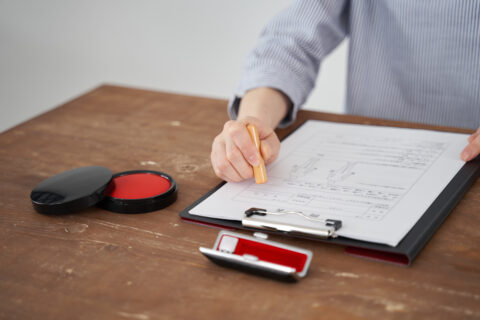


Japan has a way of surprising new arrivals with how much of daily life still runs on paper. You register your address, set up utilities, open a bank account, receive a package — and at each of these moments, someone may ask you to stamp a form rather than sign it. If you arrived expecting a signature to cover everything, the hanko requirement shows up fast and often at the worst possible time.
For foreign graduates settling into life in Japan, understanding hanko for new graduates in Japan isn’t an optional cultural curiosity. It’s a practical necessity that affects your first weeks in ways that are easy to underestimate. The administrative rhythm of Japanese daily life — ward office visits, utility contracts, postal procedures, local registrations — is built around the assumption that you have a seal. When you don’t, each of these moments becomes a small negotiation, and not always one you’ll win quickly.
This guide focuses specifically on daily admin: the non-work, non-rental paperwork that accumulates quietly in the background of your first months in Japan. You’ll learn which situations commonly call for a hanko, what type makes sense, and how to get one sorted in English before daily life starts piling up on your desk.
Why This Segment Is Asked for a Seal

The hanko’s role in daily Japanese administration predates modern bureaucracy and has remained embedded in routine processes long after digital alternatives became available. For most administrative interactions in Japan — whether with a government office, a utility provider, or a local service — the stamp carries the same weight that a handwritten signature carries elsewhere. It signals that you are who you say you are, and that you formally agree to what the document says.
For new graduates in Japan, the daily admin category is where the hanko requirement can feel most surprising. You expect it on a lease. You half-expect it at the bank. But you may not expect it when picking up a registered letter at the post office, or when completing a simple address change notification at the ward office. Japan’s administrative system applies the stamp expectation broadly, and the daily friction of not having one adds up faster than most new arrivals anticipate.
There’s also a demographic-specific pattern worth noting. New graduates — particularly those who arrived for work or study and are navigating Japanese systems largely on their own — often deal with a concentrated burst of admin tasks in their first month. Address registration, national health insurance enrollment, bank setup, utility contracts, and local library or gym registration can all happen within weeks of each other. Each of these has a reasonable chance of needing a stamp.
Take Priya, an Indian graduate who moved to Fukuoka for a tech job. In her first three weeks, she was asked for a hanko at the ward office when updating her residence card address, at the gas company when setting up service, and at the post office when collecting a registered document her company had sent. She managed to work around it each time — some staff accepted a signature, one form was delayed — but the cumulative disruption was real. One hanko ordered in advance would have eliminated all three friction points.
The administrative case for having a seal is not dramatic. It’s simply that Japan’s daily systems run more smoothly when you have one.
Common Documents and Timelines
Daily admin in Japan covers a wider range of documents than most new arrivals expect. The following are the situations where a hanko is most commonly requested outside of work and rental contexts.
Ward office registrations and updates: When you register your address (a legal requirement within 14 days of moving), apply for your residence card update, enroll in national health insurance, or request any municipal document, the forms often carry stamp fields. Staff at some offices will accept a signature from foreign nationals, but this varies by office and by staff member.
National health insurance (国民健康保険): If your employer doesn’t cover you under shakai hoken, you’ll need to enroll in the national scheme at your ward office. The enrollment form commonly requires a stamp.
Utility contracts: Gas, electricity, and internet providers in Japan often use paper contracts for new setups. These contracts typically include a stamp field. Some providers have moved to fully digital processes, but many have not, particularly for gas, where a technician visit and paper form are still common.
Postal procedures: Collecting registered mail or applying for mail forwarding at Japan Post often requires a stamp. If you receive important documents by registered post — which happens regularly with government correspondence, bank cards, and official notices — being without a hanko can mean a return trip.
Bank account maintenance: Even after your account is open, certain transactions or account changes may require a stamped form, depending on the bank. This is less common at major banks but still occurs at regional institutions and Japan Post Bank.
Local service registrations: Libraries, community centers, certain gyms and sports facilities, and municipal programs occasionally ask for a stamp on membership or registration forms. This is inconsistent but not rare.
Timeline to keep in mind: Your most admin-heavy period is almost certainly your first four weeks in Japan. Order your hanko before you arrive or within your first two days. Services like HankoHub ship within Japan and take orders entirely in English, so you can handle this from your laptop before any of these appointments are even scheduled.
Checklist: Daily admin situations that commonly require a hanko
- Address registration at ward office
- National health insurance enrollment
- Residence card update or reissuance forms
- Gas, electricity, and internet contracts
- Japan Post registered mail collection
- Mail forwarding application
- Bank account changes or additions
- Municipal service or library registration
- Local gym or community center membership forms
Recommended Hanko Type and Size
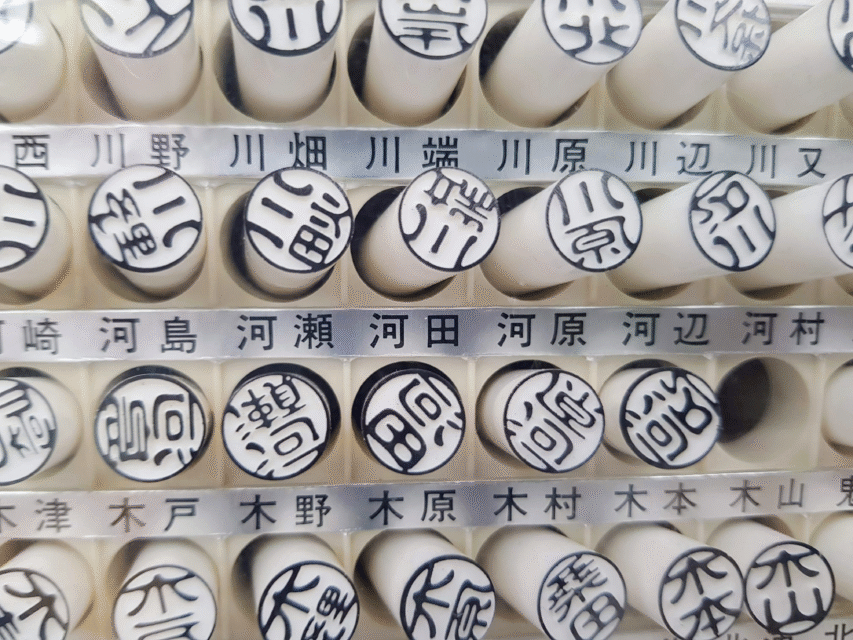
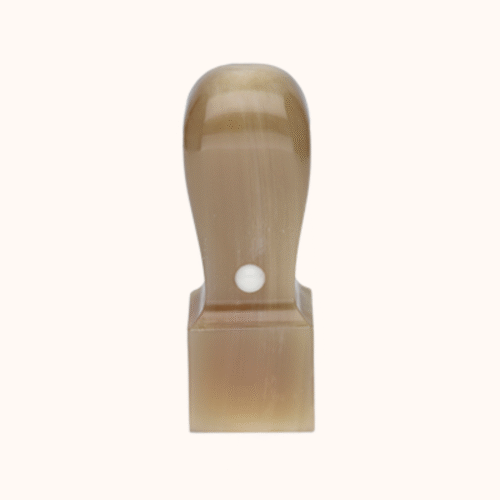
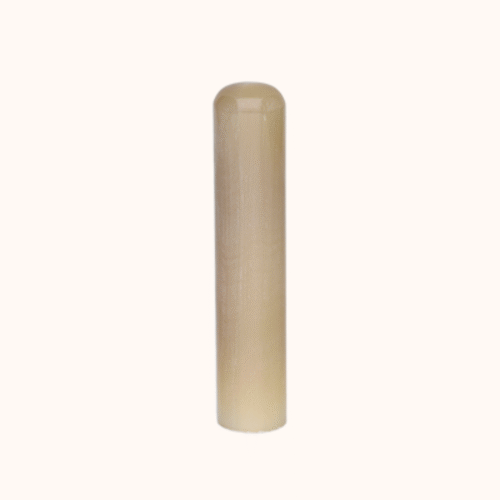
For daily administrative use, the right hanko is a mitome-in (認め印) — a standard personal seal used for everyday documents. This is not the formally registered jitsuin (実印), which is reserved for significant legal transactions. For everything covered in this guide — ward office forms, utility contracts, postal procedures — a mitome-in is appropriate and sufficient.
Size: 10.5mm or 12mm in diameter covers the vast majority of stamp fields you’ll encounter on Japanese administrative forms. These are the standard sizes for personal everyday seals. Larger sizes are more typically used for company seals or the formal registered variety.
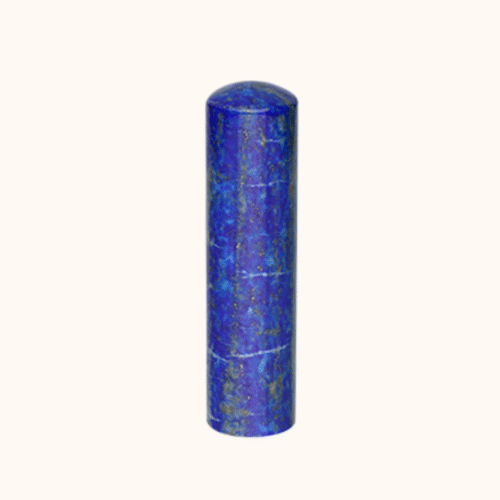
Material: A resin or acrylic seal is the practical choice. It produces a clean, consistent impression, holds up well with regular use, and handles Japan’s humidity without warping. Wood is traditional and looks elegant but can change shape slightly over time. For a working seal you’ll use repeatedly across multiple contexts, synthetic resin is reliable.
Name rendering: Most foreign residents use a katakana rendering of their surname. If your surname is phonetically complex or very long in Japanese, a shortened version or your given name works equally well in most daily admin contexts. The goal is a clean, legible seal that matches the name you’re using on your documents.
HankoHub offers name rendering support during the ordering process, so you don’t need to work out the katakana spelling yourself before placing an order.
Common mistakes to avoid:
- Buying a pre-made seal: Convenience stores and 100-yen shops sell pre-made hanko for common Japanese surnames. As a foreign national, your name won’t be there. Even if something phonetically close exists, using a seal that doesn’t match your name on official documents is a problem you don’t want.
- Choosing a decorative font: Stylized or artistic seal designs can be difficult to read clearly. Administrative staff expect a clean, legible impression. A seal that looks elaborate but reads poorly can be questioned or rejected.
- Ordering too late: This is the most common mistake. New arrivals assume they’ll sort it out after landing. Then the ward office appointment happens on day three and the gas company calls on day five. Ordering in advance removes this entirely.
- Not accounting for an ink pad: Some hanko are self-inking. Others require a separate vermilion ink pad (shuiniku). Check which type you’re ordering so you have everything ready when the forms arrive.
- Thinking one situation won’t need it: The general rule is to bring your hanko to any official appointment in Japan. The cost of having it when you don’t need it is nothing. The cost of not having it when you do need it is a second trip.
Ordering Tips in English
Ordering a hanko as a foreign resident no longer requires finding a local engraving shop and negotiating your name across a language barrier. English-language ordering is now available through services built specifically for people in exactly your situation.
HankoHub handles the full process in English: you enter your name in Roman letters, review a preview of the name rendering in Japanese script, choose your size and material, and complete your order online. The seal ships within Japan. If you’re in a company dormitory, a share house, or a newly rented apartment, it comes to your address without you needing to track down a local shop.
Practical tips for ordering:
Order before your first wave of admin appointments. Your ward office registration, utility contracts, and postal pickups tend to cluster in your first two to four weeks. Get the hanko ordered before that window opens, not during it.
Review the name preview carefully. Before confirming your order, look at how your name will appear on the seal. Check the katakana spelling against your residence card or passport transliteration if you have one. A small error in the name rendering on a hanko used for official documents is worth catching before production.
Ask HR or your ward office contact if they have any requirements. Most don’t, and a standard 10.5mm or 12mm seal will be accepted without comment. But if you’re joining a company or dealing with an institution that has specific preferences, a quick check takes ten seconds.
Keep the hanko and ink pad together. Store them as a unit — in the pouch or case that often comes with the seal — so you’re never in the position of having one without the other when you need to stamp something quickly.
If you’re still looking for the right role, ComfysCareer is a solid starting point for foreigner-friendly jobs in Japan — and once you’ve landed one, daily admin including your ward office registration and utility setup will all move faster with a hanko already in hand.
FAQ
Do I actually need a hanko for daily admin in Japan, or can I always use a signature? It depends on the institution and the individual staff member. Some offices and providers will accept a signature from foreign nationals. Others won’t, and you won’t always know in advance. Having a hanko means you never have to find out the hard way.
What’s the difference between a mitome-in and a jitsuin? A mitome-in is an everyday personal seal used for general documents — ward office forms, utility contracts, postal procedures. A jitsuin is a formally registered seal required for major legal transactions such as property purchases. For daily admin, you need a mitome-in.
Can I use the same hanko for daily admin, work, and rental paperwork? Yes. A single mitome-in covers all three categories. You don’t need separate seals for different types of documents at this stage of life in Japan.
What name should I use on my hanko? Most foreign residents use a katakana rendering of their surname. If your name is long or phonetically complex in Japanese, a shortened version or your given name is acceptable. HankoHub provides name rendering support as part of the ordering process.
What happens if I stamp a form incorrectly? A smudged, tilted, or faint impression is occasionally flagged. If it happens, ask whether the form can be reprinted — most staff will simply provide a new copy. Practice on scrap paper once or twice before stamping official documents, particularly if you’re using a seal for the first time.
How long will a basic hanko last? A resin seal used regularly for daily admin will last for years with basic care. Keep the cap on when not in use, clean the face occasionally with a soft cloth, and store it away from direct heat. The seal itself is durable; the ink pad may need replenishing over time if it’s a separate component.
Do I need to carry my hanko everywhere? Not everywhere, but it’s worth keeping it in your bag or document folder during your first month, particularly if you have any official appointments scheduled. After the initial admin burst settles down, you’ll use it less frequently and can keep it at home in a known location.
Next Steps

Daily admin in Japan moves on its own schedule, and it rarely gives you much notice. A utility company calls, a registered letter arrives, a ward office appointment comes through — and each of these moments goes more smoothly when you’re already prepared. Head to HankoHub, enter your name in English, and order a personal seal that’s ready for everyday administrative use. The process is in English, it ships within Japan, and it takes one item off your list before daily life in Japan starts asking for it.