

Finding a place to live is one of the first real challenges of a working holiday in Japan, and it starts well before you hand over a deposit. The rental process here involves more paperwork than most foreigners expect — and somewhere in that stack of forms, there is often a small printed circle waiting for your hanko.
Japan’s rental market is not especially foreigner-friendly by default. Even in cities with large international populations, the standard lease agreement is a formal document built around Japanese administrative conventions, and the hanko is one of them. For working holidaymakers in particular, the situation is complicated by the fact that you’re often renting in places you’ve never been before, in a hurry, with an employer or start date already set. The last thing you want is a delay caused by something as fixable as not having a personal seal.
This guide covers the rental side of hanko for working holiday in Japan specifically. You’ll learn why landlords and real estate agents ask for a seal, which documents commonly include a hanko field, what type to order, and how to have one ready in English before the paperwork lands in front of you. If you’ve already worked through our guides on employment contracts and bank account setup, the pattern will feel familiar — but rental paperwork has its own timeline and its own pressure points worth covering in detail.
Why This Segment Is Asked for a Seal

Japanese rental agreements are formal legal documents, and the conventions surrounding them have changed more slowly than some other areas of daily life. While signatures are increasingly accepted in certain contexts, the hanko remains a standard expectation across much of the private rental market — and particularly in situations where the landlord is an individual rather than a large property management company.
The cultural logic behind it is worth understanding briefly. In Japan, a hanko impression on a document carries a weight that a handwritten signature does not. It signals that the person involved is prepared, organized, and familiar with how things work here. For a landlord or real estate agent dealing with a foreign tenant — already a somewhat unfamiliar situation in many parts of Japan — a foreigner who arrives with their own personal seal sends a reassuring message. It suggests you’ve done your homework.
There are three main parties who may ask for your hanko during the rental process.
Real estate agents (fudousan-ya) handle most private rental transactions in Japan and typically use standardized contract forms that include hanko fields for all signing parties. Some agencies that specialize in foreigner-friendly rentals have adapted their processes to accept signatures, but this is not universal even among agencies that market themselves as internationally accessible.
Individual landlords renting directly — common in share houses, older apartment buildings, and rural properties near seasonal work sites — tend to be more traditional in their expectations. A family that has rented the same property for decades is unlikely to have updated their paperwork to accommodate foreign signatures.
Share house operators are the most variable. Purpose-built share houses targeting international residents often accept signatures and have English paperwork available. Smaller share houses run by local operators may use the same standard forms as any other landlord.
One micro-scenario that plays out frequently: a working holidaymaker secures a seasonal job at a winery in Yamanashi and is connected by the employer to a nearby landlord renting a small apartment. The landlord sends a standard lease agreement. There are two circles on the final page. The tenant emails asking if a signature is acceptable. The landlord, who has never rented to a foreigner before, says they’d prefer a hanko. The tenant doesn’t have one. The move-in date gets pushed by a week while alternatives are negotiated. That week matters when you’re already committed to a job start date.
Common Documents and Timelines
The rental process in Japan typically involves several documents, and the hanko can appear in more than one of them. Here’s what to expect and when.
Application form (moushikomisho) — this is submitted before the lease is agreed, as part of your initial application to rent. Some agents include a hanko field here; others don’t. It’s the first point of contact in the process and often the earliest moment your seal might be needed.
Lease agreement (chintai keiyakusho) — the main contract, signed when you confirm the rental. This is the document most likely to include a hanko field, and it’s the one where the expectation is strongest. Both tenant and landlord typically stamp this document.
Guarantor documentation — if you have a Japanese guarantor (hoshounin), they will almost certainly need to stamp relevant paperwork. As a working holidaymaker you may be using a rental guarantee company (hoshougaisha) instead of a personal guarantor, in which case the company handles their own side — but you still need to stamp your portion.
Move-in checklist and property condition report — some landlords ask you to stamp these at move-in and move-out to confirm the state of the property. Not universal, but it happens.
Renewal paperwork — less relevant for most working holidaymakers on shorter stays, but if you extend a lease, renewal contracts typically mirror the original in terms of hanko requirements.
Timeline reality: rental paperwork often moves faster than expected once a place is secured, particularly in areas with seasonal worker housing where demand is high and landlords don’t hold properties for long. In competitive situations, you may have two to three days to return signed paperwork. Having your hanko already in hand removes one variable from a process that already has plenty of them.
Recommended Hanko Type and Size
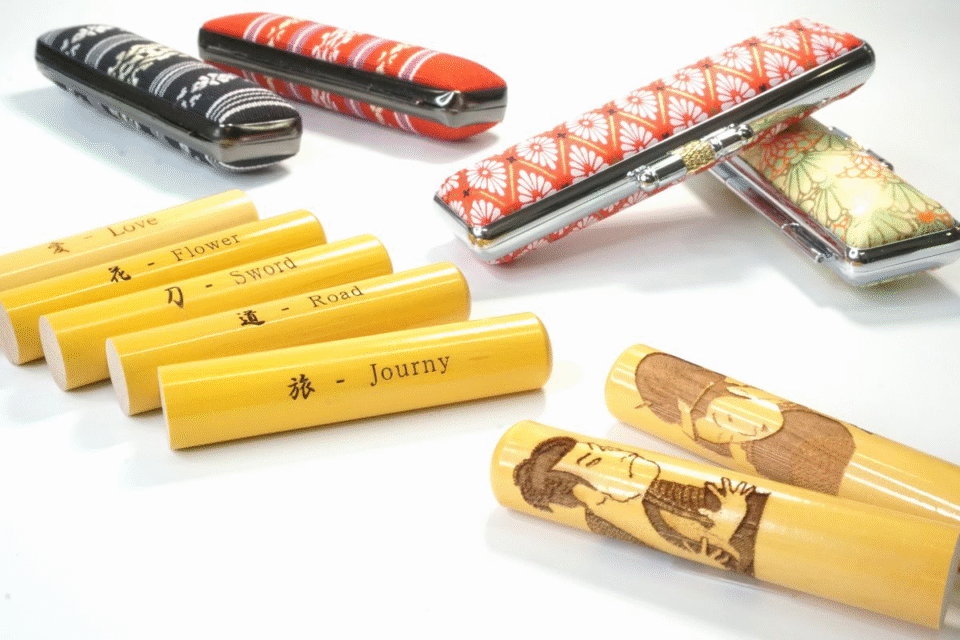
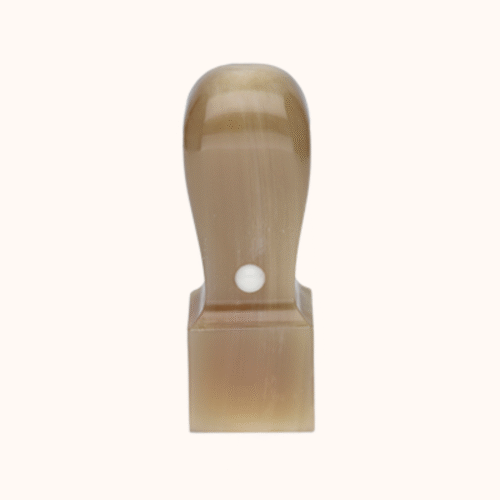
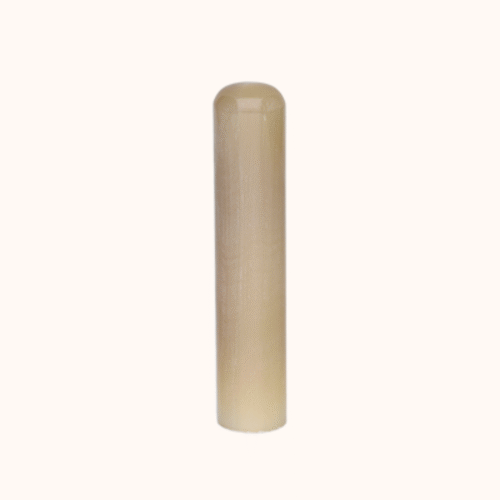
For rental paperwork during a working holiday, a mitome-in (認め印) is the correct choice. This is the standard everyday personal seal, used for routine documents that don’t require formal government registration. Lease agreements for personal rental — as opposed to commercial property transactions — fall squarely in mitome-in territory.
You do not need a jitsu-in (実印), the formally registered seal associated with high-stakes legal transactions like property purchases. Unless you are buying property in Japan — which is outside the scope of a working holiday — this level of seal is not required and would be unusual to present for a standard rental agreement.
Size: 10.5mm to 12mm in diameter is the appropriate range. This fits standard hanko fields on Japanese lease agreements without looking oversized or out of place. Most printed hanko circles on rental paperwork are sized for exactly this range.
Material: Wood, acrylic, or resin are all appropriate. Rental paperwork does not require any particular material — what matters is that the stamp produces a clean, consistent impression. Avoid rubber stamps, which are not considered equivalent to a proper hanko and may not be accepted on formal lease documents.
Name and script: Katakana rendering of your family name is the standard approach for foreign nationals and is understood and accepted across the rental market in Japan. If your name is phonetically complex or very long, a shortened katakana version is acceptable. English-language hanko services handle foreign name adaptation as a routine part of the process.
Common mistakes in this category:
- Stamping too hard or at an angle — a lease agreement is a legal document, and the hanko impression needs to be clean and centered. Practice on a piece of scrap paper before you stamp anything official. Use firm, even pressure straight down.
- Using ink that bleeds or smears — quality hanko come with appropriate ink pads. Don’t improvise with office stamp pads, which may use ink that bleeds on standard Japanese paper.
- Forgetting to bring the hanko to the signing appointment — once you have it, keep it with your important documents. Don’t leave it at your accommodation on the day you’re meeting an agent or landlord.
- Assuming all share houses accept signatures — even internationally marketed share houses sometimes use standard Japanese lease forms that include hanko fields. Don’t assume; ask in advance, and have your seal ready regardless.
Ordering Tips in English
The case for ordering your hanko before arriving in Japan is particularly strong when it comes to rental paperwork. Unlike employment contracts, which you typically sign after starting work, a lease agreement often needs to be executed before or within days of your arrival — sometimes while you’re still jet-lagged and figuring out which train goes where.
Here is a practical checklist for ordering ahead of your trip:
- Allow ten to fourteen days minimum between placing your order and your departure date, accounting for production and international shipping
- Decide on your name format — family name in katakana is the standard; confirm with the service if you have questions about phonetic adaptation
- Specify the intended use — noting that you need a mitome-in for rental contracts and general working holiday paperwork helps the maker guide you toward the right product
- Choose a size of 10.5mm or 12mm — both work well for standard lease agreement fields
- Select a legible script style — clean and readable, not overly decorative
- Confirm material and ink pad — a wood or resin hanko with a quality ink pad is the practical choice
- Check shipping options — some services offer tracked international shipping; confirm lead times for your destination country
HankoHub manages orders in English and is familiar with the name-adaptation questions that foreign customers typically have. The process is designed so you don’t need prior knowledge of hanko conventions to place a correct order.
If you’re still looking for the right role, ComfysCareer is a solid starting point for foreigner-friendly jobs in Japan.
Once your hanko arrives, pack it with your passport and other essential documents. Keep it accessible during your first weeks in Japan, not buried in a bag you don’t open until you’ve unpacked.
FAQ
Do all rental agreements in Japan require a hanko? No, but many do — particularly standard private leases and those handled through traditional real estate agencies. Share houses and foreigner-oriented accommodations are more likely to accept signatures, but it varies. Having a hanko means you’re covered in either case.
What if my landlord says a signature is fine? Then use a signature. A hanko is not required for every rental situation. But if you don’t have one and the landlord expects one, you’re the one who has to resolve the gap — usually under time pressure.
Can I use the same hanko for my rental agreement, bank account, and employment contract? Yes. A single mitome-in is appropriate for all three. Working holidaymakers don’t need multiple seals for different document types.
What if I’m renting through my employer — does the hanko rule still apply? Sometimes. Employer-arranged accommodation varies widely. Large resort operators with standardized foreigner onboarding may not require a hanko. A smaller employer who arranges housing through a local landlord likely will. Ask your employer in advance, and have your hanko ready to be safe.
Is a rubber stamp acceptable for a rental agreement? Generally not. Landlords and agents expect a solid-material hanko that produces a clean, consistent impression. A rubber stamp from a convenience store or stationery shop is not considered equivalent and may not be accepted on a formal lease.
What if I need to stamp documents but I haven’t received my hanko yet? If you’re caught without a hanko and a document genuinely won’t accept a signature, explain your situation honestly and ask whether there’s a short extension. Some landlords will wait a few days. Others won’t. This is exactly the scenario that ordering before you fly is designed to prevent.
Can I get a hanko made after I arrive in Japan? Yes, local hanko shops (hanko-ya) exist in most towns and cities. In practice, though, the interaction will be in Japanese, you’ll need to wait one to several days for production, and you’ll be doing this during your most logistically demanding week in Japan. Ordering in English before departure is the more comfortable option by a significant margin.
Next Steps

Rental paperwork often moves faster than working holidaymakers expect, and arriving without a hanko during that window creates delays that are entirely avoidable. Before your departure, take ten minutes to order a personal mitome-in from HankoHub — in English, with your name in katakana, sized for standard Japanese lease agreements. Have it shipped ahead of your trip, pack it with your important documents, and arrive ready for whatever paperwork Japan puts in front of you first.