
There is a particular kind of buyer’s regret that only hits in an airport. You are standing at the gate, bag heavier than it should be, wondering why you bought a lacquered chopstick set you will never use and a plush Shinkansen that seemed more charming in the shop. If you are looking for the best Japanese souvenirs — ones that earn their space in your luggage and your life — this guide is for you.
Japan is genuinely one of the best countries in the world for souvenir shopping. The craft traditions run deep, the attention to quality is real, and the range spans from ¥200 convenience store finds to handmade pieces that become family heirlooms. The problem is not scarcity. It is the noise: the generic, the overpriced, and the things that look meaningful but are not.
This post cuts through that. Whether you are a tourist with a carry-on allowance, a digital nomad sending gifts home, or a new resident trying to explain Japan to people back home through objects, you will leave with a clear list and a few ideas you probably had not considered — including one that doubles as a functional tool long after the trip is over.
What Makes a Souvenir ‘Useful’
The word “souvenir” comes from the French for remembrance, but most souvenir shops treat it as a synonym for “disposable object with a landmark printed on it.” A useful souvenir is something different. It is an object that carries memory and keeps earning its place in someone’s daily life.
A few honest criteria:
- It is made with real craft, not mass-produced in a country with no connection to the one printed on the label
- It fits naturally into the recipient’s life — their kitchen, their desk, their routine
- It ages well, or at least does not look sad after six months
- When someone asks about it, the answer is a story, not a shrug
Japan excels at objects that meet all four conditions because craftsmanship here is not a marketing word — it is a cultural value. The concept of monozukuri (roughly: the art of making things) shapes how Japanese artisans, manufacturers, and even convenience store suppliers approach their work. Even inexpensive items often have a quality of finish that surprises people new to the country.
The other thing that makes a Japanese souvenir genuinely useful is specificity. A beautifully made knife from a specific forge in Sakai. A ceramic cup from a kiln in Mashiko. A personal name seal carved by an artisan in a Kyoto hanko shop. These things cannot be replicated by clicking around on Amazon. That irreplaceability is part of what makes them worth bringing home.
Common mistake: buying the most visually impressive thing rather than the most considered one. A large lacquered tray is beautiful in the shop and awkward in a Western kitchen. A set of hand-cut washi cards, a quality furoshiki cloth, or a compact hanko fit a life more easily than statement pieces most recipients have nowhere to put.
Top Picks by Budget
Under ¥2,000
Tenugui. These thin cotton towels have been used in Japan for centuries. They dry fast, fold flat, and come in patterns ranging from geometric traditional prints to contemporary graphic designs. Use them as a hand towel, a gift wrap cloth, a scarf, or frame one as wall art. Under ¥1,000 at most craft shops and department stores.
Japanese stationery. Midori, Stalogy, Kokuyo — Japanese stationery brands produce notebooks, tape, and pens that have genuine cult followings globally. A ¥500 roll of washi tape or a well-made notebook is a low-risk, high-satisfaction gift for almost anyone.
Regional food items. Instant dashi packets, quality soy sauce in a small bottle, yuzu kosho paste, or a bag of good matcha. These are genuinely useful in a kitchen and carry a specificity that a box of generic matcha Kit Kats does not. Buy from a specialty food shop or a depachika (department store basement) rather than a tourist arcade.
¥2,000–¥10,000
A quality kitchen knife. Japan produces some of the world’s best kitchen knives at every price point. A basic gyuto (chef’s knife) or santoku from a reputable maker costs around ¥3,000–¥8,000 in a kitchen district shop and will outlast years of daily use. Kappabashi in Tokyo and Nishiki Market in Kyoto are the right hunting grounds.
Ceramics. A single handmade cup, small plate, or yunomi tea cup from a regional kiln is a unique Japanese souvenir that gets better with use. Look for pieces from recognizable kiln regions: Arita, Bizen, Mashiko, Tokoname. Avoid anything that says “made in China” on the base.
Furoshiki. A traditional Japanese wrapping cloth used to carry goods, wrap gifts, and fold into bags. Quality ones are made from silk or high-grade cotton and last indefinitely. Practical, beautiful, zero-waste.
¥10,000 and above
Custom hanko. At this tier, a personalized souvenir Japan travelers rarely expect to find sits at the top of the list. A custom name seal made from quality materials — ebony, buffalo horn, or natural stone — is a handcrafted object with a specific function and a story behind every use. More on this below.
Artisan lacquerware. A single lacquered bowl or box from a serious workshop is an investment piece. Wajima-nuri (from Ishikawa Prefecture) is the most celebrated style. These take months to make and last generations.
Why a Hanko Is Personal and Practical
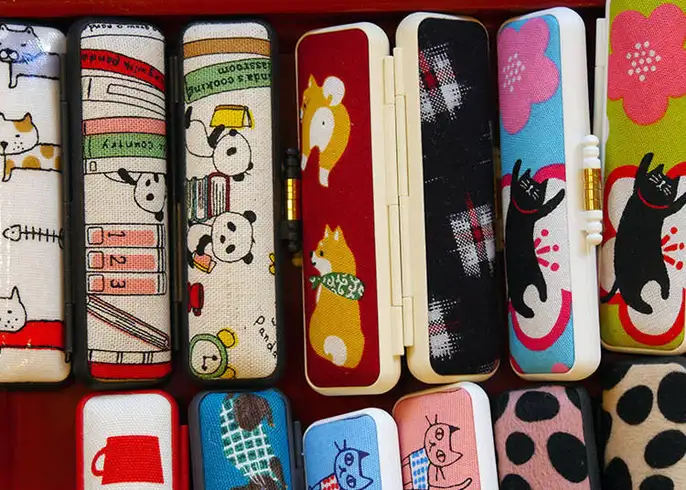
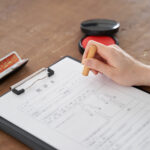
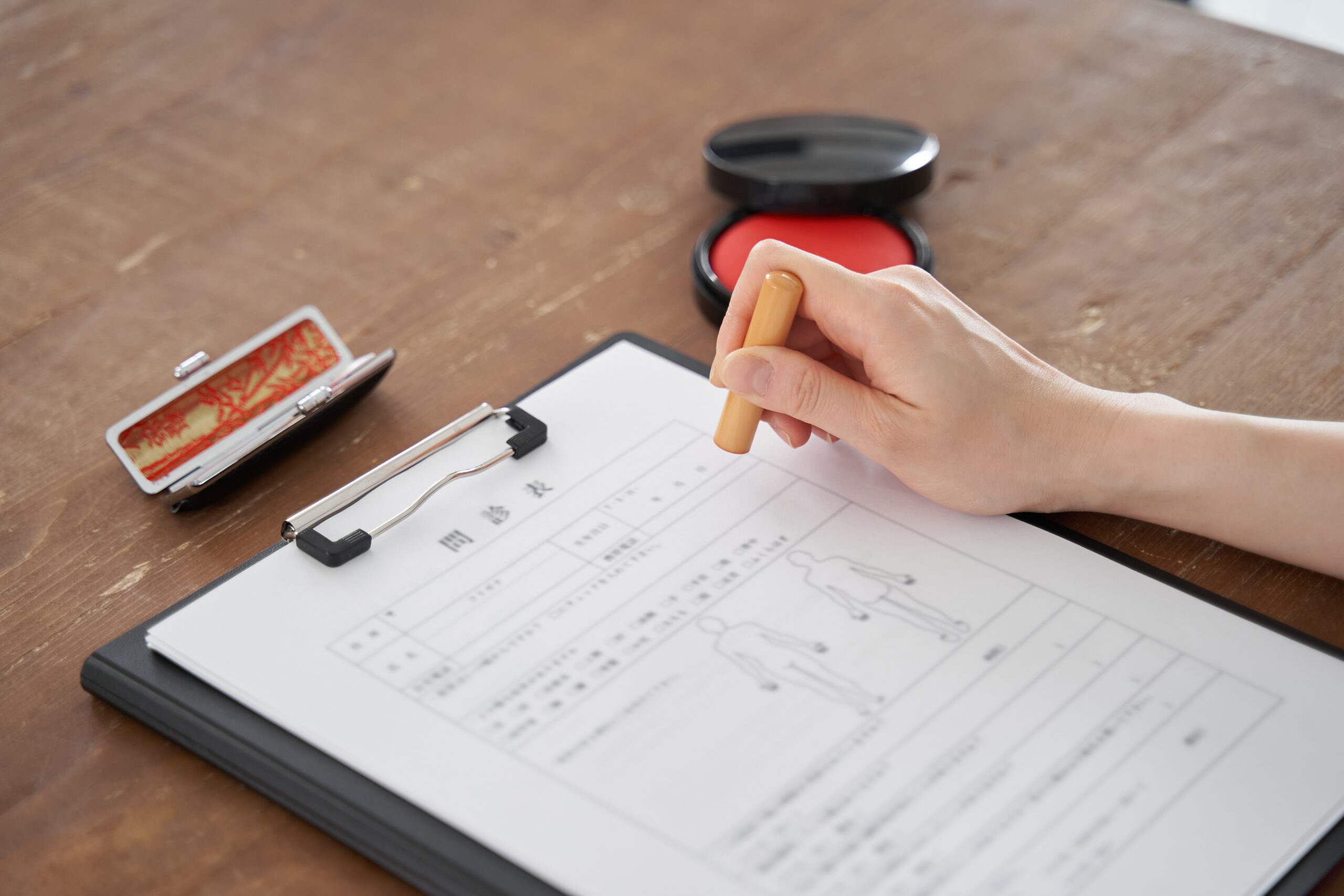
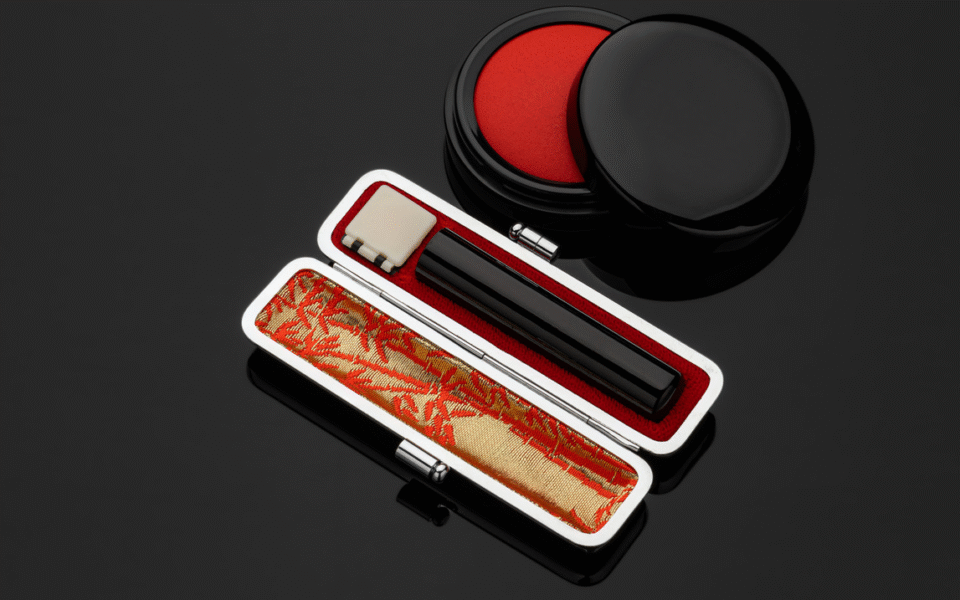
A hanko — also called an inkan — is a personal name seal used throughout Japan to authenticate documents, sign contracts, open bank accounts, and complete official paperwork. Every Japanese person has one. For foreigners in Japan, having one made with your name is a practical tool and, as a custom hanko souvenir, one of the most personal objects you can bring home.
Here is what makes it different from other souvenir options.
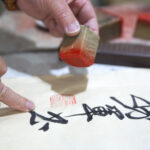
It is carved with your name. A skilled artisan takes a transliteration of your name — in katakana, or sometimes in kanji chosen for their meaning and visual balance — and carves it into the base of a cylindrical seal. No two are alike. The name, the carving style, and the material combine into something that exists nowhere else in the world.
It has a function beyond display. Many people use their hanko as an artist’s stamp on handmade cards, as a wax seal impression, as a way to mark their books and notebooks, or — if they spend time in Japan — for actual administrative use. Unlike most souvenirs, it does not just sit on a shelf waiting to be explained to guests. It gets used.
It fits any budget at the quality end. A well-made hanko in synthetic material costs around ¥2,000–¥4,000. Natural wood, rosewood, or ebony runs ¥5,000–¥10,000. Horn and stone pieces sit higher. In all cases, the craftsmanship involved is significant relative to the price.
Consider the micro-scenario: you have a friend who spent a year in Japan teaching English, came home, and lost most of the physical evidence of the experience to clutter and time. A hanko — small, durable, carrying their name in a script they learned to read — survives that attrition. It is still sitting on their desk a decade later.
Or consider the person who just completed a working holiday in Tokyo, who wants one object that encapsulates the bureaucratic, fascinating, deeply specific experience of navigating Japanese life. A hanko is exactly that object: simultaneously mundane to a Japanese person and entirely singular to the foreigner who had one made.
How to Buy (In Japan vs Online)
Buying in Japan
Hanko shops (判子屋, hanko-ya) exist in almost every Japanese city and town. You will find them near train stations, in covered shopping arcades, and in the stationery sections of larger department stores. In Tokyo, the Shinjuku and Ginza areas have reliable options. In Kyoto, the Teramachi shopping street has several.
The process is straightforward. You give the shopkeeper your name (bring a written version, ideally in romaji), discuss character options, choose a material and size, and either wait for same-day carving or return the next day for more complex pieces. Many shops that deal with foreign customers have basic English capability or use a tablet for translation.
Checklist for buying a hanko in person:
- Bring your name written in romaji (standard English letters)
- Ask to see character options before confirming — the reading and visual balance both matter
- Confirm the size (10.5mm is standard personal use; 12mm is common for formal seals)
- Ask whether a case or ink pad is included
- Check if same-day service is available if your schedule is tight
Buying Online
If you are back home, short on time in Japan, or want to send a personalized souvenir Japan-side to someone abroad, ordering online is straightforward. HankoHub specializes in custom hanko for international customers, handles the name transliteration process in English, and ships worldwide. You select your material, size, and character style; they handle the rest.
Common mistakes when buying online:
- Choosing a character set without understanding the options — ask the seller to explain the difference between katakana (phonetic) and kanji (meaning-based) before deciding
- Ordering the smallest available size because it looks tidy — 10.5mm is standard and easier to use than 8mm
- Forgetting to order an ink pad — most hanko do not include one by default
Planning a longer stay or job search? ComfysCareer can help foreigners find work in Japan after their trip.
FAQ
What is the most useful Japanese souvenir for someone who does not live in Japan? Something that fits naturally into their existing life. A quality kitchen knife, a set of tenugui, good tea or food items, or a custom hanko used as an artist’s stamp or personal seal. The best Japan gifts are specific and functional, not generic and decorative.
Can a foreigner actually use a hanko in Japan? Yes. While foreigners are not always required to have a registered hanko (a jitsuin) for the same transactions as Japanese nationals, a hanko is commonly accepted and sometimes expected for housing contracts, employment paperwork, and certain banking processes. Many long-term residents have one made early in their stay.
Is a hanko a good gift for someone who has never been to Japan? It can be, especially for people with a connection to Japan — someone learning the language, someone who follows Japanese culture, or someone who uses an artist’s stamp in their creative work. The key is personalizing it with care. A well-chosen character set and a brief note explaining the tradition makes it meaningful.
Where are the best places to shop for souvenirs in Japan? Depachika (department store basement floors) for food. Covered shopping arcades (shotengai) for everyday craft items. Specialist markets and kiln towns for ceramics. Kitchen districts like Kappabashi (Tokyo) for knives. And hanko shops near most train stations for a unique personalized souvenir Japan visitors rarely think to look for.
What should I avoid buying as a souvenir in Japan? Mass-produced items sold exclusively in tourist zones, anything that does not indicate Japanese origin, and objects that are visually striking but have no function or story. Also: food with very short shelf lives if you are posting items internationally.
How long does a custom hanko take to make? In-store, many shops offer same-day service for standard designs, or next-day for more complex carving. Online orders through HankoHub typically process within a few business days before shipping.
Next Steps

If you have a trip to Japan coming up, or you have just returned and are thinking about what you wish you had bought, a custom hanko is worth adding to the list. It is small enough to carry anywhere, made with real craft, and carries your name in a form that exists nowhere else. HankoHub makes the process straightforward for international customers — you choose the material and character style in English, and they handle the carving and worldwide shipping from there.