

Opening a bank account in Japan as a foreign designer sounds like it should be straightforward. You have your residence card, your address, your paperwork — and then the bank teller points to a small box on the form and asks if you have your hanko. If you’ve never dealt with Japan’s seal culture before, that moment can stop the whole process cold.
For designers working in Japan — whether you’re freelancing for local clients, employed at a studio, or building an independent creative practice — a bank account is non-negotiable. Client payments, salary deposits, invoice settlements, and tax filings all run through it. And in many cases, getting that account open requires a stamp, not a signature.
This guide focuses specifically on the banking side of hanko use for designers. You’ll learn why banks ask for a seal, which type you actually need, what to expect at each stage of the process, and how to order one in English without the usual confusion.
Why This Segment Is Asked for a Seal
Japan’s banking system has deep institutional roots, and the hanko is embedded in how identity and consent are confirmed across financial paperwork. When a bank registers your seal, they’re creating a verifiable record of your mark — something they can cross-reference every time you make a withdrawal, update your account, or authorize a transaction in person.
For foreign designers, this can feel like an unexpected layer of formality. In most other countries, a signature does all of this work. In Japan, many banks — particularly the larger traditional institutions like Japan Post Bank, MUFG, and regional banks — still require a physical seal at account opening. Some will accept a signature in its place, but this varies considerably by bank and even by branch.
The practical reality for a designer is this: you need a bank account quickly. Client payments don’t wait. If you’re freelancing, you may have an invoice ready to send within your first few weeks. If you’re employed at a studio, salary hits your account from month one. Delays in getting your bank setup sorted translate directly into delays in getting paid.
A typical scenario: a motion designer joins a mid-size Tokyo agency on a contract basis. During onboarding, HR hands over a stack of forms including bank transfer authorization paperwork. The form has a stamp field. The designer assumes a signature will work, the accounting team flags it, and there’s a week of back-and-forth before the first paycheck clears. Having a hanko ready from the start sidesteps this entirely.
Understanding that banks ask for a seal not out of bureaucratic habit but as a recognized form of identity verification in Japanese institutional culture helps frame the whole thing differently. It’s not an obstacle — it’s just the system, and working with it is easier than working around it.
Common Documents and Timelines
Bank-related paperwork for designers in Japan tends to cluster around a few specific moments, and the hanko requirement appears consistently across them.
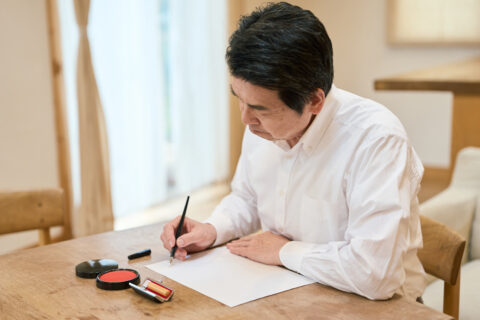
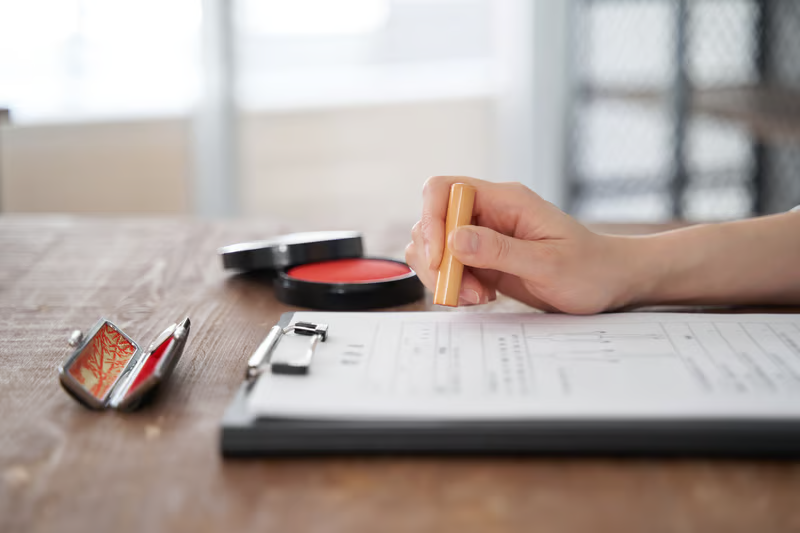
Account opening forms. This is the primary trigger. When you apply to open a personal bank account, many banks will ask you to register a seal at the same time. You press the stamp into an ink pad and then onto a dedicated section of the form, which becomes your registered bank seal (ginko-in) on file. Some banks process this digitally now, but many still require a physical impression.
Bank transfer authorization forms. If your employer or client needs to set up a standing transfer to your account, a stamp field is often included. HR departments at Japanese companies commonly handle this during onboarding, and it’s separate from the account opening itself.
Account updates and changes. Changing your registered address, updating account details, or requesting certain banking services may require your stamp again — the one you originally registered with that bank. This is one reason keeping your bank seal safe and consistent matters.
Wire transfer requests above certain thresholds. For larger transactions, some banks require in-person verification with your registered seal. This is less common for everyday designer work but relevant if you’re handling large client settlements.
The timeline pattern is fairly predictable: arrive in Japan → get residency paperwork in order → open bank account (hanko required at this stage for many banks) → receive client payments or salary. The hanko sits right at the bottleneck. Getting it sorted before you walk into the bank — rather than discovering the requirement mid-appointment — saves meaningful time.
If you’re still looking for the right role, ComfysCareer is a solid starting point for foreigner-friendly jobs in Japan.
Recommended Hanko Type and Size
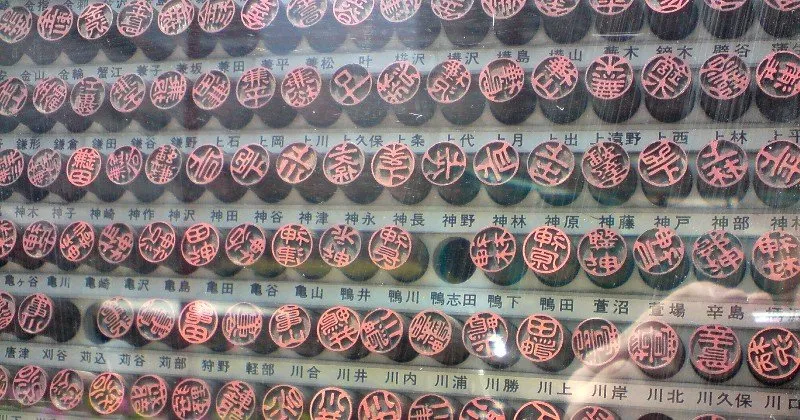
For banking specifically, the hanko you need is called a ginko-in (銀行印) — a bank seal. While technically any seal can be registered with a bank, most people keep a dedicated bank seal separate from their everyday personal stamp. This is practical advice, not just tradition: if you lose your everyday hanko, you don’t want your bank account to be compromised at the same time.
Ginko-in characteristics:
- Typically 10.5mm–13.5mm in diameter for personal accounts
- Registered with one specific bank at account opening
- Should not be used for general document stamping to minimize wear and loss risk
- Stored separately from your everyday seal, ideally in its own case
For a general-purpose everyday seal — which you’ll also need for contracts, invoices, and leases — a mitome-in (認め印) at 10.5mm–12mm is the practical standard. Most designers end up with both: a dedicated bank seal and a general personal stamp for professional use.
Name format options for designers:
- Katakana is the most widely accepted format for foreign names and works smoothly at virtually all banks
- Romaji (Latin characters) is accepted at some banks but can occasionally create friction at more traditional institutions — worth confirming in advance
- Kanji is possible if you’ve chosen a kanji rendering of your name, and some designers find this personally meaningful
Common mistakes to avoid:
- Using your everyday mitome-in at the bank and then losing track of which seal is registered where
- Ordering a seal that’s too small (under 10mm) — it may not produce a clean impression in the bank’s stamp field
- Assuming your registered bank seal can be replaced without going through a formal re-registration process — it can, but it takes time and adds friction
- Forgetting to keep a record of which seal you registered with which bank
Material considerations: For a bank seal, slightly more durable materials like resin, wood composites, or titanium are worth considering over basic plastic. You’re not using this stamp frequently, but when you do, the impression needs to be clean and consistent. A quality seal holds its edge longer.
Ordering Tips in English
The practical checklist below is designed for designers who want to get this done efficiently, without navigating the process in Japanese.
- Order your bank seal and everyday seal together if possible. Many providers offer sets, which saves time and ensures you have both sorted before your bank appointment.
- Decide on name format before you order. Katakana is usually the safest choice for foreigners opening accounts at traditional banks. If your name is long, family name only fits cleanly in standard stamp fields.
- Choose an appropriate size. For a ginko-in, 12mm is a reliable all-purpose size for personal accounts. It fits cleanly in most bank forms without being oversized.
- Pick a durable material for your bank seal. You won’t use it daily, but you want a clean, reliable impression every time. Mid-range resin, bamboo, or entry-level titanium all perform well.
- Order at least one week before your bank appointment. Standard delivery in Japan is typically 3–7 business days. If you have a specific bank appointment scheduled, build in buffer time.
- Store your bank seal separately from your everyday hanko immediately after receiving it. Label the case if needed. This habit prevents the two from getting mixed up over time.
- Keep a photo or written record of which seal is registered with which bank. If you ever need to replace it, having this information speeds up the process.
HankoHub offers an English-language ordering process with clear options for name format, material, and size — which makes it significantly easier to navigate than ordering through a Japanese-only service, especially when you’re still getting oriented.
FAQ
Do all Japanese banks require a hanko to open an account? No, not all of them. Some banks — particularly those oriented toward foreign residents, such as Sony Bank or certain online banks — accept a signature instead. However, many major banks and post office accounts still commonly require a registered seal. It’s worth checking with your specific bank before your appointment, but having a hanko ready means you’re covered regardless.
Can I use the same hanko for my bank account and my contracts? You can, but it’s not recommended. Keeping a separate bank seal reduces the risk of complications if your everyday stamp is ever lost or damaged. Most people who use hanko regularly in Japan keep at least two: one for banking and one for general professional use.
What happens if I lose my registered bank seal? You’ll need to visit the bank in person, complete a loss report, and go through a re-registration process with a new seal. This takes time and temporarily restricts certain account functions. It’s manageable, but avoidable with basic care.
Is my katakana name acceptable at all banks? In almost all cases, yes. Banks are accustomed to foreign account holders using katakana representations of their names. Occasional edge cases exist with very traditional institutions, but katakana is the standard approach and works reliably.
How many hanko do I actually need as a designer in Japan? For most working designers, two covers the main bases: a ginko-in for banking and a mitome-in for everyday professional documents. If you eventually register a business or need to formalize major legal transactions, a jitsuin (registered personal seal) may become relevant — but that’s a later step.
Can I get a hanko made in Japan without speaking Japanese? Yes, especially through English-friendly online providers. In-person shops in areas like Akihabara or Shinjuku may have English-speaking staff, but it varies. Online ordering through a service designed for foreigners is generally the smoother path.
How long does a hanko last? With reasonable care, a quality hanko lasts years — often longer than your time in Japan. The main risks are physical damage to the stamp face and loss. Keeping it in a dedicated case and storing it somewhere consistent significantly extends its useful life.
Next Steps

Getting your bank account set up in Japan is one of the first real administrative hurdles as a foreign designer, and the hanko requirement sits right at the center of it. The good news is that once you have your seal in hand, this particular friction point disappears — and it serves you well beyond banking, across contracts, invoices, and the general paperwork rhythm of professional life in Japan.
Order a practical personal hanko at HankoHub and get ready for paperwork. The ordering process is available in English, covers the name formats and sizes that work for foreign residents, and gets your seal to you before your next bank appointment.