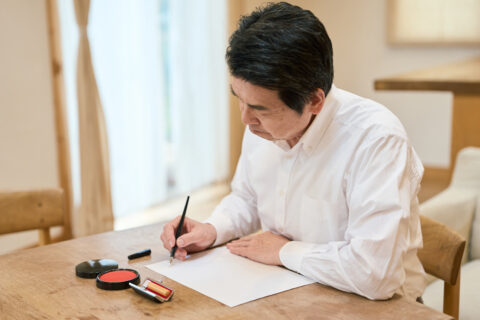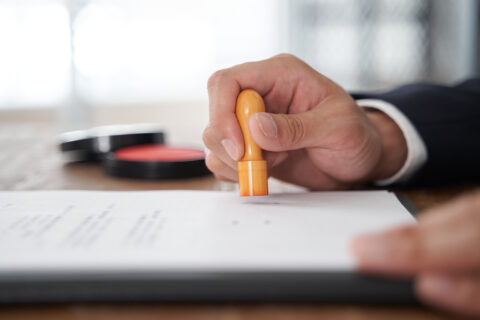

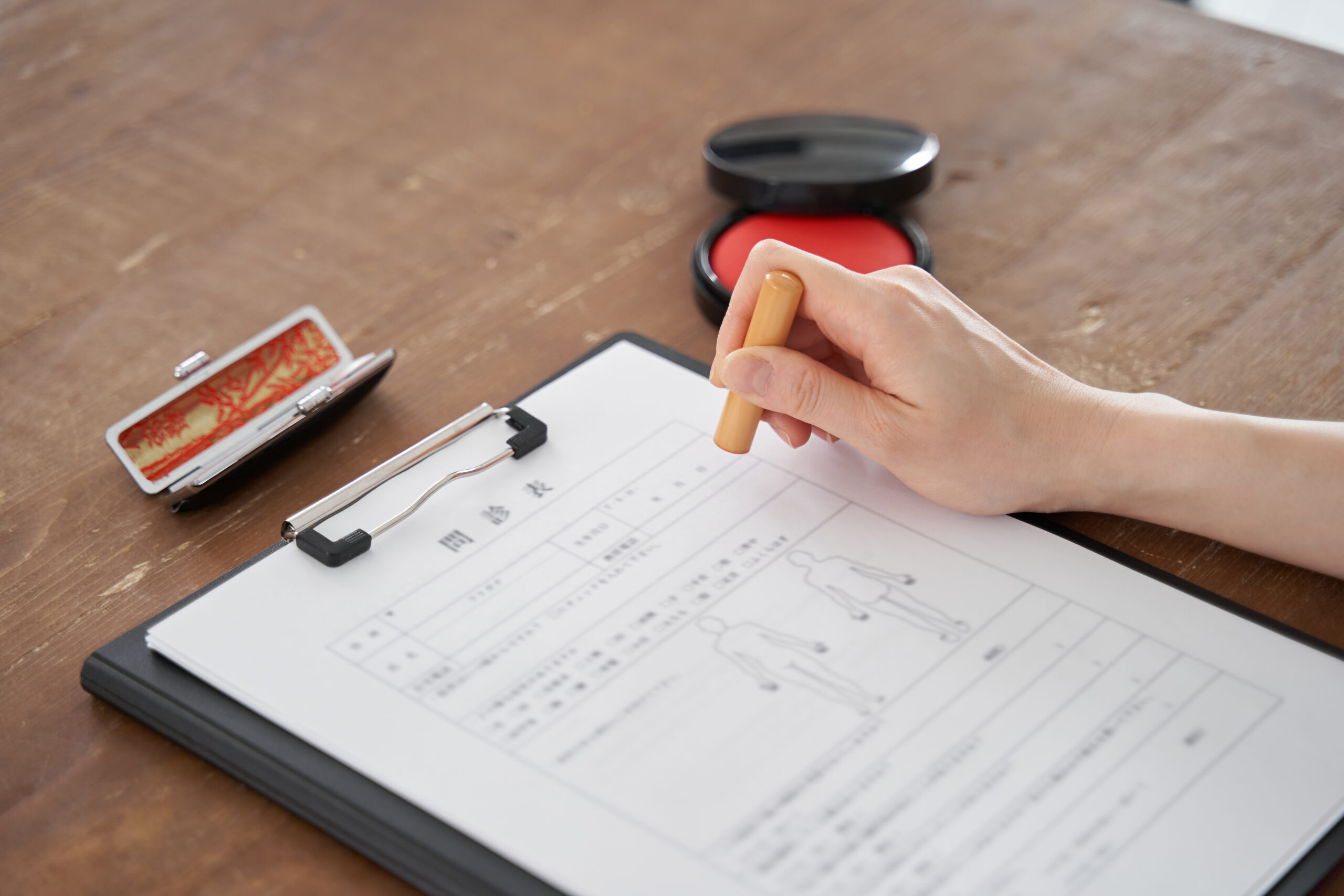
If you’ve just landed a design role in Japan — at a studio, agency, tech company, or in-house brand team — congratulations. Now comes the part nobody warned you about: the paperwork. Specifically, the part where someone hands you a form, points to a small blank circle, and says “hanko, onegaishimasu.” If you’ve never dealt with a Japanese seal before, that moment can feel oddly intimidating. But it doesn’t have to be. This guide is written specifically for designers navigating HR onboarding in Japan, whether you’re a UI/UX professional, a graphic designer, a motion artist, or a creative director stepping into a new position. Hanko for designers in Japan is a practical topic that rarely gets covered in the forums, so let’s fix that.
A hanko — also called an inkan — is a personal name stamp used in place of, or alongside, a handwritten signature on official documents. In Japan, it carries legal weight. For foreigners, the confusion usually starts because your name isn’t in kanji, and the whole system feels like it was built for someone else. It was, mostly. But that doesn’t mean you can’t use it confidently once you understand how it works.
By the end of this post, you’ll know exactly why your new employer is asking for one, which documents typically require it, what type of hanko makes sense for your situation, how to order one in English, and what common mistakes to avoid. Think of this as the practical briefing your HR department probably didn’t give you.
Why This Segment Is Asked for a Seal
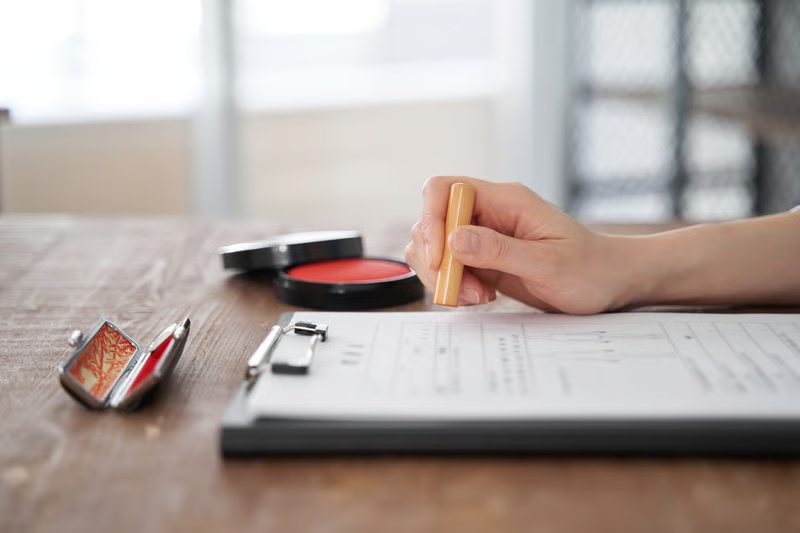
Designers are often surprised to learn that creative roles in Japan come with just as much administrative formality as any other profession. The assumption that “it’s a modern agency, they probably don’t use hanko” is one that catches a lot of people off guard. In reality, Japan’s corporate culture largely still runs on physical stamps, and this applies whether you’re joining a 10-person branding studio in Nakameguro or a 500-person enterprise software company in Osaka.
The short answer to why you’re being asked for a seal is this: hanko are how Japan formalises consent and identity on paper. When you sign an employment contract, a resident registration form, a bank account application, or a health insurance enrolment document, your stamp is how the institution confirms that you, specifically, agreed to what’s written. It functions like a wet signature in most Western countries, but it’s tied to a physical object rather than a gesture.
For designers in Japan specifically, there are a few common scenarios where this comes up quickly:
Scenario one: You accept a full-time offer at a Tokyo design agency. During your first week, HR gives you a stack of documents — employment contract, confidentiality agreement, housing allowance form, commuter pass request — and asks you to stamp each one. You don’t have a hanko. You scramble to find one at a convenience store, but the generic stamps there only carry common Japanese surnames. Your foreign name isn’t there.
Scenario two: You’re a freelance UX designer transitioning to a contract role. Your client company wants a stamped invoice and a project agreement before they’ll release payment. You’ve been submitting unsigned PDFs. Now they want something more formal.
Scenario three: You join a company that uses a hybrid system — most internal approvals are digital, but contracts with clients and vendors still require a physical stamp. You’re asked to create your own personal hanko for anything you sign on the company’s behalf as a project lead.
In all three cases, the expectation is the same: have a stamp, know how to use it, and don’t treat it as optional.
Common Documents and Timelines
Understanding which documents require a hanko — and when — helps you prepare before your start date rather than scrambling during onboarding week. Here is a practical overview of what designers typically encounter:
Employment contract: Almost universally stamped. You will be asked to affix your hanko at least once, sometimes in multiple places. This is usually the first document that requires it.
Resident registration (Jūminhyō procedures): If you’re registering your address at the local city hall — which you’re legally required to do within 14 days of moving — some municipalities will ask for a stamp on related forms.
Bank account opening: Major Japanese banks, including Japan Post Bank and regional banks, commonly require a hanko alongside your identification documents. Online banks are more flexible, but if your employer pays salary into a specific bank, you may not have a choice.
Health insurance and pension enrolment: Your company HR will typically handle these forms, but they often require your stamp as confirmation of personal details.
Commuter pass and expense reimbursement forms: Ongoing, not just during onboarding. These are internal forms that come up repeatedly throughout your employment.
Freelance or contract invoices: If you do any independent work alongside your job, or if you’re on a contract arrangement, stamped invoices are standard practice among many Japanese companies.
As for timelines: in most cases, you’ll need your hanko ready before or on your first day. Some employers will accept a short grace period of a few days, but it’s far better to have it sorted before you arrive. Ordering in advance — ideally one to two weeks before your start date — removes all the stress.
Recommended Hanko Type and Size
This is where designers often overthink it, and understandably so — you work with visual detail for a living, and you want something that feels right. The good news is that for everyday HR and professional use, the requirements are practical rather than ceremonial.
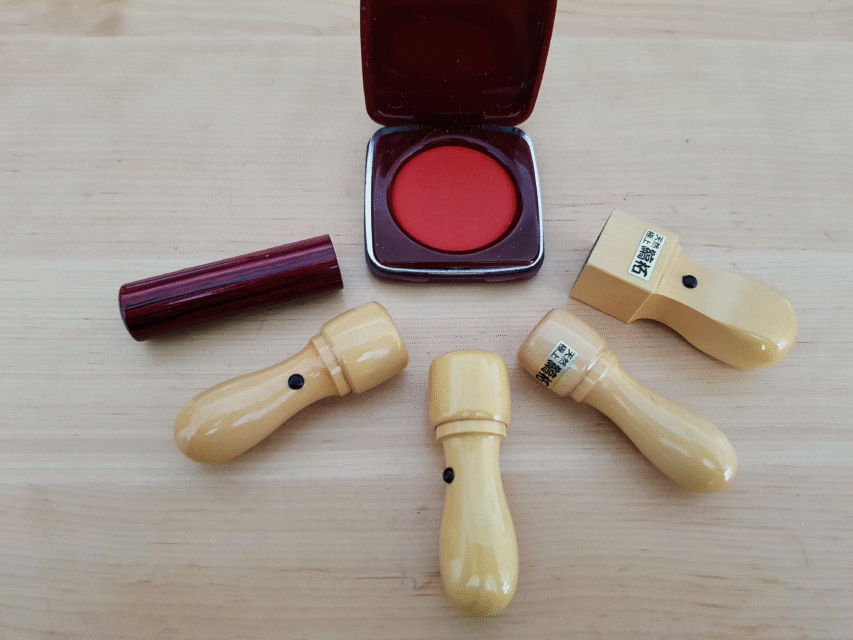
Type: For most working designers in Japan, a mitome-in (認め印) is the appropriate starting point. This is a personal recognition stamp used for everyday documents — contracts, forms, internal approvals, invoices. It doesn’t need to be registered with the government to be useful in most professional contexts. A jitsuin (実印), which is officially registered at city hall, is typically required only for higher-stakes legal transactions like property purchases or car registration. Unless your employer specifically asks for a registered seal, a mitome-in will cover virtually everything you need.
Material: Standard materials include plastic (acetal), wood, and various resins. For professionals who want something that feels personal and lasts longer, harder materials like ebony or buffalo horn are popular choices. As a designer, you’ll likely appreciate having something that doesn’t feel disposable.
Size: The standard size range for personal hanko is 10.5mm to 12mm in diameter. For women, 10.5mm is the most common recommendation. For men, 12mm is typical. Either is perfectly acceptable regardless of gender. Avoid going smaller than 10.5mm, as it can make your stamp difficult to read and may be rejected on official documents.
Name format: This is the most important part for foreigners. You have three main options:
- Katakana rendering of your name (e.g., サラ for Sara)
- Romanised name in Western characters
- A simplified or chosen Japanese name
Katakana is the most commonly accepted option in Japanese institutions. Romanised names on hanko are increasingly accepted, particularly in international companies, but may occasionally raise questions at conservative institutions like banks or city offices. When in doubt, katakana is the safer choice.
Common mistakes in this area:
- Ordering a hanko with a full first and last name when the standard is just one name or a shortened form
- Choosing a size below 10.5mm because it looks sleeker — this can cause readability issues
- Using a self-inking travel stamp instead of a proper inkan — these are not appropriate for official documents
- Waiting until the last minute, then buying a generic convenience store stamp that doesn’t match your name
Ordering Tips in English
The main barrier foreigners face is navigating the ordering process when they don’t read Japanese. This used to mean either finding a bilingual friend to help or guessing your way through a Japanese-language website. That’s no longer necessary.
HankoHub is built specifically for foreigners ordering personal hanko from outside Japan or without Japanese language skills. The ordering process is in English, you can submit your name in Roman characters and they’ll advise on the katakana rendering, and you can choose your material, size, and case. This takes the guesswork out of one of the more frustrating parts of settling into life in Japan.
A few practical ordering tips:
- Order at least one to two weeks before your start date. Shipping to Japan or within Japan can take several business days, and you don’t want to be chasing a delivery on your first week.
- Decide on your name format before ordering. Know whether you want your first name only, your full name, or a katakana version. If you’re unsure, ask the vendor — HankoHub provides guidance on this.
- Consider a protective case. A hanko without a case gets damaged easily, and the ink cap matters. Most vendors include a case as standard, but double-check.
- Keep your stamp in a consistent place. This sounds obvious, but losing your hanko is a real hassle. Treat it like your passport — know where it is at all times.
If you’re still looking for the right role, ComfysCareer is a solid starting point for foreigner-friendly jobs in Japan.
FAQ
Do I need a hanko if I work at a foreign company in Japan? It depends on the company. Many foreign-owned firms operating in Japan have adopted digital signature systems and no longer require a physical hanko for internal documents. However, if the company deals with Japanese clients, vendors, or government bodies, there’s a good chance you’ll still need one for external documents. Ask your HR team before your start date.
Can I use a signature instead of a hanko? Some institutions now accept signatures, particularly international companies and certain banks. However, Japanese institutions — including most city offices, domestic banks, and traditional employers — still commonly require a hanko. Having one means you’re never caught out.
What if my name is very long? Standard hanko are sized for relatively short name inputs. If your name is long, most vendors will help you choose a shortened or adapted version that fits the stamp area cleanly. Katakana rendering of a first name alone is the most practical solution for most foreigners.
Is one hanko enough, or do I need multiple? For most designers working in Japan, one personal hanko covers everything needed during onboarding and regular employment. If you later need to register a seal (jitsuin) for a specific legal transaction, you would typically get a second stamp for that purpose and register it separately at city hall.
Can I use the same hanko for both work and personal documents? Yes. A personal mitome-in is used for both professional and personal purposes. There’s no rule requiring separate stamps for different contexts.
What happens if I stamp in the wrong place or make a mess? It happens to everyone at some point. The standard procedure is to stamp lightly next to the error with the word 消印 (keiin, cancellation stamp) — or simply ask your HR department how they handle corrections. Don’t try to fix it yourself without guidance.
Next Steps

Now that you know what’s expected and why, the practical move is to get your hanko sorted before anything else. Don’t leave it until the first stack of forms lands on your desk. Head to HankoHub, choose your material and size, submit your name, and have it ready before your start date. It’s one small item that removes a surprising amount of friction from your first weeks in a new role.