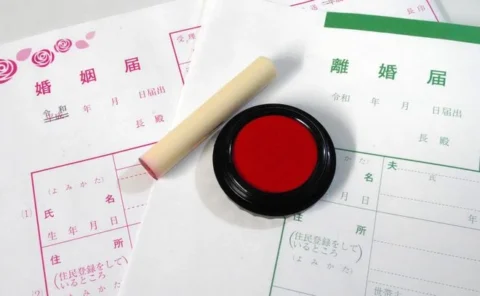

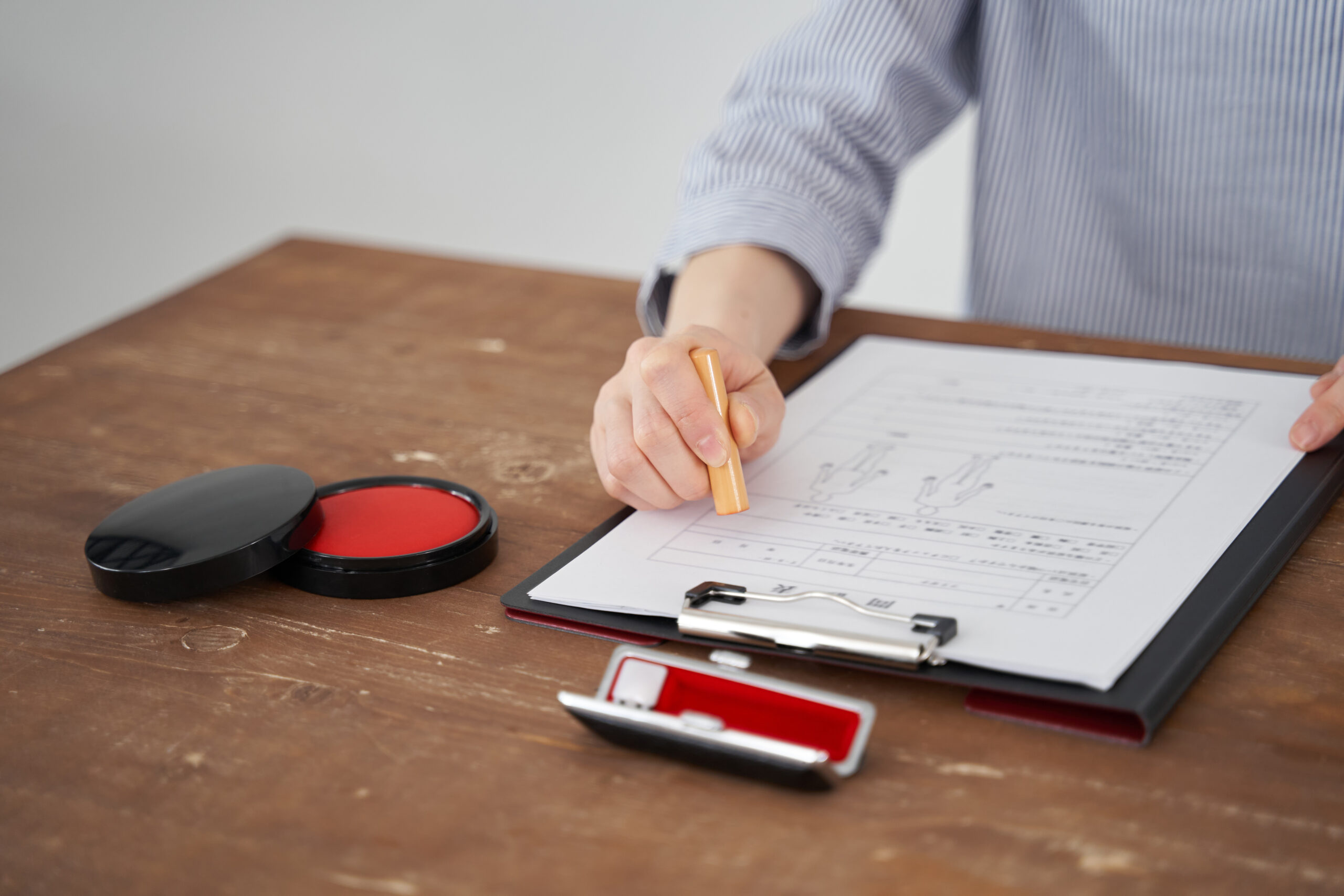
If you have recently arrived in Japan on a research visa, or you are preparing to do so, paperwork will find you faster than you expect. Within days of landing, you may be standing at a ward office counter, filling out a residence registration form, or sitting across from a university administrator who slides a document toward you and points to a small empty box with the word 認印 printed beside it. That box is for a hanko — and if you do not have one, the process stalls.
Hanko for researchers in Japan is a topic that rarely comes up in pre-departure briefings, yet it consistently catches foreign academics, postdoctoral fellows, and visiting scientists off guard. Unlike tourists who may never need one, researchers typically stay long enough to deal with bank accounts, housing contracts, institutional registration, and grant-related paperwork. A personal seal is not a novelty for this group — it is a working tool.
This guide covers why research roles specifically trigger hanko requirements, what documents you are likely to sign during your time in Japan, which type of seal makes the most sense for your situation, and how to order one in English before the paperwork pile grows.
Why This Segment Is Asked for a Seal
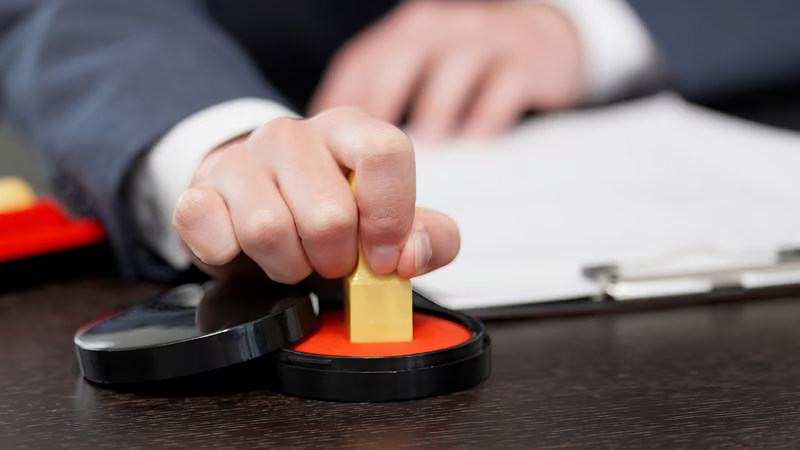
Research positions in Japan, whether at a national university, a private institution, a government-affiliated laboratory, or an independent research institute, tend to involve a concentration of formal administrative processes in a short window of time. Within the first few weeks, you are often simultaneously registering your address, opening a bank account, signing an employment or fellowship agreement, enrolling in national health insurance, and completing internal HR paperwork.
Each of these processes may, depending on the institution and the local ward office, require a hanko impression rather than a signature. This is not universal — some institutions accept a signature from foreign nationals — but many still default to their standard forms, which have a designated seal box. Even when a signature is technically accepted, staff sometimes prefer a seal because it fits their filing system.
There is also an institutional culture element. In Japanese academic and government environments, a personal seal signals that you are a participant in the system, not a visitor passing through. Administrators who work with foreign researchers regularly will often tell you, informally, that having a hanko simply makes things go more smoothly. It removes a small friction point that would otherwise require someone to call a supervisor, pull out an exception form, or explain the situation to a colleague.
For postdoctoral researchers in particular, the paperwork load can be surprisingly heavy. Unlike undergraduate exchange students who may be handled through a dedicated international office, postdocs are often processed through the same administrative channels as regular staff. That means standard employment forms, health insurance registration, and sometimes pension enrollment documents — all of which commonly require a seal.
Common Documents and Timelines
Understanding when you will need your hanko, and for what, helps you prioritise getting one before you need it rather than scrambling after you arrive.
First two weeks (high pressure):
- Residence registration at your local ward office (住民登録) — required within 14 days of moving in
- National health insurance enrollment, often processed at the same window
- Bank account opening — most major banks, including Japan Post Bank, commonly ask for a hanko
- Housing contract signature if you are renting privately rather than through university accommodation
First month:
- Employment contract or fellowship agreement with your institution
- Internal HR registration forms (direct deposit setup, emergency contact forms, department registration)
- JSPS or other grant-related paperwork if applicable
Ongoing:
- Expense reimbursement forms at many universities still use printed forms with seal boxes
- Internal approval processes for equipment purchases, conference travel, or external collaborations
- Lease renewals if your position extends
One micro-scenario that comes up often: a researcher arrives on a Friday, moves into a weekly apartment over the weekend, and tries to open a bank account on Monday. The bank asks for a hanko. The researcher has none. The account opening is pushed back a week, which delays the institution’s ability to process salary payments. A small delay, but an annoying one that is entirely avoidable.
Another common situation: a postdoc whose fellowship paperwork arrives by postal mail with a return deadline. The documents require a seal. The researcher spends two days trying to find a hanko shop, discovers that most shops cannot engrave foreign names without advance ordering, and ends up asking a Japanese colleague to stamp the document temporarily — which creates an awkward situation and a compliance grey area.
Recommended Hanko Type and Size
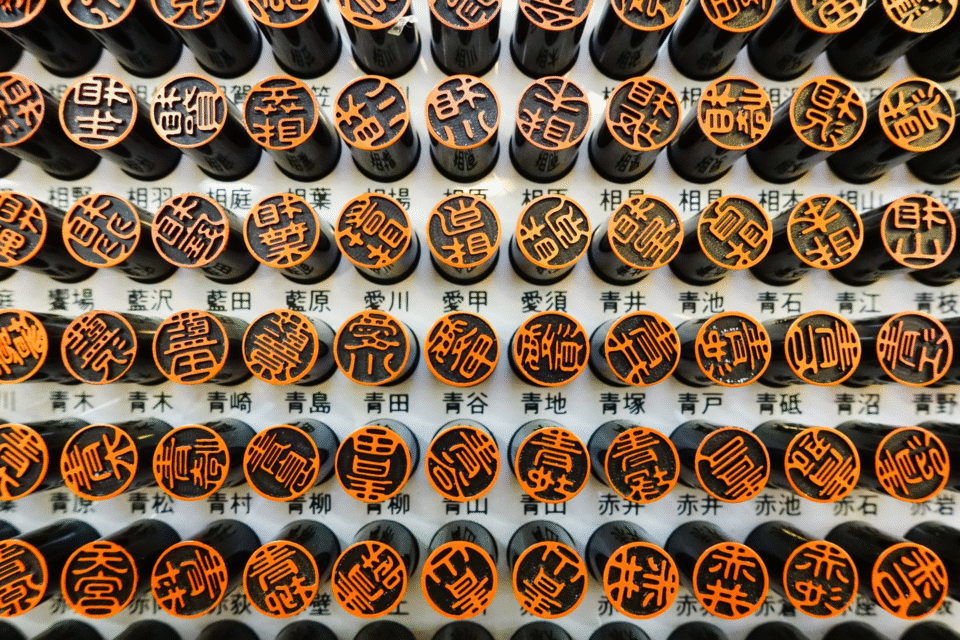
For most foreign researchers in Japan, a practical jitsu-in or mitome-in is the right starting point. Here is how to think about the choice.
Mitome-in (認印) — also called a daily-use hanko — is an unofficial personal seal used for general administrative purposes. This covers the majority of what researchers deal with: bank account applications at some institutions, internal HR forms, expense claims, and general office paperwork. It is smaller, lighter, and does not need to be registered with a ward office.
Jitsu-in (実印) — a registered seal — is required for higher-stakes legal documents such as property purchase contracts, vehicle registration, and certain guarantee agreements. As a researcher, you are unlikely to need one unless you are buying property or signing a major legal contract in your personal capacity. If that situation arises, you would register the seal with your ward office and receive a seal certificate (印鑑証明書).
For most researchers, a good mitome-in covers daily needs, and ordering a jitsu-in later if required is straightforward.
Size guidance: A diameter of 10.5mm to 12mm is standard for personal use and fits the seal boxes on most Japanese forms. Women traditionally use slightly smaller sizes and men slightly larger, but this is convention rather than a rule — choose what feels practical.
Material: Acrylic and resin are durable, affordable, and widely used. Ebony and other hardwoods are popular for longevity. Avoid very soft materials if you plan to use the seal frequently.
Name rendering: This is where foreign researchers sometimes hesitate. Your name can be rendered in katakana (phonetic representation of your name’s sound), kanji if your name has a Chinese or Korean origin, or romanised letters. Katakana is the most common and practical choice for foreign names. It is widely accepted and clearly readable to Japanese administrators.
A checklist before you order:
- Confirm with your institution whether a mitome-in or jitsu-in is needed for your contract
- Decide on name rendering (katakana recommended for most foreign names)
- Choose a diameter between 10.5mm and 12mm for standard form compatibility
- Select a durable material if you expect regular use
- Order before you arrive or within the first few days of landing
Ordering Tips in English
Finding a hanko with your foreign name engraved, in English, from outside Japan, used to be genuinely difficult. Most local hanko shops do not have English customer service, and walk-in shops in Japan often struggle with non-Japanese names.
Online ordering in English has made this significantly easier. HankoHub is designed specifically for foreigners who need a Japanese seal without navigating the process in Japanese. You can select your name rendering, choose your material and size, preview the design, and order with English-language support throughout.
A few practical ordering tips:
Order before you land if possible. Japan-based shipping is fast, but if you are ordering from overseas, factor in production and delivery time. Arriving with a hanko already in hand removes one item from your first-week to-do list.
Double-check your katakana. If you are ordering with a katakana name, confirm the romanisation-to-katakana conversion before submitting. A name like “Petra” or “Alexei” may have more than one reasonable katakana rendering. Pick the one that sounds most accurate to your own pronunciation.
Keep your receipt and design record. If your seal is ever lost or damaged, having the original design on file makes reordering much faster.
Common mistakes researchers make when ordering:
- Ordering a size that is too large (above 15mm) for standard form seal boxes
- Choosing a very similar rendering to a common Japanese surname, which can cause confusion in institutional settings
- Waiting until the day before a deadline to order and paying premium for rushed delivery
- Ordering a jitsu-in-grade seal before confirming it is actually required (unnecessarily expensive for general use)
If you are still looking for the right role, ComfysCareer is a solid starting point for foreigner-friendly jobs in Japan.
FAQ
Do I legally have to have a hanko as a foreign researcher in Japan? Not always. Some institutions and banks accept a signature from foreign nationals. However, many administrative forms in Japan are standardised with seal boxes, and in practice a hanko often makes the process significantly faster and less complicated. It is worth having one even if it is not strictly required everywhere.
Can I use the same hanko for everything? For daily administrative purposes, yes — a single mitome-in handles most situations. If you are ever required to produce a jitsu-in (registered seal) for a specific legal document, you would register a separate seal at your ward office at that time.
How long does it take to get a hanko made? Production times vary. Standard orders through services like HankoHub typically take a few business days. If you order from overseas before your arrival, allow time for international shipping on top of production.
What if my name is very long? Hanko are small, so extremely long names need to be shortened or adapted. A common approach is using a shortened phonetic version of your first name, or your family name only. Discuss options with the maker if you are unsure — a reputable service will guide you.
Is a digital hanko accepted in Japan? Digital seals are growing in acceptance, particularly for internal company documents and some online administrative platforms. For official procedures at ward offices, banks, and most institutional paperwork, a physical seal remains the standard. It is worth noting the digital option if you work partly in remote or hybrid environments, but for the administrative processes described in this guide, a physical hanko is the reliable choice.
What happens if I lose my hanko? For a mitome-in, losing it is inconvenient but not a major legal event — you can simply order a replacement. For a jitsu-in (registered seal), you should notify your ward office to cancel the registration and register a new seal when it arrives.
Next Steps

If your research position in Japan is confirmed, or even in the planning stages, sorting out your hanko early removes one of the more reliable friction points in the first-week administrative rush. Head to HankoHub to order a practical personal hanko with English-language support — designed with foreigners in mind, and ready to handle the paperwork Japan will send your way.