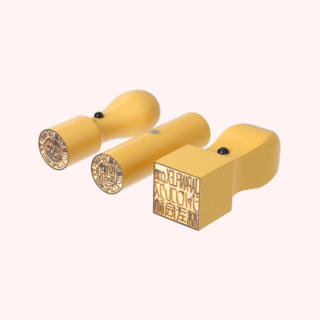


Starting a research position in Japan is exciting right up until the moment the HR coordinator slides a stack of forms across the desk and points to a row of small circular boxes you have never seen on a document before. Those boxes are seal fields, and filling them correctly — with a personal hanko, not a signature — is one of the small but consequential things nobody thinks to mention in the offer letter.
The hanko for researchers in Japan comes up earlier and more persistently during HR onboarding than most foreign researchers anticipate. It is not just the employment contract. It is the tax withholding form, the social insurance enrollment card, the commuting allowance application, the equipment loan agreement, and sometimes the lab access request. Each of these documents may have its own seal field, and each one represents a small administrative checkpoint where being unprepared adds delay to a process that is already dense with unfamiliar procedures.
This guide addresses the HR onboarding experience specifically — not housing, not banking, but the internal institutional paperwork that begins on your first day and continues quietly in the background for weeks afterward. The audience is foreign researchers of all kinds: postdocs on JSPS fellowships, visiting scientists on short-term contracts, permanent faculty at national universities, and researchers joining private R&D facilities. The paperwork culture differs somewhat between these settings, but the core hanko question is consistent across all of them.
By the end of this guide you will know which onboarding documents typically require a seal, what kind of hanko to order, and how to get one in English before your first day at the institution.
Why This Segment Is Asked for a Seal

Japanese institutional HR departments operate within a documentation culture that has changed more slowly than almost any other sector. While private companies in major cities have gradually adopted digital workflows and signature-based processes, universities, national research institutes, and many private research facilities still process employment paperwork through physical forms with designated stamp fields. This is not bureaucratic stubbornness — it reflects a deep institutional norm in which a personal seal functions as a consistent, verifiable identifier across all documents associated with a single individual.
For foreign researchers, the situation is slightly more nuanced. Some institutions have adapted their onboarding materials for international hires and may offer signature-based alternatives for certain forms. Others have not adapted at all and present the same form packet to every new employee regardless of nationality. You often will not know which category your institution falls into until you are already at the HR desk.
Here is where the seal requirement tends to surface most reliably during researcher onboarding:
- Employment contracts and appointment letters: The formal agreement between you and the institution is typically the first document in the onboarding packet. Many national universities and research institutes include a seal field alongside the signature line, and HR staff expect both to be completed.
- Social insurance and pension enrollment: Enrollment in Japan’s national health insurance and pension systems (shakai hoken) requires submission of forms to the institution’s HR department. These forms, which HR then files with the relevant government agencies, commonly include employee seal fields.
- Tax withholding declarations: The income tax withholding form (kyūyo shotoku-sha no fuyō kōjo shinkokusho) is submitted at the start of employment and again at year-end adjustment. This form has traditionally included a seal field, though some institutions now accept a signature in its place.
- Internal request forms: Lab equipment loans, key and access card issuance, IT account requests, and commuting allowance applications are all forms that researchers encounter in their first weeks. The level of documentation rigor varies by institution, but in research environments — particularly at national universities — internal forms often follow the same stamped-document convention as official HR paperwork.
The cumulative effect is significant. Even if no single document strictly requires a hanko by law, the practical expectation across a full onboarding packet at a traditional research institution is that you will use a personal seal repeatedly. Arriving without one means either delaying submissions, asking HR to make exceptions, or relying on colleagues to lend you a stamp — none of which creates a good first impression.
Common Documents and Timelines
HR onboarding at Japanese research institutions is rarely a single event. It unfolds across several weeks, with different document categories arriving at different stages. Understanding the timeline helps you prepare rather than react.
Before your start date: Pre-arrival paperwork Some institutions send preliminary documents before you arrive — particularly if your position involves a fellowship or grant with specific enrollment requirements. JSPS fellows, for example, often receive paperwork related to their fellowship terms before they set foot in Japan. These documents may be handled digitally or by post, but if a seal field appears, you will need to have your hanko ready or request guidance from your host institution on acceptable alternatives.
Day one to week one: Core employment documentation The first week is typically the densest period for HR paperwork. Expect to submit your employment contract, social insurance enrollment forms, bank account information for salary payment, and tax declarations within this window. HR coordinators at larger institutions often schedule a dedicated onboarding session for new international researchers, where these documents are processed together. This is the session where the hanko question is most likely to come up without warning if you have not prepared.
Week two to four: Institutional access and internal forms After the core HR paperwork is submitted, a second wave of internal forms tends to follow. Lab access requests, safety training acknowledgments, equipment loan agreements, and research ethics compliance forms are common in this period. The pace is slower, but the documents are no less important — missing or incorrectly submitted forms can delay access to facilities you need for your work.
Ongoing: Annual forms and renewals Japanese employment generates recurring paperwork. Year-end tax adjustment forms, contract renewal documents, fellowship renewal applications, and annual health check acknowledgments all recur throughout your time at the institution. A personal seal that you register consistently from the start makes each subsequent round of paperwork straightforward.
Common mistakes during onboarding:
- Waiting to order a hanko until after the first HR meeting. The onboarding session often happens within the first two or three days — order your seal before you arrive.
- Using a different stamp for different documents. Consistency matters in institutional records. Use the same hanko throughout your entire tenure.
- Leaving seal fields blank and submitting forms with signatures only. Even where a signature is technically acceptable, leaving a designated seal field empty can flag your form for review or return.
- Not keeping a record of which seal you used. If your hanko is lost or damaged and you need to replace it, having documentation of the original rendering helps ensure the replacement matches institutional records.
- Assuming the international office will flag the requirement in advance. They often do not, because it is such an embedded assumption in Japanese institutional practice that it does not occur to Japanese staff to mention it.
Recommended Hanko Type and Size

For HR onboarding purposes, the hanko category you need is a mitome-in (認め印) — a personal seal used for everyday administrative documents. This is the same category used for rental contracts and bank account setup, and it is the appropriate tool for the full range of institutional paperwork a researcher encounters during onboarding.
A registered seal (jitsuin) is not required for employment contracts or HR forms in the vast majority of cases. Jitsuin are used for high-stakes legal transactions — property purchases, significant loans, formal powers of attorney. Your HR coordinator is not expecting a registered seal; they are expecting a clean, consistent personal stamp.
Size: 10.5mm to 12mm is the standard range. For HR forms specifically, 10.5mm is the most practical choice because institutional documents — particularly government-format forms like tax declarations and insurance enrollment cards — tend to have small, standardized seal fields. A 10.5mm seal fits these fields cleanly. If you prefer 12mm, it is generally acceptable, but 10.5mm is the safer default.
Material: For a working researcher who will use this seal repeatedly over the course of a contract, durability matters more than aesthetics. Hard resin is practical and long-lasting. If you want something with a more professional weight and appearance — appropriate for a faculty position or a senior research role — black buffalo horn or cherry wood are popular choices that hold up well over time.
Name rendering: This is the most consequential decision for long-term administrative consistency.
- Katakana: The standard choice for most foreign researchers. Your name is rendered phonetically in katakana, matching how your institution will typically render it in Japanese internal records. HR staff and government form processors recognize this immediately.
- Kanji: If you have a kanji name — common for researchers from China, Korea, or Taiwan — using kanji on your hanko creates the cleanest match with institutional records and is often the most professionally appropriate option.
- Romaji: Increasingly accepted, and sometimes the most direct match with your residence card if your institution uses your name in Latin script in its English-language records. Confirm with your HR coordinator which name format they use in their system before finalizing your order.
The critical point is consistency: whatever rendering you choose, use it on every document from day one. Changing your hanko mid-contract requires updating your record with the HR department and potentially re-stamping documents already in your file.
Ordering Tips in English
Most foreign researchers encounter the hanko requirement for the first time at the HR desk — which is already too late to order one before the onboarding session. The researchers who navigate this most smoothly are those who ordered their seal before departure or immediately upon arrival, treating it as part of the standard pre-move checklist alongside residence card preparation and housing arrangements.
Practical guidance for ordering:
- Order before your start date, not after. If you know your institution’s start date, that gives you a fixed deadline. Work backward from it. Domestic delivery within Japan is typically two to three business days from a reputable service. International shipping takes longer — factor this in if you are ordering from overseas.
- Use a service with an English interface and name preview. The rendering of your name in katakana or kanji needs to be accurate before the seal is cut. A good service will show you a preview so you can confirm the script matches how your institution represents your name.
- Specify 10.5mm unless you have a specific reason for 12mm. For institutional HR paperwork, 10.5mm fits the widest range of form fields without adjustment.
- Confirm ink color before ordering. Red is the standard color for personal seals in Japan. Some services default to black. Check before you finalize the order.
- Order one seal and use it for everything. Researchers sometimes consider ordering separate seals for different purposes. For practical purposes, one good mitome-in covers the full range of documents you will encounter — banking, rental, HR, and internal institutional forms. Keeping it simple keeps your records consistent.
HankoHub handles the complete ordering process in English — you input your name in romaji, select your rendering style, preview the result, and choose your size and material before anything is made. For researchers who need a functional seal ready before their first HR meeting, this is the most straightforward path.
If you are still looking for the right role before your research position begins, ComfysCareer is a solid starting point for foreigner-friendly jobs in Japan.
FAQ
Will my HR department definitely require a hanko, or might they accept a signature? It depends on the institution. Private research facilities and some newer university departments have moved toward signature-based processes for foreign employees. National universities and traditional research institutes are more likely to expect a seal on standard forms. The safest approach is to email your HR coordinator before your start date and ask directly whether a hanko is required for onboarding documents. Having one ready regardless means you are covered either way.
What if I arrive before my hanko is delivered? Ask your HR coordinator whether you can submit forms with a signature temporarily and re-stamp once your seal arrives. Most HR departments will accommodate this for new international hires, though they may hold the documents until the seal is applied. This is a workable fallback, but it creates a second appointment and potential delays — ordering early is strongly preferable.
Can I use the same hanko I ordered for my bank account? Yes, and you should. Using one consistent personal seal across banking, rental, and HR documentation creates a coherent paper trail. If you ever need to update any of these records — changing banks, renewing your lease, extending your contract — having one known seal simplifies the process considerably.
My contract is only six months. Is a hanko still worth ordering? For a six-month research contract, you will still encounter HR onboarding forms, likely a bank account setup, and possibly rental paperwork. The investment in a quality personal seal is modest relative to the administrative friction it prevents. Many researchers on short contracts also find that their stay extends — having a hanko in place from the beginning means you are not scrambling if your contract is renewed.
Is there a risk that my hanko will not be accepted because I am a foreigner? No. A properly made personal seal — correctly sized, cleanly stamped, with your name in katakana or kanji — will be accepted by HR departments, banks, and real estate agencies without issue. The occasional question that arises is about name rendering accuracy, not about the legitimacy of a foreign national using a hanko. Japanese institutions are accustomed to processing documents from foreign researchers and expect personal seals from them.
What should I do if I lose my hanko mid-contract? Notify your HR department promptly. You will likely need to order a replacement seal and formally update your record with HR and your bank. Some institutions require a written notification when an employee’s seal changes. Having a record of your original seal’s rendering — a photo of the stamp face or the original order confirmation — makes the replacement process faster and ensures the new seal matches the old one as closely as possible.
Next Steps

HR onboarding in Japan is one of those processes that feels manageable right up until you are sitting across from an HR coordinator who is pointing at a stamp field and waiting. The researchers who get through it most smoothly are the ones who prepared their hanko the same way they prepared their visa documents — before they needed it, not after.
Order your personal hanko at HankoHub, where the entire process is in English, name previews are included before production, and the seals are built for the kind of sustained, real-world use that a research contract generates. One practical step now saves a complicated conversation on your first day.