

Finding a place to live in Japan as a foreign restaurant worker is one of the more demanding administrative tasks you’ll face when you first arrive. The job itself might come together quickly — restaurants hire fast, especially in cities with high turnover — but the housing side moves on a different timeline, with its own set of requirements that catch a lot of newcomers off guard.
One of those requirements is the hanko. At some point during the rental process, a real estate agent, property management company, or landlord will ask you to stamp a document with your personal seal. If you don’t have one yet, the transaction stalls. In Japan’s rental market, where competition for apartments can be real and landlords often have multiple applicants, a delay in paperwork is not a minor inconvenience.
This guide covers everything a foreign restaurant worker needs to know about using a hanko in Japan’s rental process: why it gets asked for, which documents require it, what type of seal to order, and how to get one without needing to navigate a Japanese-language website or make any guesses about your name format.
Why This Segment Is Asked for a Seal
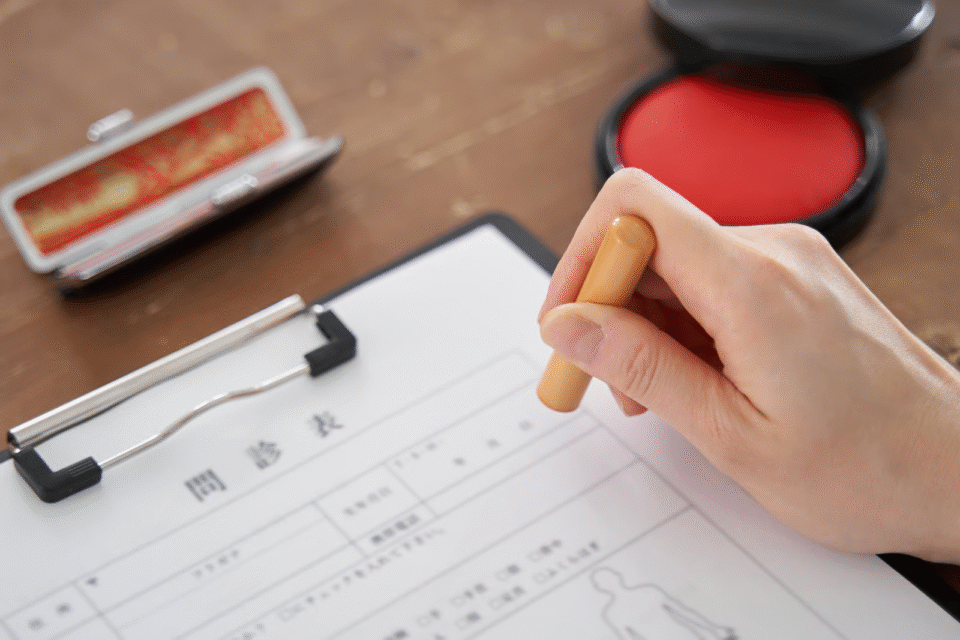
Restaurant work in Japan creates a specific housing situation that is worth understanding before you start apartment hunting. Many restaurant jobs — particularly entry-level and part-time positions — come with irregular hours, variable monthly income, and employment contracts that don’t always look reassuring to a Japanese landlord. At the same time, you need housing quickly, often before your first paycheck arrives.
Japan’s rental market is built around a formal, document-heavy process. It involves contracts, guarantor agreements, agency paperwork, and municipal registration — all of which flow through a system where the personal seal has long served as a mark of identity and agreement. Signing your name in the Western sense is increasingly accepted, particularly at larger, more internationally experienced agencies. But the hanko remains a standard expectation at many points in the process, especially for longer-term lease agreements.
For restaurant staff specifically, the paperwork chain tends to move quickly and involve multiple parties. You might be signing a lease with a landlord, a separate management agreement with an agency, and an emergency contact or guarantor form — sometimes on the same day. Each of these may carry a stamp field. Arriving without a hanko means either returning another day or asking the agent to accept a signature in its place, which not all will do.
The practical scenario is familiar to many foreign workers: you find an apartment, the agent confirms it’s available, and you’re told to come in Thursday to sign the contract. You show up, everything is ready, and the agent points to a stamp box on the lease. You have your residence card, your My Number card, your proof of income — but no hanko. The appointment gets rescheduled. Someone else may take the apartment.
That scenario is entirely avoidable, and having a hanko ready before you start your apartment search is the simplest way to prevent it.
Common Documents and Timelines
The rental process in Japan involves several distinct stages, and the hanko can appear at more than one of them. Knowing which documents typically require a seal — and when — helps you plan rather than react.
Lease agreement (chintai keiyakusho): This is the primary document where your hanko will almost certainly be required. A standard lease agreement is a formal legal document, and stamping it is part of confirming your identity and agreement as a tenant. Timeline: at the contract signing appointment, which typically happens within a week of your application being approved.
Rental agency agreement: If you’re working with a real estate agency — which most renters in Japan do — there is often a separate agreement governing the agency’s role in the transaction. This may also carry a stamp field. Timeline: same appointment as the lease, or shortly before.
Guarantor or rent guarantee company forms: Most foreign renters in Japan use a rent guarantee company (hoshō gaisha) instead of a personal guarantor, since few people have a Japanese national who can serve in that role. These forms require personal information and a stamp. Timeline: part of the application process, before contract signing.
Resident registration (jūminhyō related paperwork): Once you have an address, you’re required to register at your local city hall. While this process itself may not always require a hanko, some related forms — particularly if you’re registering a change of address from a previous residence — can include a stamp field. Timeline: within two weeks of moving in, as required by law.
Moving company agreements: If you use a professional moving service, some companies use stamped agreements for their service contracts. This is less universal but common enough to mention. Timeline: before your move date.
A practical checklist for the rental process:
- Hanko (mitomein, your name in katakana or romaji)
- Residence card (zairyu card)
- Passport
- My Number card or notification letter
- Proof of income (pay slips, employment contract, or employer letter)
- Bank account details for direct debit setup
- Emergency contact information
- Hanko case and ink pad
Having everything on this list ready before your first agency appointment puts you in the strongest possible position as an applicant.
Recommended Hanko Type and Size

The type of hanko that makes sense for rental paperwork depends on what you’re signing. For most foreigners working in restaurants and renting a standard apartment, the answer is a mitomein — an everyday personal seal that does not need to be registered at city hall.
There is one exception worth knowing about. If you’re signing a lease that involves a particularly large deposit, an unusually long contract term, or any kind of property purchase agreement, you may be asked for a jitsuin — a registered seal with an accompanying certificate from city hall. For standard apartment rentals, this is not typically required. But if an agent or landlord asks specifically for a registered seal, that request is telling you something about the formality of the transaction.
For the standard rental scenario:
Type: Mitomein (unregistered personal seal)
Size: 10.5mm is the most practical choice. It fits the stamp fields on standard Japanese documents without looking out of place. Some people go slightly larger at 12mm, which is also acceptable, but 10.5mm is the reliable default.
Material: Acrylic is fine. The material choice matters more for decorative or investment pieces. For a working seal used on rental documents, clarity and durability are what count, and standard acrylic delivers both.
Name format: Use your name as it appears on your residence card. For most foreign residents, this means your family name in katakana. Romaji is increasingly accepted but katakana remains the more consistent choice for formal documents. If your name is long, using your surname only is standard practice.
Common mistakes to avoid:
- Ordering a seal before checking your residence card. The name on the seal should match the name on your official documents. Even a small difference in katakana spelling can create questions.
- Choosing an overly decorative font. A seal used on rental documents needs to be legible and consistent. Artistic designs look appealing but can cause complications if a document processor questions whether two stamps from the same seal are actually the same.
- Ordering too late. Japan’s rental market does not wait. If you know you’re going to be apartment hunting, order your hanko first.
- Assuming a signature will always be accepted. Some agencies and landlords will accept a signature in place of a seal, but you cannot guarantee this in advance. Having a hanko removes the uncertainty entirely.
Ordering Tips in English
For foreign restaurant workers with limited Japanese, the clearest path to a correctly made hanko is using a service designed for exactly that situation.
HankoHub is built for foreigners navigating Japan’s paperwork requirements. The entire ordering process runs in English, which means you don’t need to transliterate your name yourself, guess at size conventions, or try to communicate material preferences through a Japanese-language form. You select your options, confirm your name, and the seal is made and shipped.
A few practical tips to make the order go smoothly:
Check your residence card before you order. Your name in katakana, exactly as it appears on your card, is what you want on your seal. Don’t rely on memory — look at the card directly.
Choose 10.5mm for a general-purpose seal. If you’re ordering specifically for rental documents, this size works reliably across all standard document formats.
Order as soon as you know you’ll be apartment hunting. Standard delivery takes a few days to a week. Ordering before you start your search means the seal arrives before you need it, not after.
Get the carrying case. Most orders from HankoHub include one, but confirm before completing your order. A case keeps the ink pad in good condition and protects the seal face.
If you’re still looking for the right role, ComfysCareer is a solid starting point for foreigner-friendly jobs in Japan.
FAQ
Do I need a hanko to rent an apartment in Japan as a foreigner? In most cases, yes. While some modern agencies and landlords will accept a signature, the hanko remains a standard requirement on Japanese lease agreements and related documents. Having one ready removes a potential point of friction in the application process.
Does my hanko need to be registered for rental paperwork? For standard apartment rentals, an unregistered mitomein is typically sufficient. A registered seal (jitsuin) is generally only required for more significant legal transactions. If an agent asks specifically for a registered seal, you can register your hanko at your local city hall — the process is straightforward and does not take long.
What name should I use on my hanko? Your name as printed on your residence card. Most foreigners use their family name only in katakana, which is the standard format for a mitomein. Confirm the exact spelling before ordering.
Can I use the same hanko for my bank account and my apartment rental? Yes. A personal mitomein is a general-purpose seal. The same stamp you use to open a bank account can be used on rental documents, employment paperwork, and any other standard administrative forms. You only need one seal for everyday use.
How far in advance should I order my hanko? Order before you start actively searching for apartments. If you already have a job lined up and know you’ll need housing, that’s the right time to order. Standard delivery typically takes three to seven business days, so building in a week of lead time is sensible.
What if my name is very long in katakana? Using your surname only is entirely standard. Most Japanese people use surname-only seals for everyday documents. If your surname is also long, a reputable hanko service will advise you on how to format it to fit the seal face cleanly.
I’ve heard some landlords won’t rent to foreigners. Does having a hanko help? A hanko signals that you are prepared to engage with Japan’s administrative process in the expected way. It does not overcome every barrier in the rental market, but it removes one practical objection and demonstrates a level of local preparation that can work in your favor with undecided landlords.
Next Steps
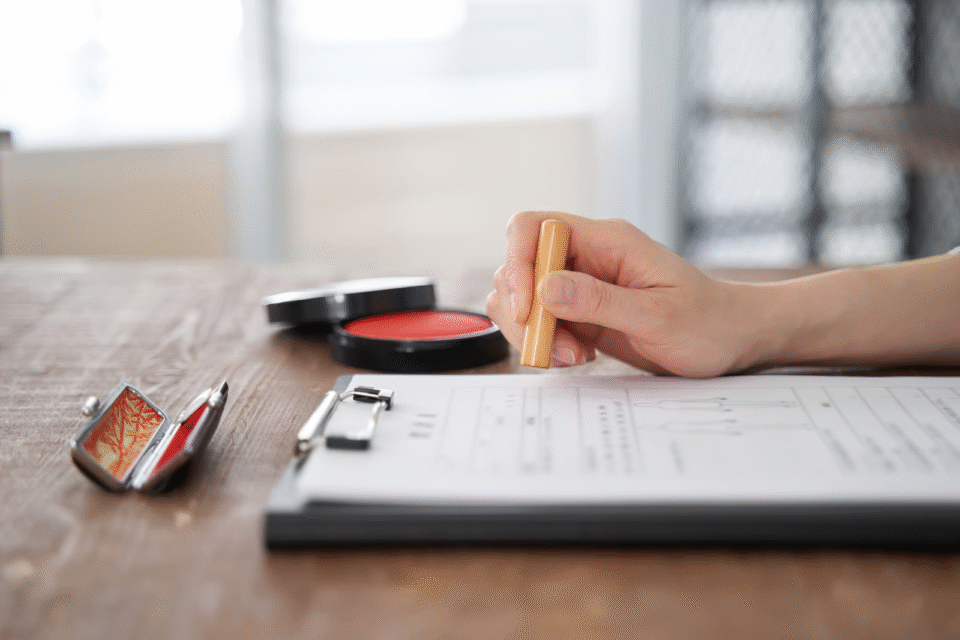
Before your first apartment viewing, before your first meeting with a real estate agent, get your hanko sorted. It is one of the few things in Japan’s rental process that you can fully control in advance, and having it ready changes the dynamic of every document-signing moment that follows. Visit HankoHub, order a standard 10.5mm mitomein with your name in katakana, and have it waiting at home before your search begins.