
Going freelance in Japan is exciting — and then the paperwork arrives.
Before your first client even mentions payment terms, you will likely encounter a small square box on a contract, an invoice template with a blank stamp field, or a client who pauses and asks whether you have a hanko. If you are a foreigner freelancing in Japan, that moment can feel disorienting. You know what a signature is. You are less sure about a 13.5mm red circle.
The good news is that the hanko system is not complicated once you understand its logic. This post walks you through why freelancers use seals, which type actually fits your situation, how to use one correctly on invoices and contracts, and where the digital version makes sense. By the end, you will know exactly what to order and why.
Why freelancers use seals
The short answer: trust and formality.
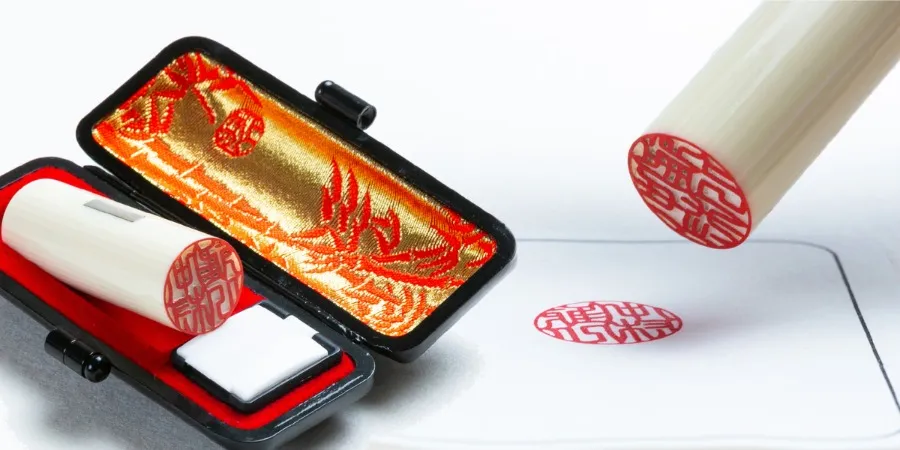
In Japan, a hanko has historically served the same function as a handwritten signature elsewhere — it confirms identity and signals agreement. For a freelancer, the practical weight of this is real. When a client receives a contract or invoice with a clean, professional stamp, it signals that you are serious, organized, and operating in a way that aligns with Japanese business norms. For many Japanese clients, especially small businesses and older-generation managers, a stamped document simply feels more complete than one that only has a typed name.
This matters for freelancer hanko Japan purposes for three specific reasons.
First, many standard Japanese contract templates include a dedicated stamp field (印鑑欄). If you leave it blank while your client’s side is stamped, the asymmetry is noticed.
Second, invoices in Japan often follow a convention where the issuer’s seal appears near the business name or at the bottom of the document. Clients filing paperwork internally expect to see it.
Third, building a freelance reputation in Japan is partly about signaling that you understand the local professional environment. Having a hanko — even if it is not always legally mandatory — communicates that you did your homework.
Consider this scenario: a foreign UX designer in Tokyo lands a contract with a mid-size Japanese apparel company. The contract comes through with two stamp fields. She signs on the dotted line and returns it unsigned in the stamp field. HR emails back to ask if she has an inkan. She does not, and it creates an awkward pause. A week later, after ordering a hanko, everything moves forward. The delay was minor. The impression it left was not.
Best seal type and size
For freelancers, the relevant seal category is the mitomein (認め印) — a personal or business-use stamp that does not require official registration. This is distinct from the jitsuin (実印), which is a registered seal used for high-stakes legal transactions like real estate purchases or large loan agreements.
You do not need a registered jitsuin for standard freelance work. A mitomein is appropriate for the vast majority of freelance contracts, invoices, and routine professional correspondence.
What size should you choose?
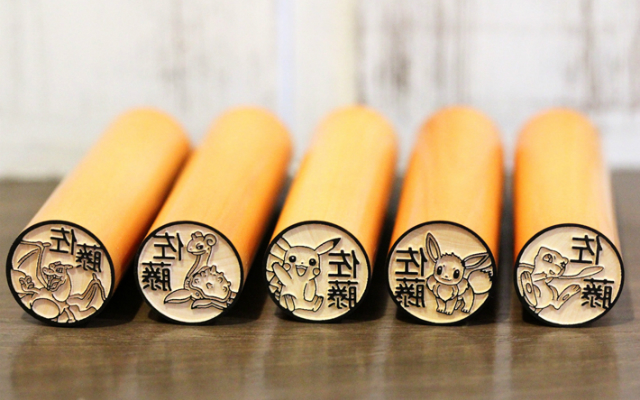
Most freelancers do well with a 13.5mm round seal. It is the standard professional size, fits neatly in contract stamp fields, and does not look oversized on an invoice. Some people go slightly smaller at 12mm for a more compact feel, but 13.5mm is the sweet spot for professional use.
What should it say?
This is where foreigners often feel uncertain. Your options:
- Your family name in katakana (most common approach for foreign residents)
- Your full name in katakana
- A romanized version of your name, depending on the vendor
- A custom design if you are branding a freelance business
If you are operating under a business name — even informally — you can have that name on the seal instead. Some freelancers use a personal name seal for contracts and a second seal with their business name for invoices. That is a reasonable setup as your client base grows.
Common mistakes at this stage:
- Ordering a seal with kanji you did not verify. If you transliterate your name into kanji characters, check the meaning first — some combinations are inauspicious or simply unusual.
- Going too small. A 10mm seal is fine for personal correspondence but can look faint or informal on a business document.
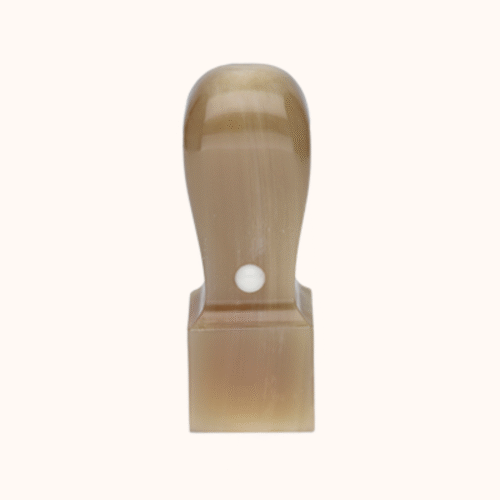
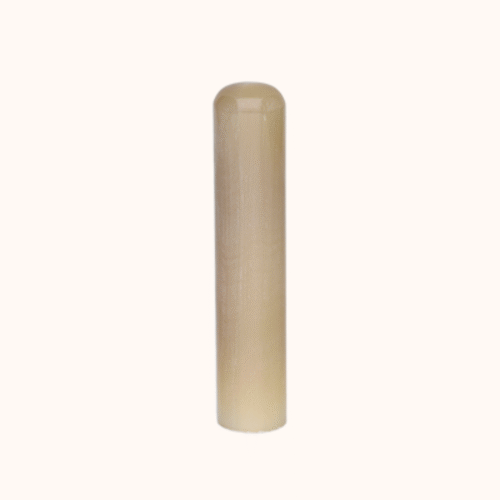
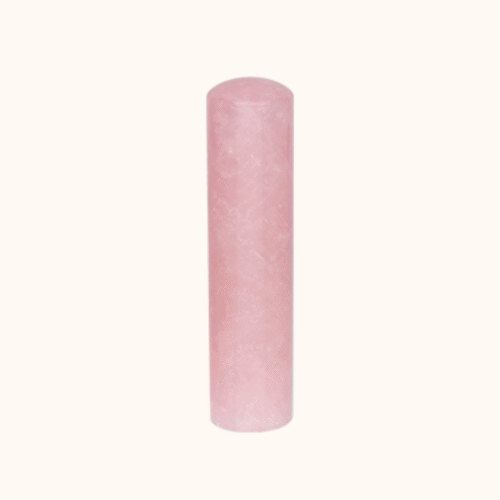
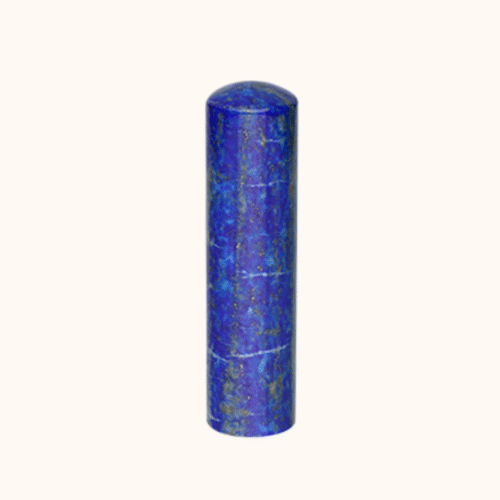
- Ordering a cheap plastic seal with ink-soaked pads that bleed. For client-facing use, the ink impression matters. A well-made seal in acrylic, wood, or horn leaves a cleaner mark.
HankoHub offers a range of mitomein options in multiple materials, with katakana name customization for foreign residents — worth checking before you commit elsewhere.
Using seals on invoices
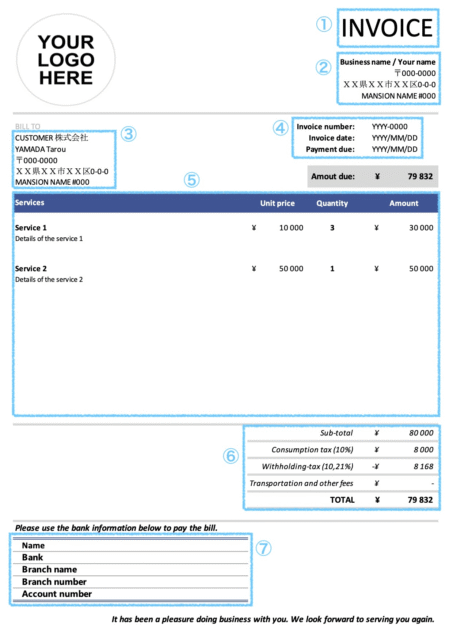
Japanese freelance invoices (請求書, seikyuusho) follow a fairly consistent format. You will typically see fields for the issuer’s name, date, invoice number, a breakdown of work and fees, consumption tax, and bank transfer details. Many templates also include a stamp field near the top, beside or below the issuer name.
Where to stamp:
Place your hanko so that it partially overlaps your name or business name on the invoice. This is the conventional position and is considered good practice — it visually links the seal to the identity making the claim.
How to stamp cleanly:
- Use a firm, flat stamping pad with oil-based red ink for professional documents.
- Press evenly with steady downward pressure. Do not rock or twist.
- Test on a scrap paper first, especially with a new seal.
- If you make a ink mistake, write 訂正 (teisei, meaning “correction”) next to it and re-stamp cleanly nearby. Do not try to erase.
A practical micro-scenario:
A freelance translator working with a legal firm sends monthly invoices as PDFs. Her client’s accounts payable team asks for stamped originals to keep in their filing system. She now stamps physical copies and sends them by post once a month, keeping a scanned record herself. This takes about five minutes per month and has removed all friction from the payment process.
Does the invoice seal have legal weight?
For standard freelance invoices in Japan, the stamp is more of a professional convention than a hard legal requirement. Whether it is strictly necessary varies by client and industry. But if your client’s standard process includes stamped documents, working against that norm creates unnecessary friction. It is easier and more professional to simply have the seal ready.
Digital hanko option
Japan has been moving — somewhat slowly, sometimes reluctantly — toward digital workflows. The 2021 administrative reforms under the Hanko Reform initiative pushed many government and corporate processes to accept electronic signatures. If you are working with clients in tech, startups, or larger corporations that use platforms like CloudSign, DocuSign Japan, or Adobe Sign, you may find that a digital hanko is not only acceptable but preferred.
A digital hanko is an image file of your seal impression — typically a PNG with a transparent background — that you place directly into a PDF or Word document before sending. It looks identical to a stamped original on screen, and for many digital-first workflows, it is fully accepted.
When digital makes sense:
- Your client works fully remotely and does not require physical originals
- You are submitting invoices through an online portal
- You work in an industry where digital-first processes are standard (IT, design, content)
When physical is still better:
- Government-related work or filings
- Contracts with traditional companies that keep paper archives
- Any situation where your client has explicitly asked for a stamped original
The practical approach for most freelancers is to have both. Order a physical seal for formal contracts and paper invoices, and keep a high-resolution scan of the impression as your digital hanko. HankoHub provides digital hanko options alongside physical orders, so you can set up both in one go.
Looking for stable work first? ComfysCareer lists foreigner-friendly roles to help you build income before freelancing.
FAQ
Do I need a registered jitsuin as a freelancer?
In most cases, no. A mitomein is sufficient for standard freelance contracts and invoices. A jitsuin is typically required for major legal transactions — purchasing property, setting up a company, or signing high-value loan agreements. If a client specifically asks for a jitsuin and certificate of seal registration (印鑑証明書, inkan shoumeisho), that is an unusual situation and worth clarifying what the document actually requires.
Can I use my regular Western signature instead of a hanko?
In many cases, yes — especially with international clients or companies accustomed to working with foreigners. However, if your client’s contract or invoice template includes a stamp field and they expect it filled, a signature in the box does not always feel equivalent to them. The safest approach is to have a hanko and use it when the situation calls for it.
What if I freelance under a business name?
You can have a seal made with your business name (屋号, yago) in place of your personal name. Some freelancers order two seals: one personal, one business. Which you use depends on whether you are signing as an individual or as your business entity. For most sole proprietors, one good mitomein with a clean design is sufficient to start.
I am not a Japanese resident — can I still order a hanko?
Yes. Hanko are not restricted to residents. Tourists and short-term visitors order them as meaningful souvenirs or practical tools. If you are visiting Japan for a business meeting or signing an agreement while in the country, having your own seal ready is a professional touch that most Japanese counterparts will notice and appreciate.
How long does it take to get one made?
It varies by vendor and material. Express orders are often available. HankoHub is worth checking for current production and shipping times if you are working against a deadline.
Do I need to re-stamp every page of a multi-page contract?
Not necessarily every page, but many Japanese contracts use a 割印 (wariin) — a seal that spans the spine of a folded or stapled multi-page document, so that the impression appears on both pages. This confirms all pages belong to the same document and have not been swapped. Your client or their legal team will usually tell you if this is expected.
Next steps

If you are freelancing in Japan — or getting ready to — a professional seal is a low-cost, high-signal investment in how your clients perceive you. The paperwork will come. Being ready for it is simple.
Head to HankoHub to browse physical mitomein options in a range of materials and sizes, as well as digital hanko for modern workflows. Katakana name customization for foreign names is available, and you can set up both formats in a single order if you want to cover all your bases from day one.