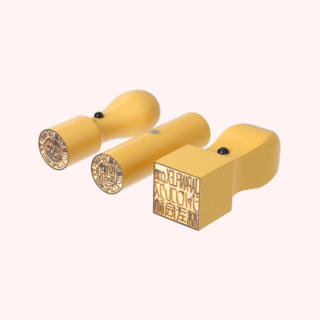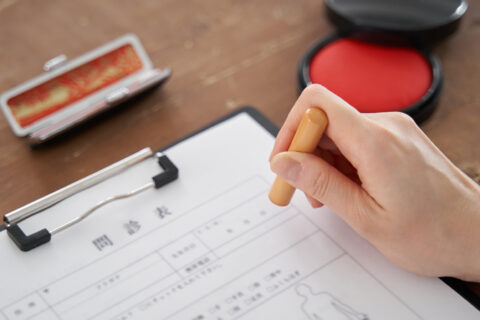


Starting a part-time job or a graduate-level position in Japan while you’re still on a student visa comes with a paperwork layer that most people don’t anticipate. Among the forms your employer will hand you during onboarding, there’s a good chance at least one will have a small circle printed on it—waiting for a stamp. Knowing about hanko for students in Japan before your first day at work means you don’t show up empty-handed to a process that expects you to be prepared.
A hanko is a personal name seal used throughout Japanese administrative and professional life. It functions as your stamp of acknowledgment on documents—contracts, tax forms, HR registration sheets—and in many workplaces it carries the same weight as a formal signature, sometimes more. For foreign students entering the Japanese workforce, even part-time, this tool comes up faster than expected.
This guide focuses specifically on the HR onboarding context: the documents you’ll encounter, when you’ll need your seal, what kind to get, and how to order one in English without stress. Whether you’re starting a convenience store shift or a research assistant role at a university lab, the process is largely the same.
Why This Segment Is Asked for a Seal

Foreign students working in Japan occupy an interesting middle position. You’re operating under a student visa with permitted work hours, which means your employer is dealing with a slightly more complex onboarding process than usual—and the paperwork reflects that. Japanese HR systems were built around domestic conventions, and the hanko is central to those conventions.
When a Japanese employee joins a company, they stamp virtually every document that formalizes the employment relationship. The logic is straightforward: a stamp signals that you have personally reviewed and accepted the contents of a document. It’s a physical act of acknowledgment that the system trusts. For foreign employees and student workers, most employers apply the same expectation unless they’ve specifically adapted their onboarding process for international hires—and many haven’t.
Three situations where the hanko requirement surfaces most clearly for student workers:
Employment contract signing. Even for part-time roles, a written contract is standard in Japan. The employer stamps it; you’re expected to as well. Showing up without a hanko can delay your start date or require a second visit to the office.
Tax and social insurance forms. Depending on your employment status and hours, you may be enrolled in partial social insurance or need to complete withholding tax documentation. These forms commonly include a stamp field.
Internal HR registration. Many companies maintain internal employee records that require a stamp at registration. This is separate from the employment contract itself—think of it as the company’s own filing system confirming you’ve been formally onboarded.
A realistic scenario: Kenji, a Vietnamese exchange student at a university in Nagoya, lands a part-time role at a family restaurant. On his first day, HR hands him a three-page contract and a withholding tax form. Both have stamp fields. He signs where he can, but the HR manager explains he’ll need to come back with a hanko to finalize everything. He loses two days of pay while sorting it out.
That kind of friction is entirely preventable.
Common Documents and Timelines
HR onboarding in Japan moves through a fairly predictable sequence. For student workers, the timeline is compressed—often everything is expected within the first week of starting, sometimes on day one.
At or before your first day:
- Employment contract (雇用契約書) — almost always requires a stamp
- Part-time work agreement (アルバイト契約書) — same expectation
Within the first week:
- Withholding tax form (給与所得者の扶養控除等申告書) — stamp field present on most versions
- Social insurance enrollment forms (if applicable based on hours)
- Bank account registration for salary payment — some employers route this through HR with a stamp requirement
Ongoing during employment:
- Contract renewals (common for part-time roles every three to six months)
- Any amendments to working hours or conditions
- Internal forms for requesting leave, equipment, or role changes
A checklist of HR documents where a hanko is commonly required:
- Employment or part-time work contract
- Withholding tax declaration form
- Social insurance enrollment documentation
- Salary bank account registration form
- Contract renewal agreements
- Internal leave or request forms
- Exit documentation at end of employment
The density of these documents in the first week is worth noting. Having your hanko ready before your first HR meeting—not after—keeps everything on schedule and signals to your employer that you understand how the process works. That matters more than it might seem in a Japanese workplace.
Recommended Hanko Type and Size
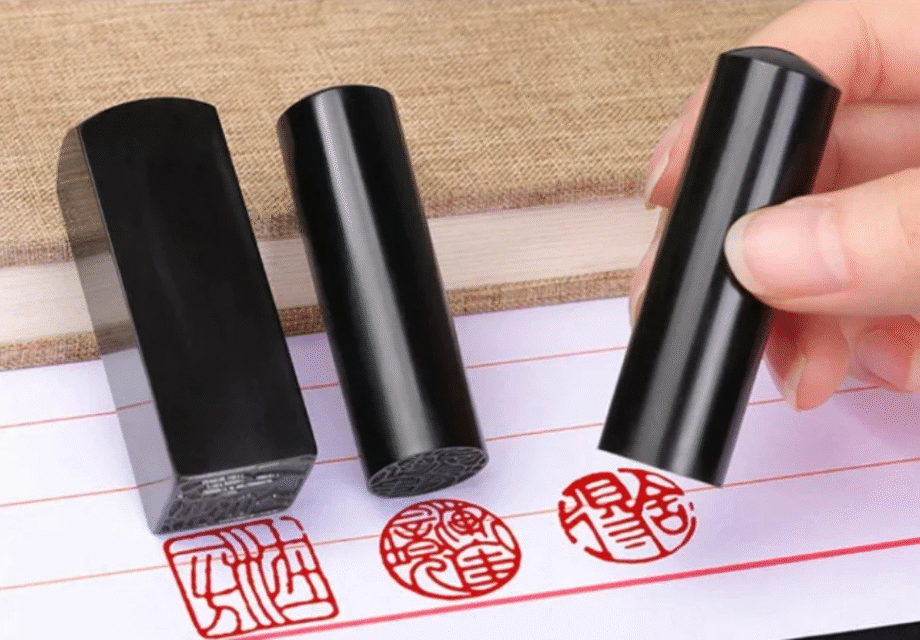
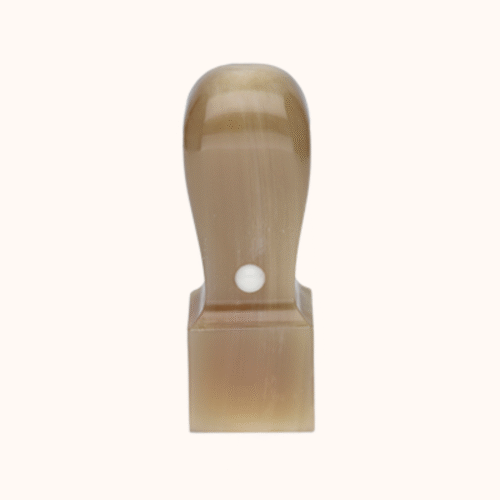
For HR onboarding purposes, the right hanko is the same practical everyday seal that covers most of a student’s administrative life in Japan: a mitome-in. You don’t need a registered seal (jitsuin) for employment paperwork. That category is reserved for high-stakes legal transactions like property purchases or vehicle registration—not part-time contracts or tax forms.
Size: 10.5mm is the standard for personal use and fits comfortably in the stamp fields on most HR documents. 12mm is also acceptable and slightly easier to handle if you’re new to stamping. Either works; 10.5mm is the more common choice for everyday seals.
Material: Practical and durable is the goal. Resin composites and eco-wood options are affordable, hold their shape well over repeated use, and are more than adequate for the volume of stamping a student worker will do. High-end materials like buffalo horn or precious woods are unnecessary at this stage.
Name engraving for foreign students: This is where most people have questions. The two standard options are:
- Katakana. Your name rendered phonetically in Japanese script. This is the most broadly accepted option across HR departments, banks, and government offices. “Lucas” becomes ルーカス, “Priya” becomes プリヤ. Most employers will have no issue with a katakana seal.
- Roman alphabet (Latin script). Some providers engrave foreign names in English letters. Acceptance is generally fine for everyday workplace documents, but katakana tends to feel more natural within Japanese HR systems and is the safer default.
Common mistakes to avoid:
- Using your full name on the seal. Japanese convention is to use one name—typically family name—on a personal hanko. A stamp with your full first and last name can look unusual and may be harder to stamp cleanly.
- Choosing a highly stylized or decorative font. HR documents need a legible, cleanly stamped impression. Ornate fonts increase the chance of a messy stamp or a rejection from a detail-oriented HR manager.
- Ordering at the last minute. If you’re starting a job in two weeks, order now. Domestic stamp shops in Japan can have turnaround times of several days, and language barriers can complicate custom orders for foreign names.
- Assuming your employer will provide one or accept a workaround indefinitely. Some employers are flexible for a day or two, but a missing hanko in a Japanese HR context is treated as an incomplete onboarding, not a minor gap.
Ordering Tips in English
Ordering a hanko as a foreign student doesn’t require any Japanese language ability when you use the right service. English-language hanko providers handle the full process—including converting your name into appropriate katakana—so you’re not trying to navigate a local stamp shop with a translation app.
When you’re ready to order, have the following prepared:
- Your name as you want it engraved (family name only is standard)
- Preferred script: katakana or Roman alphabet
- Size preference: 10.5mm or 12mm
- Your job start date, so you can confirm the seal arrives in time
If you’re still looking for the right role, ComfysCareer is a solid starting point for foreigner-friendly jobs in Japan.
HankoHub is designed specifically for foreigners navigating Japanese paperwork. The ordering interface is in English, name conversions are handled accurately, and the process is built around practical timelines. For students with a known start date, ordering two to three weeks in advance is a comfortable buffer.
A few practical notes: confirm whether the service ships internationally if you’re ordering from outside Japan, or domestically if you’re already here. Also check whether your order includes an ink pad—some seals come with one, others don’t, and you’ll need one on hand for day one.
FAQ
Is a hanko required for every job in Japan, or just some?
It’s common across most employment contexts, but not universal. Larger multinational companies and startups with international teams sometimes accept signatures from foreign employees. Smaller Japanese businesses, traditional industries, and most public-sector or university roles are more likely to follow conventional stamping practices. When in doubt, having one means you’re always prepared.
Can I use the same hanko I ordered for my apartment lease?
Yes. A mitome-in is a general-purpose personal seal. The same stamp you used for your housing contract works for your employment contract, your tax forms, and any other everyday document. You don’t need separate seals for different contexts unless one institution specifically requires a registered seal, which is rare for students.
What if I forget my hanko on my first day?
Most HR managers will allow you to come back with it, but it delays your formal onboarding completion. In some cases it may push back your first payroll cycle if the salary registration form isn’t stamped in time. It’s a solvable problem, but an avoidable one.
Do I need to register my hanko with the city office for work purposes?
No. Registered seals (jitsuin) are a separate category required for specific legal transactions. For HR onboarding, a standard unregistered mitome-in is sufficient. Registration adds time and cost that simply isn’t necessary for the documents student workers encounter.
My name is difficult to render in katakana. Will it still work?
Yes. Providers who specialize in hanko for foreigners handle this regularly. Names with sounds that don’t map neatly onto Japanese phonetics are approximated using standard katakana conventions—the result is recognizable and accepted by Japanese HR departments without issue. HankoHub handles name conversion as part of the ordering process.
How long will the hanko last?
A well-made resin or eco-wood hanko will last through your entire time in Japan and beyond. There’s no expiration, and the engraving doesn’t wear down under normal use. The same seal you order now can be used for every document you sign throughout your student and early professional life in Japan.
Next Steps

If you’re preparing to start work in Japan—whether it’s your first part-time shift or a graduate research position—getting your hanko sorted before HR hands you that first contract is the simplest way to walk in prepared. Order a personal hanko through HankoHub in English, with your name handled correctly for Japanese workplace documents, and start your job without the administrative delay.