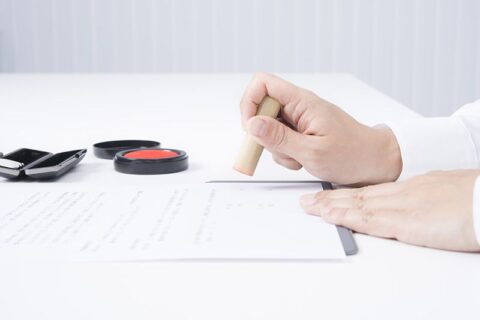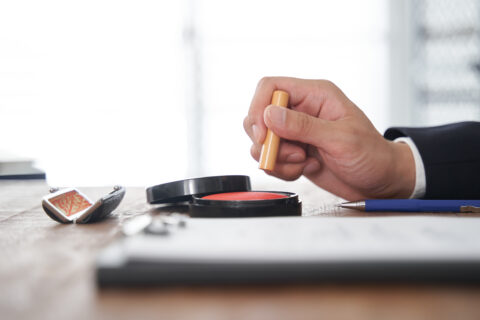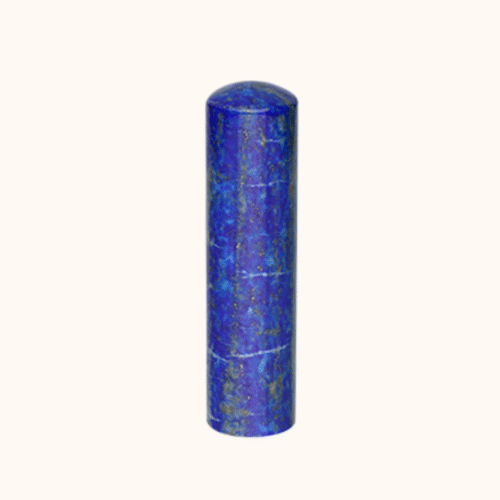


If you are a foreign nurse working in Japan—or preparing to—you have probably already noticed that paperwork here runs deep. Employment contracts, hospital onboarding forms, housing agreements, resident registration documents: each one seems to come with a blank box labeled 印 (in), waiting for a stamp. That stamp is your hanko, and for nurses specifically, it comes up early and often.
Japan’s healthcare sector is one of the most document-heavy environments in the country. Hospitals and clinics operate on systems that were built around the hanko long before digital signatures were an option, and while some institutions are slowly updating their processes, the seal remains standard in most nursing contexts. If you arrive without one, you will likely be asked to get one before you can sign your first contract.
This guide explains why nurses in particular are asked for a hanko so frequently, which documents require one, what type to order, and how to get it sorted in English without the usual confusion. Whether you are starting a new position at a public hospital, a private clinic, or a care facility, the information here applies.
Why This Segment Is Asked for a Seal
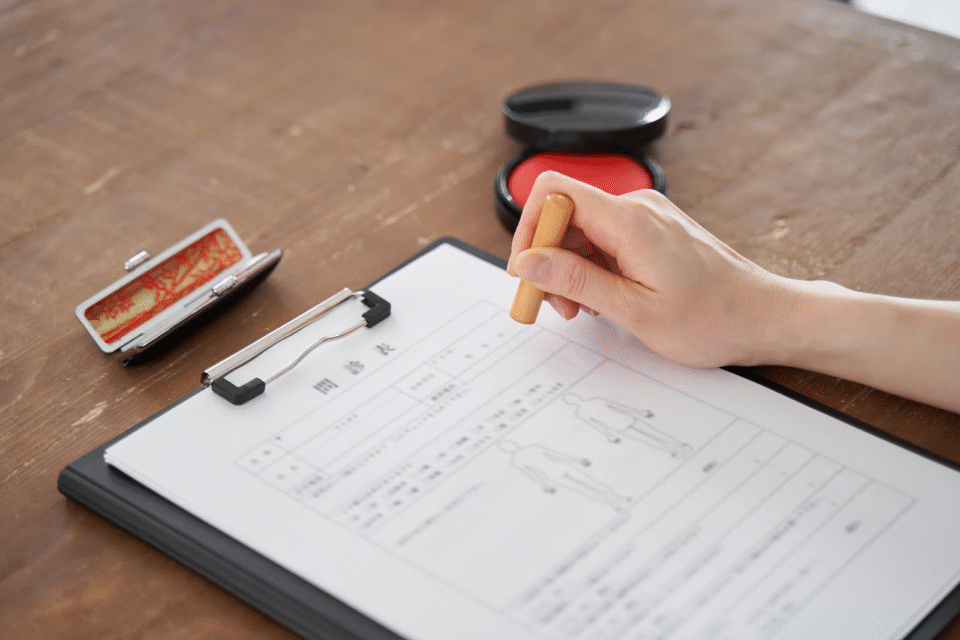
Nurses in Japan operate inside an unusually paperwork-intensive structure. You are not just an employee—you are a licensed professional working under a regulated framework, which means documents touch multiple layers of bureaucracy: your employer, the hospital administration, the prefectural nursing association, and sometimes the Ministry of Health, Labour and Welfare.
At each layer, a hanko is often expected rather than a written signature. This is partly tradition and partly practical: Japanese administrative culture has long treated the seal as the more legally legible mark of agreement or acknowledgment. A signature can look different every time, but a stamped inkan is consistent and traceable.
There is also a licensing dimension. When foreign nurses renew or register their Japanese nursing licence—formally called the kangoshi menkyo—the paperwork submitted to prefectural offices commonly requires a personal seal. The same applies to applications for the national examination if you are sitting the test for the first time.
On top of that, your employment contract, tax forms, and social insurance enrollment documents will almost always include a hanko field. In many hospitals, your nurse manager or HR department will hand you a small stack of documents on your first day and expect them returned, stamped, within a few days. Coming in prepared makes that process significantly smoother.
Common Documents and Timelines
Understanding which documents require a hanko—and when—helps you plan. Here is a realistic picture of what nurses in Japan commonly encounter:
Before or on the first day:
- Employment contract (koyo keiyakusho)
- Confidentiality agreement
- Hospital internal regulations acknowledgment
Within the first two weeks:
- Social insurance enrollment forms (health insurance, pension)
- Tax withholding declaration
- Bank account setup for salary deposits (some banks require a hanko to open an account)
Ongoing or periodic:
- Overtime confirmation sheets at some institutions
- Annual contract renewals (common for contract-based nursing positions)
- Housing application if using employer-arranged accommodation
Licensing-related:
- Nursing licence registration or renewal documents submitted to the prefecture
- National exam application (for those entering the licensing process)
A realistic scenario: you receive your employment paperwork three days before your start date. The hospital asks you to return it on day one, stamped. You have not ordered a hanko yet. This is the situation many foreign nurses find themselves in, and it is entirely avoidable with a bit of planning.
If you are still looking for the right role, ComfysCareer is a solid starting point for foreigner-friendly jobs in Japan.
Common mistakes at this stage:
- Assuming a handwritten signature is an acceptable substitute. Some HR staff will accept it, many will not. Do not count on it.
- Waiting until after your arrival to order. Shipping takes time, especially if you are ordering from abroad.
- Using a borrowed or shared hanko from a friend. Every person’s hanko should be unique to them. Using someone else’s seal creates traceability problems and is generally not acceptable in official contexts.
- Ordering the wrong name format. Nurses working under a registered foreign name need the hanko to match the name on their licence and ID documents.
Recommended Hanko Type and Size
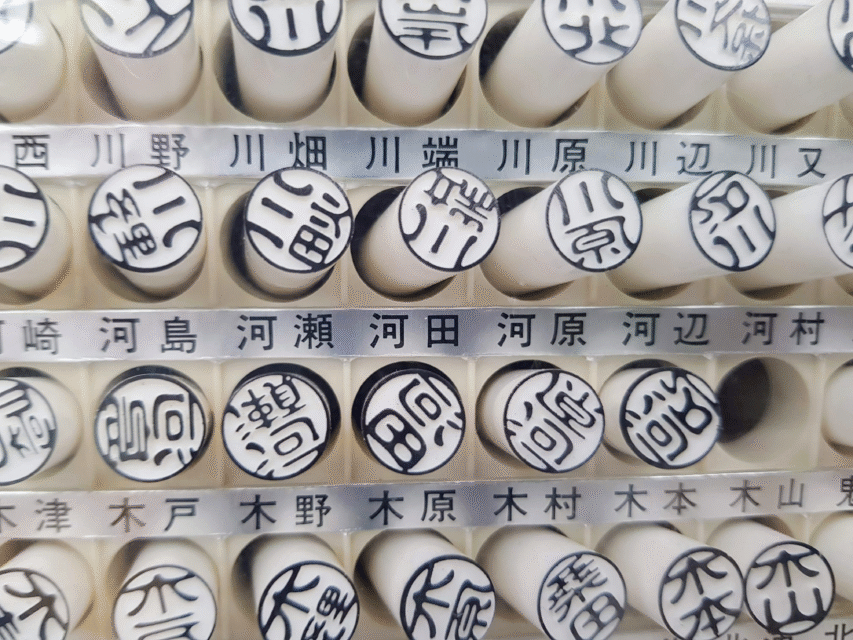
For most nursing contexts, a mitome-in (認め印) is sufficient. This is a personal everyday seal used for standard documents and acknowledgments. It does not need to be registered with your local ward office, which keeps the process simple.
You do not need a jitsuin (実印, a registered seal) for employment paperwork in most cases. A registered seal is typically required for high-stakes legal transactions—purchasing property, guaranteeing a loan, that kind of thing. If you are asked for a jitsuin at a later point, you can handle that separately.
Size: The standard range for a personal hanko is 10.5mm to 12mm in diameter. For nurses, 10.5mm or 11mm is practical and fits neatly in most document stamp fields.
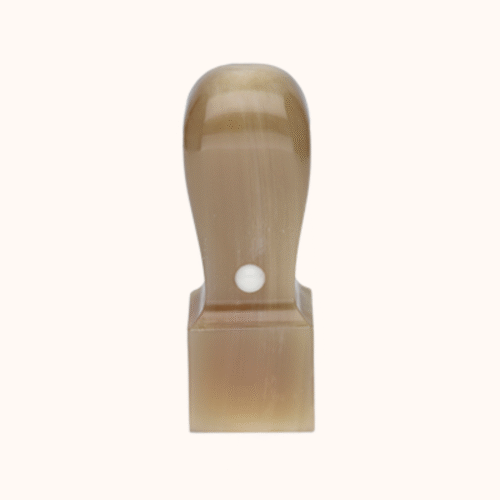
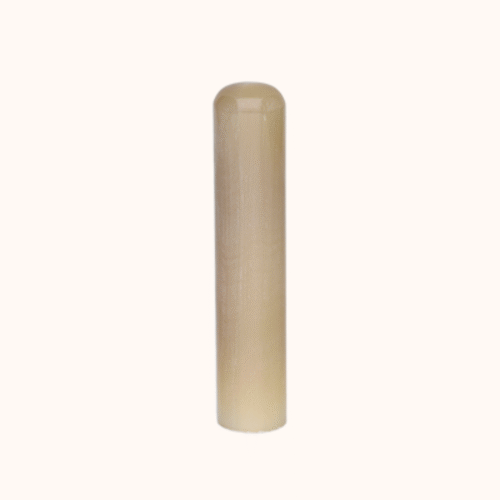
Material: Acrylic and resin options are affordable and durable for everyday use. If you want something that holds up to years of heavy use in a clinical admin environment, harder materials like Japanese cherry wood (yamato) or black buffalo horn (tsuno) are worth considering.
Name format: This is where foreign nurses need to pay attention. Your hanko should display the name that appears on your official documents—your residence card, nursing licence, or employment contract. If your name is registered in katakana (the phonetic script used for foreign names), order your hanko in katakana. If your employer or licence uses a kanji rendering of your name, confirm that before ordering. When in doubt, katakana is the safer default for foreign nationals.
Ink pad: Most hanko come with or are used alongside a separate shuniku (vermillion ink pad). Make sure you have one. Arriving at your hospital with a hanko but no ink is a surprisingly common oversight.
Ordering Tips in English
Ordering a hanko as a foreigner used to mean navigating Japanese-only websites or hoping the local hanko shop in your neighbourhood had English-speaking staff. That is no longer the case.
HankoHub offers an English-language ordering process built specifically for foreigners in Japan. You enter your name, choose your script (katakana, romaji, or kanji if applicable), select your size and material, and receive a carved hanko shipped to your address. The process does not require Japanese language ability at any step.
A few practical tips when ordering:
- Double-check the name spelling before you confirm. Match it exactly to your residence card or nursing licence.
- Order before you arrive or immediately on landing. If you have a confirmed job start date, order at least one to two weeks in advance to account for shipping.
- Keep the receipt or order confirmation. Some HR departments ask where the hanko was made, particularly if there is ever a question about authenticity.
- Order a spare. This is not essential, but nurses who use their hanko regularly—multiple overtime forms, contract renewals, periodic licence documents—often find it convenient to have a backup in case the first is lost or damaged.
- Check whether your employer requires a specific format. Most do not, but some larger hospital groups have preferences. Ask HR before you order if you are unsure.
HankoHub also handles katakana name conversions if you are unsure how your name should be rendered. This is genuinely useful for nurses whose names have multiple possible phonetic interpretations in Japanese.
FAQ
Do I need a registered seal (jitsuin) for my nursing contract? In most cases, no. A standard personal seal (mitome-in) is sufficient for employment contracts, social insurance forms, and most hospital paperwork. A registered seal is typically only required for significant legal or financial transactions. If you are ever asked for a jitsuin, your HR contact will usually specify this clearly.
Can I use romaji (English letters) on my hanko? Yes, and some foreigners prefer it. However, katakana is more universally accepted in Japanese administrative settings and less likely to raise questions. If your name appears in katakana on your residence card, matching that is the safest choice.
What if my name is very long? Hanko are typically designed around one or two characters in Japanese script, which keeps things compact. For foreign names in katakana, longer names can often be abbreviated or arranged across two lines. HankoHub can advise on layout options during the ordering process.
Is a digital hanko acceptable in hospitals? Some administrative processes in Japan are beginning to accept digital seals (denshi inkan), but hospitals and clinical environments remain largely paper-based. For nursing contracts and licence paperwork, a physical hanko is still the standard. A digital option may become more relevant over time, but for now, physical is the practical default.
What if I change my name after ordering? If your legal name changes—for example, due to marriage—you will need a new hanko that matches your updated documents. This applies to your nursing licence registration as well, which would need to be updated with the relevant prefectural office.
I am still waiting on my nursing licence approval. Should I order now? Yes, as long as you know what name will appear on the licence. The hanko is for your personal use across all documents, not just licence-specific paperwork. Ordering early means you are ready for employment contracts and onboarding forms the moment your role begins.
Next Steps

If you have a job offer in hand or a start date approaching, now is the right time to sort your hanko. Head to HankoHub, enter your name in the script that matches your official documents, and choose a size and material that suits everyday professional use. The process is in English, shipping is straightforward, and having your seal ready before day one removes one reliable source of first-week stress.