
Opening a bank account in Japan is one of the first practical tasks on every foreign resident’s list, and for designers it carries an extra layer of urgency. Without a Japanese bank account, you cannot receive a salary, collect freelance payments, set up automatic bill payments, or handle the basic financial infrastructure that daily life in Japan runs on. And in most cases, you cannot open that account without a hanko.
Hanko for designers in Japan intersects with banking more directly than many newcomers expect. The assumption, especially among people arriving from countries where signatures handle everything, is that a bank account is a straightforward administrative task. In Japan, it is — once you have the right tools. The hanko is one of those tools, and arriving without one can delay your financial setup by days or even weeks at a point when time is already tight.
This guide focuses specifically on the banking side of hanko use for designers: why banks ask for a seal, what the process looks like from arrival through account opening, which type of seal works for this purpose, and how to order one in English before you land. If you are a designer relocating to Japan, freelancing here, or preparing for a longer stay, this is the part of the admin puzzle worth solving early.
Why This Segment Is Asked for a Seal
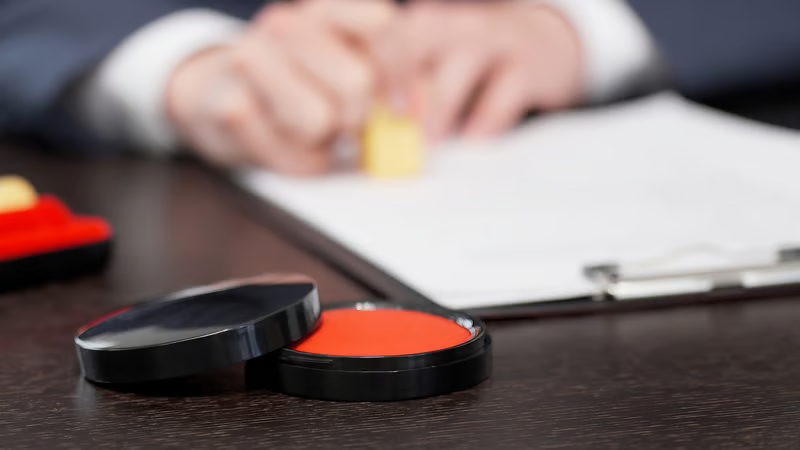
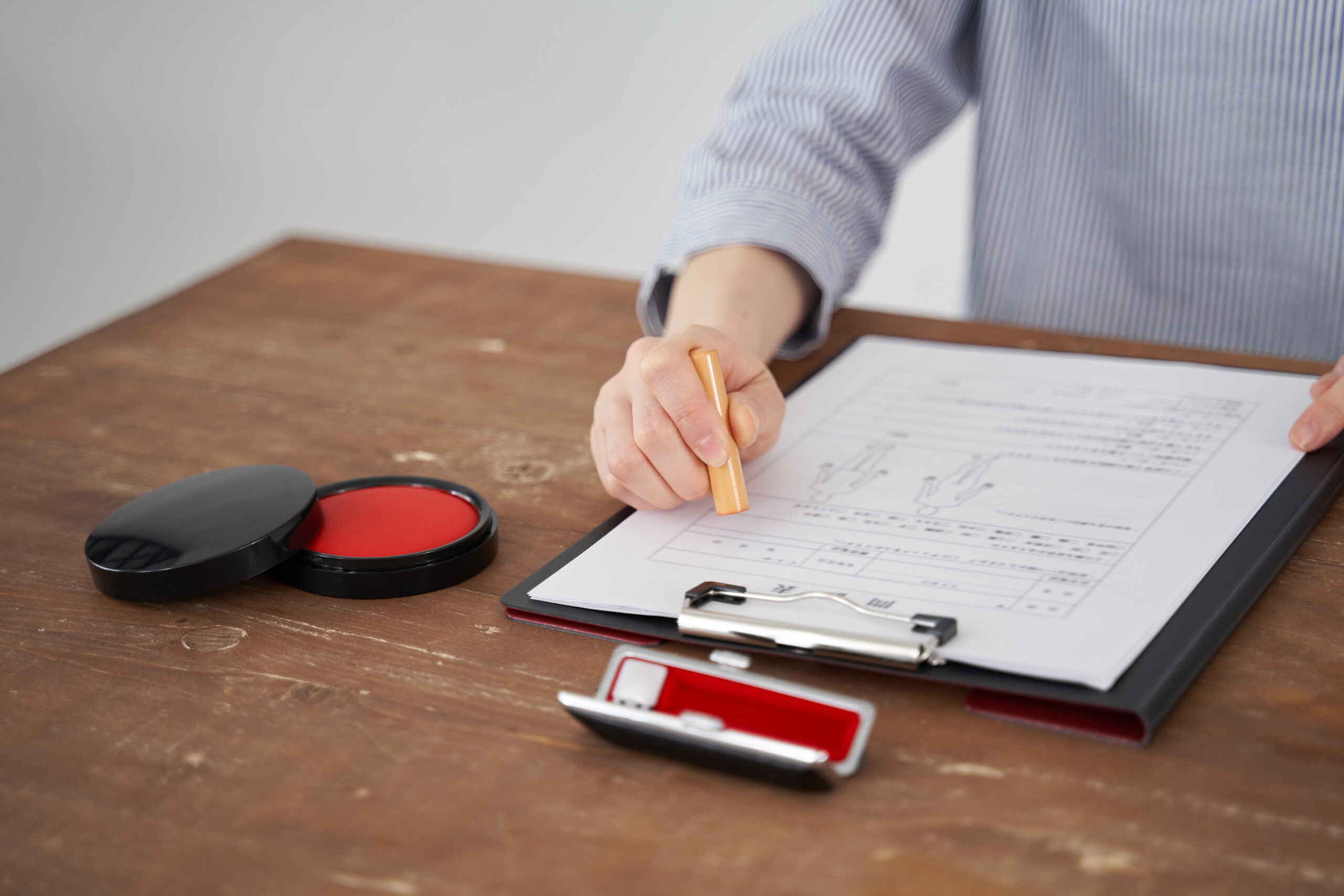
Japanese banks have long used the hanko as a core identity verification tool. When you open an account, your seal impression is registered alongside your account. In many institutions, that impression is then used to authenticate future transactions — withdrawals, transfers, and changes to account details — in the same way a signature functions in other banking systems. The seal becomes, in effect, a physical password.
For foreign residents, the specific requirements vary by bank and have been shifting gradually over recent years. Some banks now accept a signature from foreign nationals in place of a seal, particularly banks with dedicated international services. Others maintain the hanko requirement as standard. Japan Post Bank, one of the most accessible options for newly arrived foreigners due to its nationwide branch network and foreigner-friendly application process, commonly asks for a hanko. Regional banks and some major city banks do the same.
Designers in Japan face this requirement at a moment when multiple financial pressures are already converging. A designer joining an agency needs a bank account to receive their first salary. A freelance designer who has landed a Japanese client needs an account to invoice and collect payment. Both need the account open as quickly as possible after arrival, which means both need a hanko ready to go.
There is also a compounding effect worth understanding. The bank account is not just a standalone task — it is a dependency. Setting up automatic payments for utilities, mobile phone contracts, and apartment rent in Japan often requires a bank account with a registered seal. Delays in account opening can cascade into delays across multiple other administrative tasks that assume the account already exists.
One micro-scenario that illustrates this well: a UI designer arrives in Tokyo on a Wednesday, moves into a share house, and heads to Japan Post Bank on Friday to open an account. She has her residence card, her passport, and her address registered. The counter staff ask for her hanko. She does not have one. She is told to come back when she has one. She spends the weekend trying to find a shop that can engrave her name — a French name with accents — and finds that most local shops either cannot do it or need several days for a custom order. Her account opening is delayed by a week. Her agency’s payroll cut-off passes. Her first salary is deferred to the following month.
That scenario is common. It is also entirely avoidable with a small amount of advance planning.
Common Documents and Timelines
For designers focused specifically on banking and the financial administration that surrounds it, the hanko requirement surfaces across a predictable set of documents and moments.
Before account opening:
- Residence registration at your ward office (required before most banks will process your application, and sometimes requiring a seal itself)
- Some banks require proof of address confirmed with a registered stamp
At account opening:
- Bank account application form — seal impression registered to the account
- Japan Post Bank application (one of the most foreigner-accessible options, commonly requires a hanko)
- Regional bank or city bank application if your employer or client has a preferred institution
After account opening:
- Direct deposit setup form at your employer — often requires both employer and employee seals
- Automatic payment registration for utilities and rent — submitted through the bank and commonly requires a seal
- Any future changes to account details, such as address updates or beneficiary changes
Freelance-specific:
- Some payment platforms and invoicing arrangements in Japan ask for a sealed agreement when setting up recurring payment terms with a client
- Tax registration documents for self-employed designers may require a seal depending on the specific form and the local tax office
A second micro-scenario worth considering: a freelance motion designer in Osaka has been working remotely for Japanese clients using international transfers. He decides to open a local account to reduce transfer fees and accept domestic payments. He visits a regional bank with his residence card and address documentation. The application form has a seal field. He is asked to provide a hanko impression that will be registered to the account. He has been in Japan for three months and assumed he did not need one because his remote work arrangement had not required it until now. He leaves without completing the application and orders a hanko that afternoon — a delay of several days that holds up the account opening and a pending client payment.
Recommended Hanko Type and Size
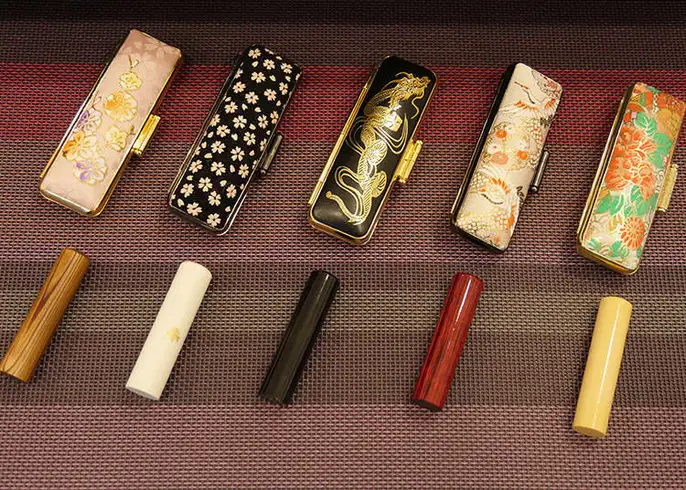
For bank account setup and the financial administration that surrounds it, the right seal depends on what the specific bank requires and the nature of the transactions you anticipate.
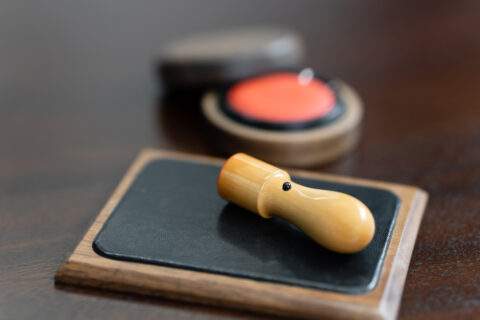
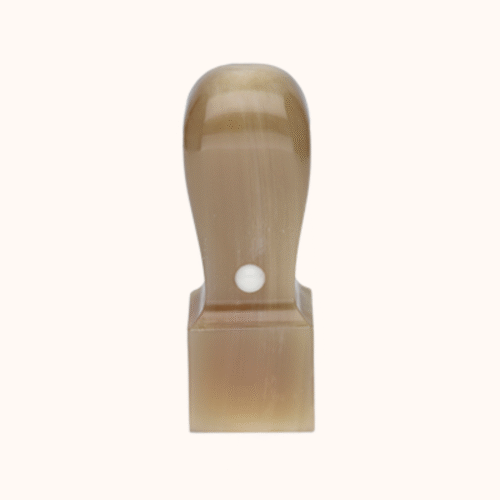
Mitome-in (認印) is a personal, unofficial daily-use seal. For most standard bank account openings — particularly Japan Post Bank and many regional banks — a mitome-in is sufficient. It is not registered with the ward office, it can be used immediately, and it covers the majority of financial administration tasks that designers encounter.
Jitsu-in (実印) is a registered seal, formally lodged with your ward office. Some banks may request a jitsu-in for higher-value accounts or specific transaction types, though this is uncommon for standard personal accounts. If a bank specifically asks for a registered seal with a 印鑑証明書 (seal certificate), you would register the seal at your ward office before presenting it at the bank.
For most designers opening a standard personal bank account, a mitome-in is the practical starting point. If your financial situation later requires a jitsu-in, ordering and registering one is a straightforward process.
Size: A diameter of 10.5mm to 12mm is the standard range for personal seals and fits the registration boxes on most bank forms. Avoid going above 15mm — oversized seals are associated with corporate contexts and may not fit the designated space on a personal account application.
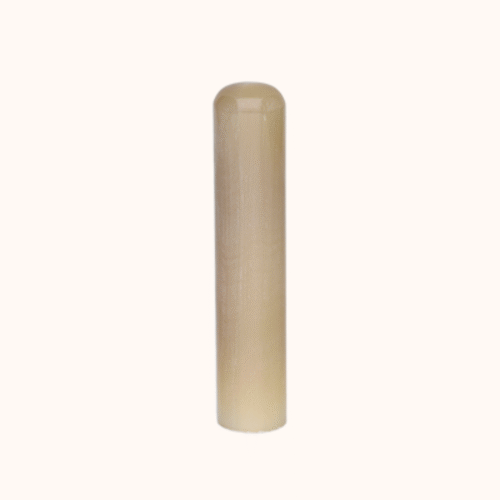
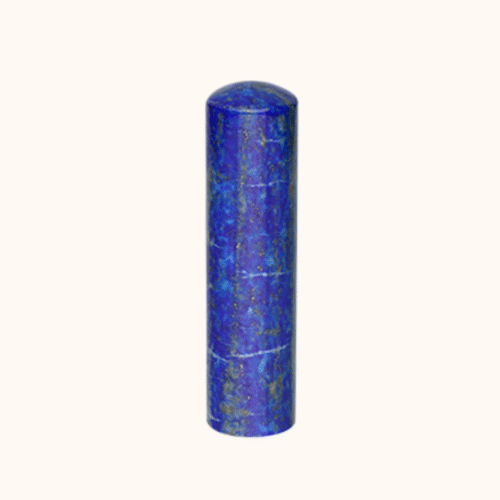
Material: For a seal that will be used regularly and needs to produce a clean, consistent impression, a durable material matters. Acrylic, resin, and hardwoods such as ebony all perform well. Avoid very soft plastics, which can wear unevenly with frequent use and produce inconsistent impressions — a problem when your seal is registered to a bank account and needs to match on every use.
Name rendering: Katakana is the most practical choice for foreign designers opening bank accounts in Japan. It is phonetically accurate, universally readable to bank staff, and widely accepted across all financial institutions. If your name has a Chinese or Korean origin and you prefer kanji, that is equally valid. Romanised name seals exist but are not universally accepted at all banks, so confirming acceptance before ordering in roman script is advisable.
A checklist before you order:
- Call or check your target bank’s website to confirm hanko requirements for foreign nationals
- Choose katakana rendering unless you have confirmed another format is accepted
- Select a diameter between 10.5mm and 12mm
- Choose a durable material that produces a clean, consistent impression
- Order before arrival or within the first few days of landing
- Store your hanko securely — a seal registered to a bank account has real financial security implications
Ordering Tips in English
Local hanko shops in Japan are plentiful, but ordering a seal with a foreign name at a walk-in shop can be slow and uncertain. Staff at smaller shops may not have experience with non-Japanese names, katakana rendering of unusual phonetics, or the kind of back-and-forth that a foreign name sometimes requires. The result is often a longer wait, a rendering that does not feel quite right, or a referral to a specialist shop that adds more time to the process.
English-language online ordering is a more reliable route for foreign designers. HankoHub is designed specifically for this situation — foreigners who need a Japanese personal seal, with full English-language support, name rendering guidance, and a clear ordering process that does not require any Japanese. You can preview your design, confirm your katakana, choose your material and size, and order without ambiguity.
Practical tips for getting your banking hanko right:
Order before you arrive. If your move to Japan is planned in advance, ordering your hanko from outside the country means it can be waiting for you or arrive within your first few days. This removes the seal from your first-week to-do list and lets you go to the bank as soon as your address is registered.
Confirm your katakana rendering carefully. Your bank will register your seal impression. If you later need to reorder a replacement seal, the new impression needs to match the registered one closely enough to be accepted. Getting the katakana right the first time matters more for banking than for general paperwork.
Keep your hanko in a secure, consistent location. A seal registered to a bank account should be treated similarly to a bank card. If it is lost or stolen, notify your bank promptly and request a seal change procedure. Keeping a digital record of your registered design makes the replacement process faster.
Common mistakes designers make when ordering for banking:
- Choosing a very soft material that wears unevenly and produces inconsistent impressions over time
- Ordering in a hurry without confirming the katakana rendering, then discovering the impression does not match when trying to authenticate a transaction
- Assuming any hanko will do — for a registered banking seal, consistency of impression matters
- Ordering too large a size for the bank’s registration box
If you are still looking for the right role, ComfysCareer is a solid starting point for foreigner-friendly jobs in Japan.
FAQ
Do all Japanese banks require a hanko to open an account? Requirements vary by institution and have been evolving. Some banks, particularly those with international services or digital-first account options, now accept a signature from foreign nationals. Japan Post Bank and many regional banks commonly ask for a hanko. It is worth checking your target bank’s current requirements before visiting, but having a hanko ready covers you regardless of which bank you choose.
Can I use the same hanko I use for work contracts at the bank? Yes. A single mitome-in can serve both purposes. There is no requirement to have separate seals for professional and financial use. The seal is registered to your account at the bank, and the same physical seal is used for both contexts.
What happens if I lose my hanko after it is registered to my bank account? Contact your bank as soon as possible to report the loss. Banks have procedures for seal changes, which typically involve identity verification and a waiting period before a new seal can be registered. This is why treating a registered seal with the same care as a bank card is practical advice, not just caution.
Does my hanko impression need to be perfect every time? It needs to be consistent and recognisable as matching the registered impression. Minor variation is generally tolerated, but a significantly degraded or damaged seal — one that produces incomplete or uneven impressions — may be questioned. Using a quality material and inking your seal properly before pressing helps maintain consistent impressions.
How quickly can I get a hanko if I am already in Japan? Standard production through HankoHub takes a few business days. If you are already in Japan and need a seal quickly, domestic shipping is fast. Planning ahead remains the more comfortable option, but same-week ordering and delivery is achievable in most cases.
Is a digital seal accepted by Japanese banks? Currently, physical seals remain the standard for in-branch bank account registration. Digital seal acceptance in Japan is growing for internal business documents and certain online platforms, but for personal bank account setup at a physical branch, a physical hanko is what you need.
Next Steps

Banking is one of the first things you need to sort after landing in Japan, and your hanko is what makes that possible. Rather than arriving and scrambling to find a shop that can handle a foreign name on short notice, get it ordered in advance. Visit HankoHub to choose your seal in English — with name rendering support, material options, and a process built for foreigners who need to get this right the first time.