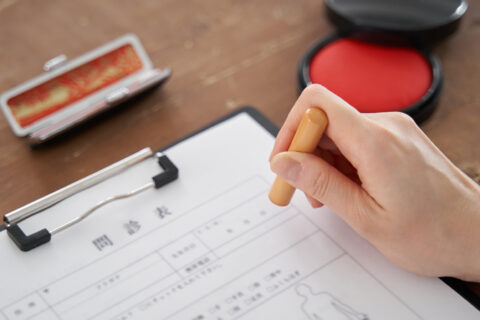


Most people discover the difference between jitsuin, ginkoin, and mitomein the hard way—sitting in a bank branch or city hall, being told their stamp is the wrong type, or that they needed a registered seal they’ve never heard of. The three types of hanko in Japan serve distinct purposes, carry different levels of legal weight, and in some situations, simply cannot be substituted for one another.
This guide cuts through the confusion. Whether you’re a new resident setting up your life in Japan, a long-term expat finally getting organized, or someone preparing for a major purchase or contract, understanding these three categories will save you real time and real frustration. The differences aren’t complicated once they’re laid out clearly—but getting them wrong has consequences that range from minor inconvenience to a stalled property deal.
By the end of this post, you’ll know exactly which type of hanko fits your situation, what name format to use, and what size to order.
Quick decision chart (by situation)

Before diving into the details, here’s a practical starting point. Find your situation and you’ll know which type you need.
You need a mitomein if you are:
- Signing for a package delivery
- Stamping internal company documents or timesheets
- Completing low-stakes forms that require a seal but no verification
- Buying a hanko as a souvenir or first stamp while you get settled
You need a ginkoin if you are:
- Opening a bank account at a Japanese bank
- Updating or changing your account details
- Conducting formal transactions at a branch counter
You need a jitsuin if you are:
- Purchasing real estate in Japan
- Registering a vehicle
- Signing a notarized or legally binding contract
- Completing certain visa or residency-related procedures
- Acting as a guarantor on a significant document
You may need more than one if you are:
- Moving to Japan long-term (expect to need at minimum a mitomein and ginkoin)
- Starting a job with formal onboarding paperwork
- Planning to eventually buy property or enter major financial agreements
New job coming up? ComfysCareer‘s job listings can help you land the role—and this guide helps you prepare the hanko you may be asked for.
Keep this chart in mind as you read through each type below. The details matter, but knowing which category applies to you makes everything easier to absorb.
Jitsuin (registered seal): when it matters
The jitsuin is the most legally significant of the three types. What distinguishes it from the others isn’t the stamp itself—it’s the registration. A jitsuin is a seal you formally register at your local city hall (yakusho or kuyakusho), after which you receive an official certificate called an inkan shōmei-sho (印鑑証明書). That certificate proves that the impression on a document was made by your specific, officially recorded seal.
This matters enormously in high-stakes situations. When someone purchases an apartment in Japan, for example, both parties are typically required to produce their jitsuin and a current inkan certificate as part of the transaction. The same applies to vehicle registration and certain notarized contracts. The logic is the same throughout: the registered seal, backed by a government-issued certificate, is the closest thing Japan has to a notarized signature.
Who actually needs one?
Long-term residents who intend to buy property, register a vehicle, or enter major legal agreements will eventually need a jitsuin. Short-term visitors and people in the early months of residency generally don’t. You must be registered as a resident (jūminhyō established at city hall) before you can register a seal—so there’s a natural sequence: arrive, register your address, then if your situation requires it, register a seal.
A real scenario: A foreigner living in Tokyo for three years decides to buy a used car. The dealership requires a completed contract with a jitsuin impression and a current inkan certificate dated within three months. Without the registered seal, the purchase cannot proceed. This isn’t bureaucratic stubbornness—it’s the legal framework the transaction operates within.
Common mistakes with jitsuin:
- Trying to use a mitomein or ginkoin where a jitsuin is specifically requested. Institutions will not accept substitutes for this.
- Losing the seal after registration. You’ll need to go to city hall, cancel the registration, carve or order a new seal, and re-register. Build in time for this.
- Using the jitsuin for everyday stamping. Your registered seal should be stored carefully and used only when its legal weight is specifically required. Daily use risks wear, loss, and unnecessary exposure.
- Assuming registration is immediate. City hall registration is generally straightforward but takes time—don’t leave it until the day before you need an inkan certificate.
Ginkoin (bank seal): bank account cases
The ginkoin is your bank seal. It doesn’t require government registration, but it is registered directly with your bank when you open an account, and every future transaction at that branch will be verified against the impression on file. The bank keeps a record of your stamp, and if the impression doesn’t match—even slightly—the transaction will be stopped.
This is the seal most foreigners in Japan need first. Many Japanese banks still require a hanko to open an account, even in 2026. Some newer digital-first banks have moved away from this requirement, but regional banks, Japan Post Bank, and major traditional banks commonly still ask for one. Check with your specific bank beforehand, but assume you’ll need a ginkoin unless confirmed otherwise.
What makes a good ginkoin:
Because the bank registers your specific impression, consistency matters more than with a mitomein. The stamp needs to produce a clean, reliable impression every time—which means the quality of the carving and the material it’s carved in genuinely affects usability. A poorly carved or worn stamp that produces slightly different results each time causes problems at the counter.
Keep your ginkoin separate from your mitomein. This is advice that sounds minor until you lose one stamp and realize you’ve disrupted both your daily use and your bank access simultaneously.
A real scenario: A new resident opens an account at a regional bank in Osaka. The bank representative asks for her hanko. She’s brought a mitomein she ordered before arriving. The bank registers it as her ginkoin. Six months later she loses it. She now has to visit the branch, fill out a loss declaration, wait through a processing period, and re-register with a new stamp. The lesson: treat your ginkoin as a dedicated, carefully stored item, not an everyday tool.
Common mistakes with ginkoin:
- Using the same stamp for both banking and daily use. If it’s lost or worn, you lose both.
- Ordering one and then changing your mind about the name format before registration. Once registered, the bank impression is fixed to that exact stamp.
- Assuming all banks have identical requirements. Size preferences, name format expectations, and whether a hanko is required at all vary by institution.
Mitomein: everyday stamping
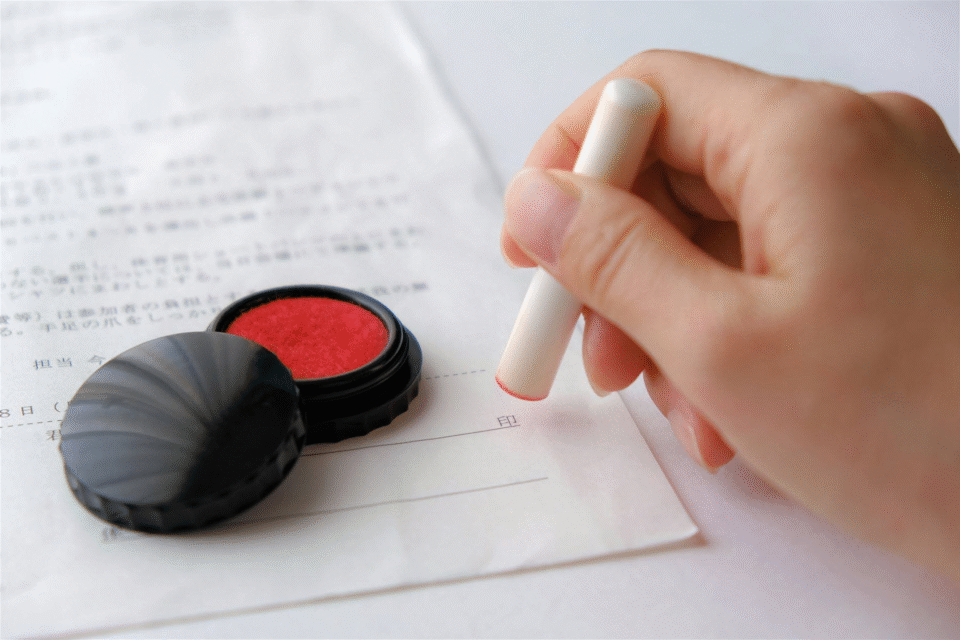
The mitomein is the workhorse. It’s unregistered, used for low-stakes confirmations, and the type most people interact with most frequently. Delivery receipts, internal office documents, casual forms, day-to-day paperwork that needs a stamp but doesn’t involve legal weight—this is where the mitomein lives.
Pre-made mitomein for common Japanese family names are sold at convenience stores and stationery shops across Japan. For foreigners with non-Japanese names, those shelves offer nothing useful, which is why ordering a custom-carved mitomein makes practical sense even if you never plan to register anything.
The mitomein is also the logical starting point for someone new to Japan who isn’t yet sure how long they’ll stay or what administrative procedures they’ll need. It covers the basics, costs less than the other types, and gives you something functional immediately. From there, you can assess whether a ginkoin or jitsuin becomes necessary.
A real scenario: A digital nomad spending four months in Japan rents a furnished apartment through a short-term agency. The contract has a stamp box. His mitomein, ordered online before arrival with his name in katakana, covers it cleanly. He also stamps delivery receipts three times during his stay. He never needs a ginkoin or jitsuin. For his situation, the mitomein was the right and only call.
Name format rules (Romaji vs Katakana)
This is an area where foreigners frequently make avoidable mistakes, usually because no one explains it clearly upfront.
Katakana is the standard for foreign names. If your name is rendered in katakana on your residence card (zairyu card) or other official documents, your hanko should match that rendering. Katakana is what Japanese institutions—banks, city offices, employers—expect to see for a foreign national’s seal. It looks official, reads clearly to Japanese administrators, and aligns with how your name appears in their systems.
Romaji (Latin letters) is less accepted for official use. Some institutions accept it; many do not, particularly for ginkoin and jitsuin purposes. Using romaji on a stamp you intend to register at a bank or city hall is a risk that’s easily avoided.
Kanji is an option only if it applies to you. If you have taken a Japanese name, have a Chinese or Korean name written in kanji, or have otherwise established a kanji rendering of your name officially, you can use it. Otherwise, katakana is the correct default.
Checklist before confirming your name format:
- Check how your name appears on your residence card or official Japanese documents
- Match that rendering on your hanko, especially for ginkoin and jitsuin
- If using katakana, confirm the correct characters with someone who reads Japanese if you’re uncertain
- Avoid ordering in romaji unless you’ve confirmed your specific institution accepts it
Recommended sizes
Size isn’t purely aesthetic—it carries functional significance, and some institutions have specific preferences or requirements.
Mitomein: Typically 10.5mm or 12mm. The smaller size is standard for everyday use. There’s no registration to worry about, so precise sizing is less critical, but staying in this range keeps things conventional.
Ginkoin: Typically 12mm or 13.5mm. Some banks specify a size range—worth checking before you order. The slightly larger size than a mitomein also helps visually distinguish the two if you’re storing them separately, which you should be.
Jitsuin: Typically 13.5mm to 15mm, sometimes larger. City hall registration requirements vary slightly by municipality, but this range covers the common standard. Larger sizes are also traditional for jitsuin because the stamp needs to be clearly distinguishable as a formal, registered seal.
Material recommendations by type:
For a mitomein, functional materials like hardwood or quality acrylic are perfectly adequate. For a ginkoin, something more durable—ebonite, titanium, or hardwood—is worth the modest cost difference, since this stamp will be used repeatedly over years and needs to produce consistent impressions. For a jitsuin, invest in quality. This is a legally significant object you’ll use for major life transactions; a stamp that lasts decades and carves cleanly is not an area to cut corners.
HankoHub offers options across all three categories with guidance on name format, sizing, and material—designed specifically for foreigners who need a stamp that functions properly in Japanese administrative contexts, not just something that looks the part.
FAQ
Can I use one hanko for everything? Technically you can use the same physical stamp as both your mitomein and ginkoin, and some people do when they first arrive. It’s not recommended. If you lose that one stamp, you lose your everyday seal and need to re-register your bank seal simultaneously. Keeping them separate is simple risk management.
Do I need to register my mitomein anywhere? No. A mitomein is used without any registration. Its validity comes from the act of stamping, not from any official record.
Can a foreigner register a jitsuin at city hall? Yes, provided you are registered as a resident in Japan. You’ll need your residence card and to follow your local ward’s procedure. Requirements are consistent in principle but can vary slightly in practice between municipalities.
What if my bank doesn’t accept a hanko at all? Some newer Japanese banks and digital banks have dropped the hanko requirement entirely. If yours is one of them, a ginkoin may not be necessary for banking—but you may still want a mitomein for other purposes. Confirm with your specific bank before assuming either way.
How many hanko should a foreigner in Japan have? For most long-term residents: two. A dedicated ginkoin stored carefully, and a mitomein for daily use. If you eventually buy property or enter major legal contracts, add a jitsuin. For short-term visitors or those just getting started: one mitomein covers immediate needs.
Does the stamp need to match my name exactly as it appears on official documents? For ginkoin and jitsuin, this is strongly advisable. Your bank or city hall will associate the impression with your identity as they have it on record. Discrepancies can cause delays or rejection. For a mitomein used for deliveries and casual stamping, there’s more flexibility in practice.
Next steps

Understanding which type of hanko you need is the first step—getting a well-made one in the right format is the second. Whether you’re starting with a mitomein to cover daily life, ordering a ginkoin before heading to the bank, or preparing a jitsuin for a significant legal procedure, the name format and sizing need to be right from the start. HankoHub guides you through each of these decisions and ships custom-carved hanko worldwide, so you can arrive prepared rather than improvising at the counter.