

Fukuoka keeps coming up in conversations about where foreigners actually enjoy living in Japan, and it’s not hard to understand why. The city is large enough to have everything you need — international airport, reliable infrastructure, a growing tech and startup scene — but compact enough that it never feels overwhelming. The food culture is serious. The pace is slower than Tokyo without feeling sleepy. And the cost of living makes the math work in a way that surprises people who budgeted for Japan based on what they’d heard about other cities.
Living in Fukuoka as a foreigner has become increasingly practical over the last several years. The city has actively positioned itself as a startup hub and has made genuine efforts to attract international talent and residents, including a dedicated startup visa program. That doesn’t mean the administrative side is simple — Japan’s paperwork system is consistent nationwide — but it does mean the local infrastructure for foreign residents is better developed than you might expect from a city outside the major three.
This guide covers the core setup steps in order: housing, banking, phone, commuting, and where your hanko fits into all of it. The goal is to give you a clear picture of what to expect and what to prioritize, whether you’re arriving next month or still planning from abroad.
City Overview and Costs
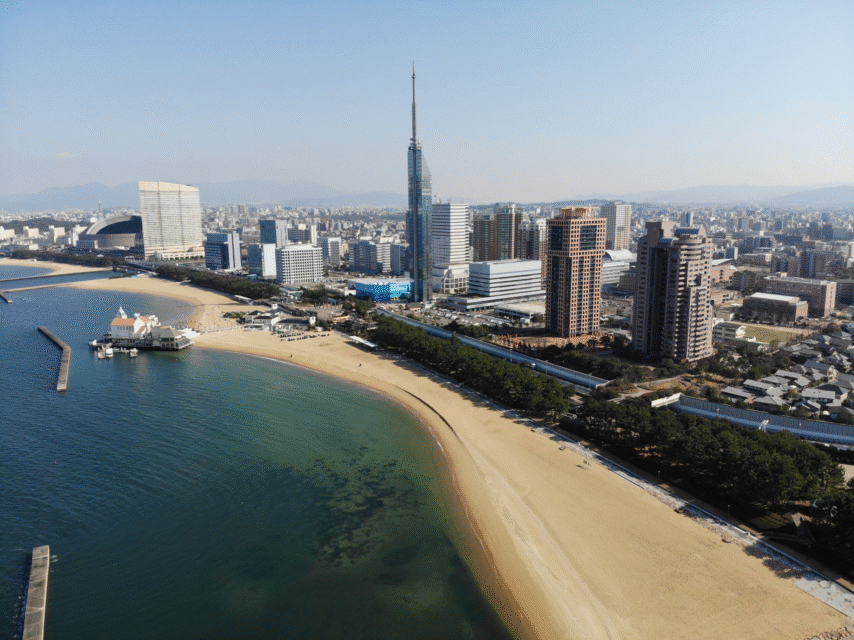
Fukuoka is the largest city in Kyushu, Japan’s southernmost main island, with a population of around 1.6 million. It sits on the northwestern coast, facing the Korea Strait, which makes it geographically closer to Seoul and Busan than to Tokyo. That proximity has historically shaped the city’s character — it has long been a point of exchange between Japan and the Korean peninsula, and today it has a visible and well-established Korean community, along with a growing presence of residents from across Asia.
The city is split into distinct districts with different personalities. Hakata, centered around Hakata Station, is the commercial and transport hub. Tenjin, a short subway ride away, is the retail and nightlife center. Ohori Park and the surrounding Chuo-ku neighborhoods feel residential and relaxed. Dazaifu, technically a separate city to the southeast, is popular for its historical sites and draws a lot of day visitors.
Rent is one of Fukuoka’s most frequently cited advantages. A one-room apartment (1K or 1DK) in a central area like Hakata, Tenjin, or Yakuin typically runs ¥45,000 to ¥70,000 per month. Further out toward Nishijin, Meinohama, or the areas along the Nishitetsu Omuta line, you can find comparable space for ¥35,000 to ¥55,000. Utilities add ¥10,000 to ¥18,000 per month — Fukuoka’s climate is milder than Tokyo or Kyoto, which helps keep heating and cooling costs lower.
Groceries are affordable at local chains like Nishitetsu Store, Youme Town, and Gyomu Super. A realistic monthly budget for a single person, covering rent, utilities, food, and transport, sits between ¥120,000 and ¥165,000 — meaningfully lower than comparable setups in Tokyo.
Housing Setup
The Fukuoka rental market is generally more accessible to foreigners than those of larger cities, partly because demand pressure is lower and partly because the city’s international orientation has encouraged more landlords and agencies to accommodate non-Japanese tenants. That said, the same structural challenges apply: some landlords still require a Japanese guarantor, and documentation requirements are consistent with the rest of Japan.
Agencies that regularly work with foreign residents include offices near Hakata Station and Tenjin, as well as platforms like Sakura House and GaijinPot Housing that list foreigner-friendly properties nationwide including Fukuoka. Guarantor companies (hoshō gaisha) are widely accepted as an alternative to a personal guarantor, and most real estate agents can arrange one.
The administrative sequence is the same as everywhere in Japan. Your residence card (zairyu card) comes from the airport immigration counter when you arrive on a long-term visa. Once you have temporary accommodation, your first stop is the ward office (ku-yakusho) to register your address. Fukuoka is divided into seven wards — Hakata, Chuo, Higashi, Minami, Nishi, Sawara, and Jonan — and your local ward office is determined by your address.
A realistic scenario: A software engineer relocates to Fukuoka for a startup job under the city’s special startup visa program. Their company arranges a weekly apartment for the first month. During that time, they register their address at Chuo ward office, open a Japan Post Bank account, receive their work phone with a local SIM, and have their custom hanko delivered — all within ten days of arrival. By the time the permanent apartment lease is signed, every required document is already in hand.
Common mistakes in housing setup:
- Failing to register an address before attempting to open a bank account — registration is the prerequisite that unlocks nearly everything else
- Overlooking the upfront costs: key money (reikin), security deposit (shikikin), and agency fees can add two to three months’ rent to your initial outlay
- Choosing an apartment based on proximity to Hakata Station without factoring in the subway and bus network that makes other neighborhoods equally accessible
- Not clarifying in advance whether the landlord accepts foreign nationals on a work visa, rather than discovering it at the contract stage
Banking and Salary
Opening a bank account in Fukuoka follows the same process as Japan broadly, with a few practical notes specific to the local landscape.
Japan Post Bank (Yucho Ginko) remains the most accessible starting point for new arrivals, with a relatively low residency threshold and branches near most major stations. Seven Bank offers a basic account through 7-Eleven ATMs that can work as a temporary solution. For a full-service account, Fukuoka Bank — the city’s major regional bank — is worth considering once you have employment documentation and a few months of residency. SBI Sumishin Net Bank is popular among the foreign resident community for its English interface and straightforward online setup.
Standard documentation required: residence card, passport, registered address, and a Japanese phone number. Some banks request proof of employment or enrollment at this stage; others do not.
Salary in Japan is paid monthly and deposited directly into your bank account. Your employer’s HR or payroll team will ask for your bank details early in the onboarding process — typically the bank name, branch name, branch code, account type (futsu), and account number. Have this ready within your first two weeks.
If you’re aiming to work in Fukuoka, check ComfysCareer for openings that match your language level.
A note on Fukuoka Bank specifically: As a regional institution, Fukuoka Bank has a strong presence across Kyushu and is widely used for salary deposits by local employers. If your employer uses Fukuoka Bank for payroll, it may be worth opening an account there even if the setup takes slightly longer than Japan Post Bank.
Commuting Basics
Fukuoka’s public transport is efficient and well-organized for a city of its size. The Fukuoka City Subway runs three lines — the Kuko (Airport), Hakozaki, and Nanakuma lines — covering the central city corridor from Fukuoka Airport through Hakata and Tenjin and out to the western residential areas. Journey times within the city are short; Hakata to Tenjin on the Kuko line takes around six minutes.
The Nishitetsu (Nishnippon Railroad) network serves the southern suburbs and connects Fukuoka to smaller cities like Kurume and Omuta. JR Kyushu covers regional routes and intercity connections — the shinkansen from Hakata Station reaches Hiroshima in under an hour and Osaka in about two hours and fifteen minutes.
SUGOCA is the IC card issued by JR Kyushu and works on the city subway, Nishitetsu lines, buses, and most IC-compatible payment terminals. ICOCA (JR West) and Suica (JR East) are also accepted on most networks. Any of these work for daily transit; SUGOCA is the logical default if you’re starting fresh in Fukuoka.
Monthly commuter passes (teiki) are worth buying for fixed routes. Check with your employer whether commuting costs are reimbursed and what documentation they require — most employers ask for the pass itself or a receipt showing the route and dates.
Cycling is practical in the flatter central and eastern parts of the city. Register any bicycle at the point of purchase or at your local police station, and note that some areas near Tenjin and Hakata Station have designated bicycle parking zones with paid parking.
Where Hanko Fits In
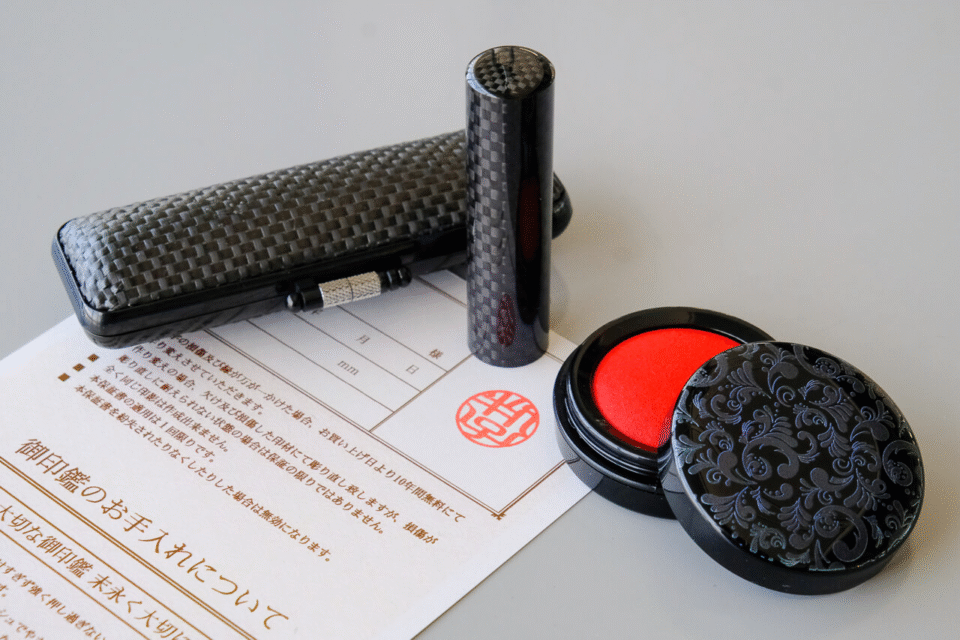
Fukuoka’s international orientation and startup-friendly environment have made it one of the more foreigner-accessible cities in Japan administratively. But the hanko remains a consistent fixture in Japanese official and semi-official paperwork, and that doesn’t change based on which city you’re in.
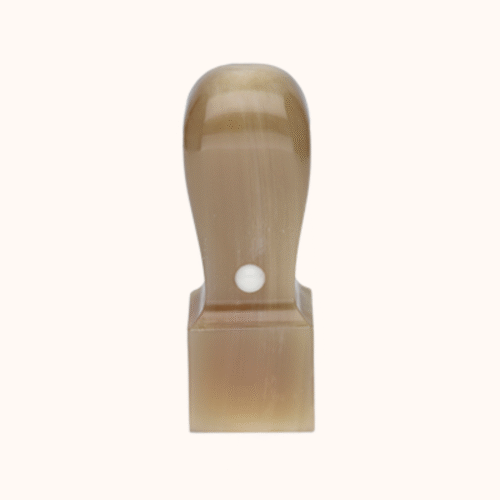
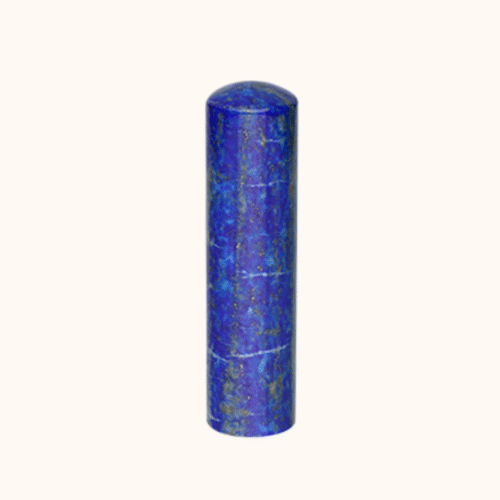
A hanko — also called an inkan — is a personal stamp used in place of, or alongside, a handwritten signature on formal documents. For foreigners setting up life in Fukuoka, it appears earlier and more often than most people anticipate.
A practical checklist of situations where your hanko may be required:
- Signing an apartment lease
- Opening certain bank accounts or completing amendment paperwork
- Employment contract documentation
- National health insurance enrollment at some ward offices
- Signing for registered mail or official deliveries
- Phone contracts with some mobile carriers
- Registering a vehicle
- Any formal agreement with a Japanese institution or individual landlord
For most daily purposes, a basic hanko (mitome-in) is sufficient. For lease agreements and registered bank accounts, some institutions require a formally registered hanko (jitsu-in) — registered at your ward office and accompanied by a seal certificate (inkan shōmei-sho). Registration takes around fifteen to thirty minutes at the ward office and is straightforward once you have your residence card and registered address.
A common scenario: A foreign resident in Fukuoka signs up for a new mobile phone contract at a carrier store near Tenjin. Midway through the paperwork, the staff member points to a blank space and asks for a hanko. The resident doesn’t have one. The contract is paused. They return two days later with a hanko purchased at a nearby 100-yen shop — but the stamp is mass-produced and identical to thousands of others, which creates a problem when they later try to register it at the ward office as a personal seal.
Another scenario: A new arrival orders a custom hanko from HankoHub before flying to Fukuoka. It arrives within their first week, rendered in katakana with the correct sizing for official use. They register it at Hakata ward office on day eight, walk out with their inkan shōmei-sho, and use it to sign their apartment lease and open their bank account without a single interruption.
Common mistakes with hanko:
- Buying a generic, mass-produced stamp — these often cannot be registered as a unique personal seal
- Ordering a hanko with a romanized name when katakana rendering is the standard for foreign names in Japan
- Assuming a written signature will always be accepted as a substitute — in Fukuoka as elsewhere in Japan, it often won’t be at traditional institutions
- Not keeping the inkan shōmei-sho in a safe place — reissuance requires another ward office visit and takes time you may not have mid-process
HankoHub offers custom hanko with English ordering, katakana name rendering, and size options suited to Japanese ward offices and financial institutions — designed specifically for foreigners navigating exactly this kind of setup.
FAQ
Do I need a hanko right when I arrive in Fukuoka? As early as possible, yes. Lease signings and bank account setups typically happen within your first two weeks. Having your hanko ready before those appointments — rather than scrambling to find one during them — removes a real and avoidable obstacle. Order before you travel if your timeline allows.
Is Fukuoka more foreigner-friendly than other Japanese cities for admin purposes? In some ways, yes. The city’s active international recruitment, startup visa program, and relatively open rental market make certain steps easier than in more traditional cities. The underlying paperwork system, however, is national — ward office procedures, bank requirements, and hanko expectations are consistent across Japan.
Can I use my signature instead of a hanko? Sometimes, at more internationally oriented institutions. But it’s not reliable across the board. Mobile carriers, traditional landlords, regional banks, and ward offices vary. Asking in advance is safer than assuming.
How do I find foreigner-friendly apartments in Fukuoka? Start with agencies near Hakata Station or Tenjin that advertise English-language service. Online platforms like GaijinPot Housing and Sakura House list Fukuoka properties with foreigner-friendly terms. Your employer or university may also have housing referral resources.
What is Fukuoka’s startup visa, and who is it for? Fukuoka City operates a special startup visa program that allows foreign entrepreneurs to reside in the city for up to one year while establishing a business. It requires registration with a designated support organization in the city. If this applies to your situation, the Fukuoka City International Foundation (FIA) and the Startup Cafe in Daimyo are good starting points for information.
What size hanko should I order? For personal use — leases, bank accounts, general paperwork — 12mm or 13.5mm diameter is the standard. HankoHub displays sizing options clearly during the ordering process so you don’t have to guess.
How long does it take to open a bank account in Fukuoka? Japan Post Bank is usually the fastest — sometimes same-day. Fukuoka Bank and commercial banks may take longer, particularly if residency is recent. Bring your residence card, registered address documentation, and a Japanese phone number to every appointment.
Next Steps
Fukuoka rewards people who arrive prepared. The city’s setup is genuinely accessible compared to much of Japan, but the paperwork still follows its own logic and sequence. Getting your hanko sorted before lease day — not after — is one of the clearest ways to keep that sequence from stalling.
Order your custom hanko in English at HankoHub. The process is built for foreigners, name rendering in katakana is straightforward, and your stamp arrives ready for the exact situations this guide covers.